Updated: 19.05.26
Are you looking for a conditioner that actually works for your hair? If so, you’ve come to the right place!
In the video above, we show you how to make a lightweight and effective conditioner bar using botanical ingredients that work for all hair types – including textured and curly hair.
In this post, we go even further, explaining our ingredient choices, sharing substitution and customisation tips (plus a handy list of suppliers), and the step-by-step instructions to make this conditioner.
If you’re tired of hair products that promise results but are really just designed for straight hair, this is for you. Plus, this solid conditioner is super easy and satisfying to make and requires only six steps.
And the best part? It comes together in just under 10 minutes!
What makes this conditioner bar so special
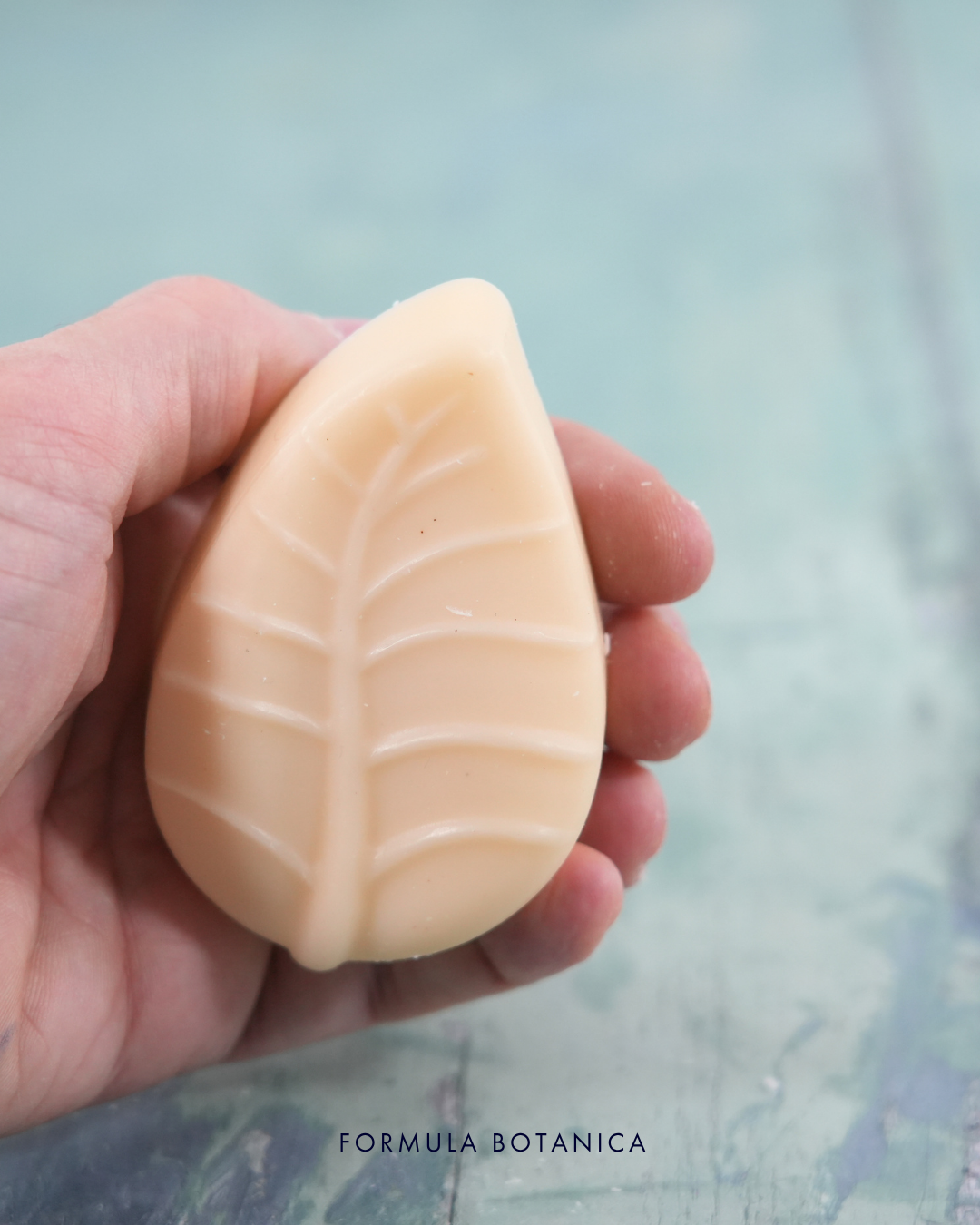
What sets this conditioner bar apart is its universality.
Unlike many conditioner bars on the market that rely on traditional conditioning ingredients, which can build up on some hair types while leaving others feeling stripped, this bar has ingredients that actually adapt to your hair’s needs. It works with your hair’s natural structure rather than against it.
Whether you have fine, straight hair that gets weighed down easily, thick curly hair that needs intense moisture, or anything in between, this bar delivers the right level of conditioning. It’s moisturising without being too moisturising.
Anyone can make it
Not only is this conditioner bar suitable for all hair types, but it’s also incredibly easy to make, and takes only 10 minutes, minus the setting time.
It’s a simple melt-and-pour method, meaning you literally just have to melt the ingredients together, stir the mixture, pour it into a mould, and let it set into a solid bar (which incidentally also makes it zero-waste).
Everything you’ll need to make this conditioner bar
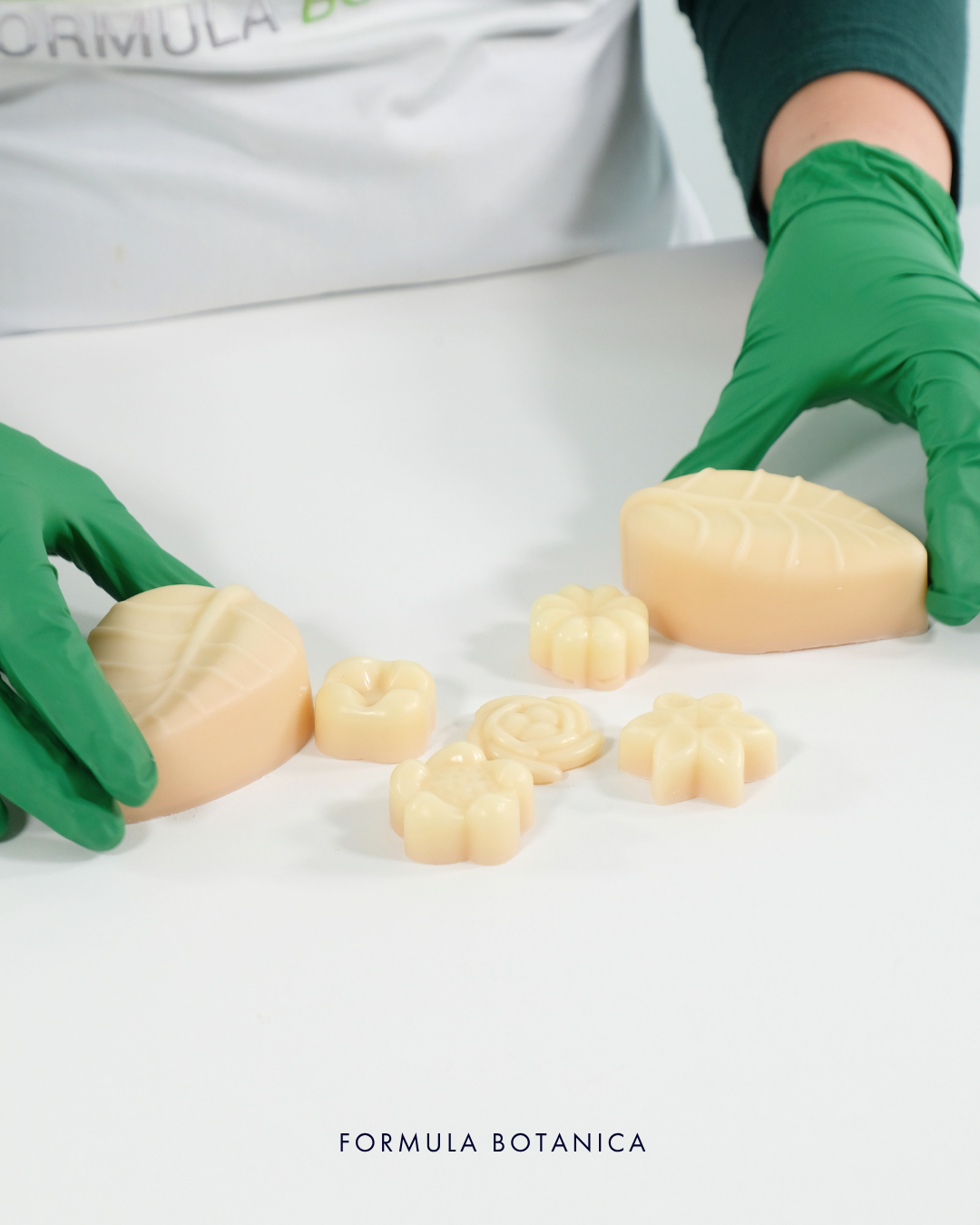
Here’s everything you need to make this zero-waste conditioner bar:
Equipment
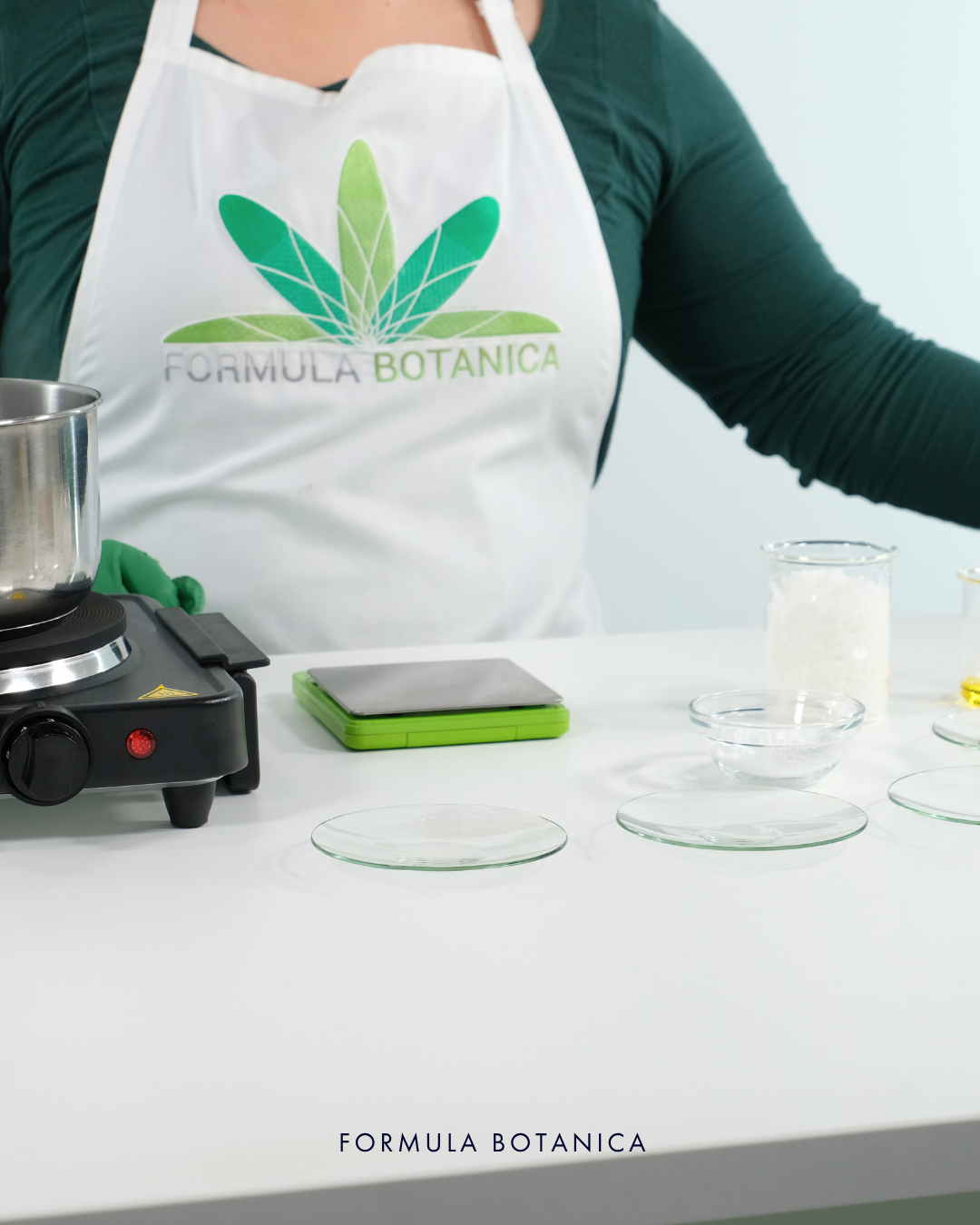
Since this is a simple melt-and-pour bar, you don’t need complicated or fancy ingredients to make it, just the basics:
- A digital scale for accurate measuring
- A heatproof glass beaker or container to hold your ingredients
- A simple water bath setup (a saucepan with gently heated water on the stove works perfectly)
- A glass stirring rod, a heatproof spatula, or a clean spoon for mixing
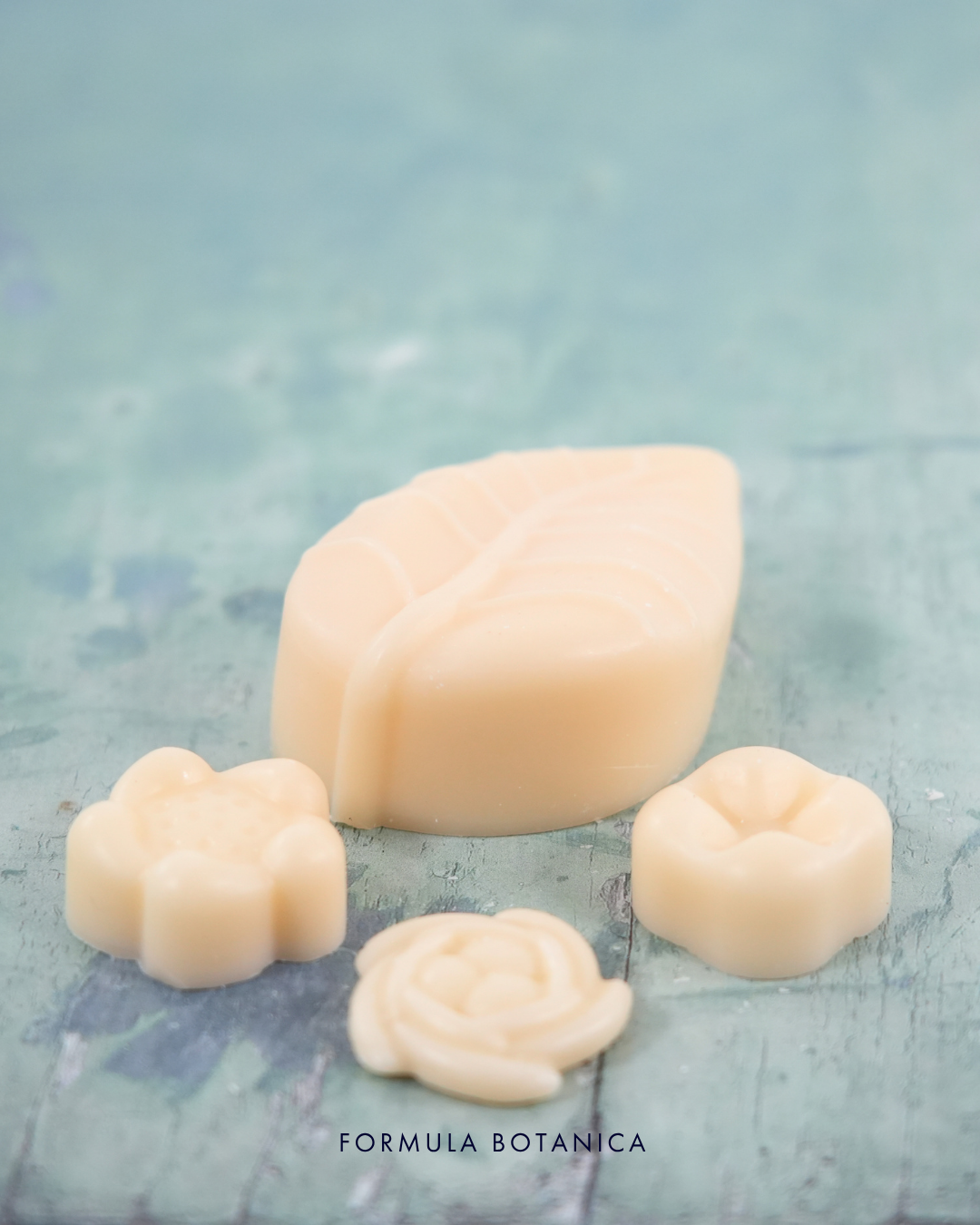
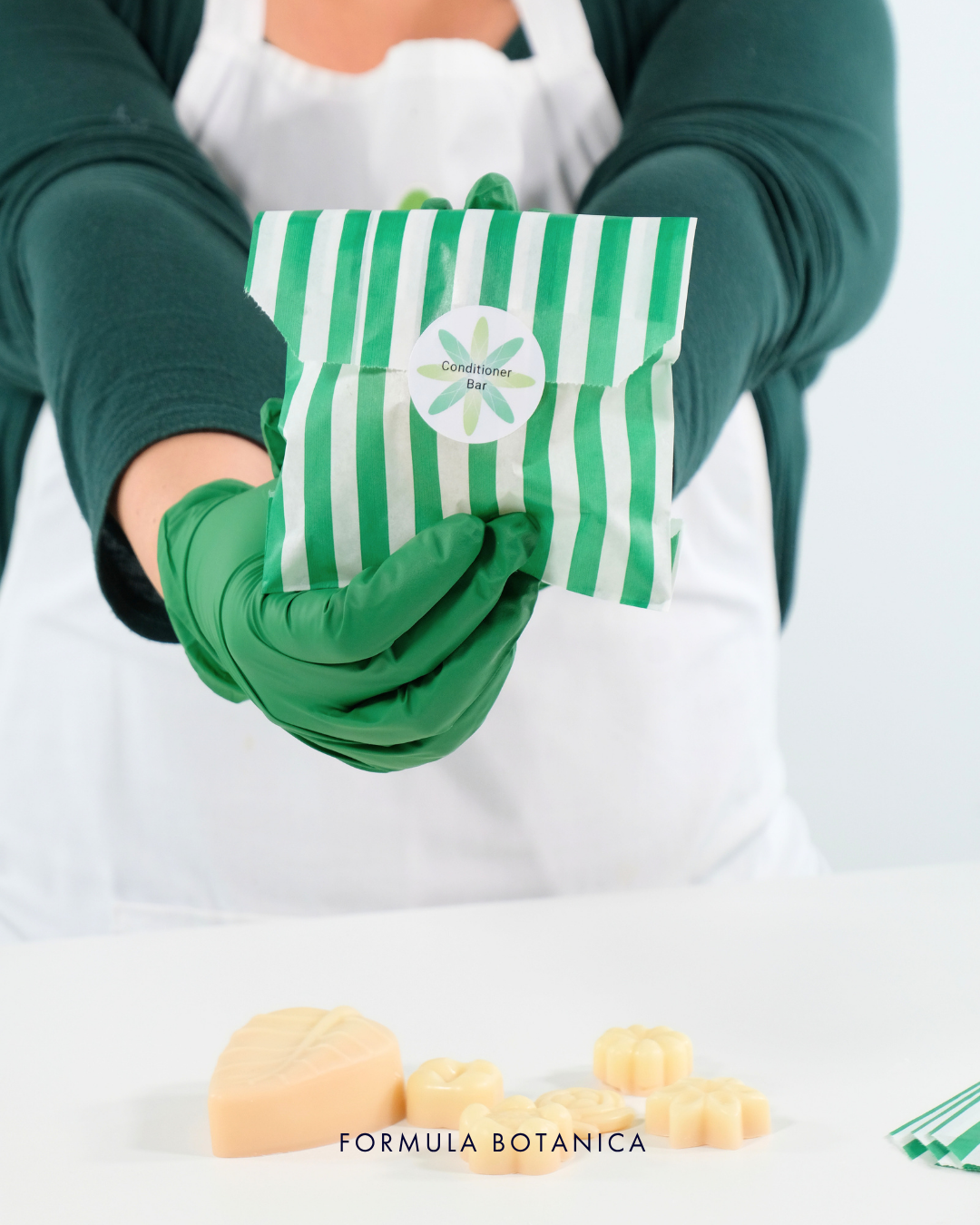
- Moulds for shaping your bars – soap moulds, silicone ice cube trays, or small containers all work. Feel free to get creative here; cookie cutters can make fun shapes, too! We used a large leaf-shaped mould and a smaller mould that had multiple flower shapes.
You likely already have most of this equipment in your kitchen. If not, it’s very easy to find online or in kitchenware shops. You can also source it via our Formula Botanica Amazon storefront.
Before you start, make sure your workspace is clean and organised, and wipe down surfaces. Tie your hair back, wash your hands, and wear gloves and an apron. A little prep goes a long way in making sure your conditioner bar is safe and hygienic!
Ingredients
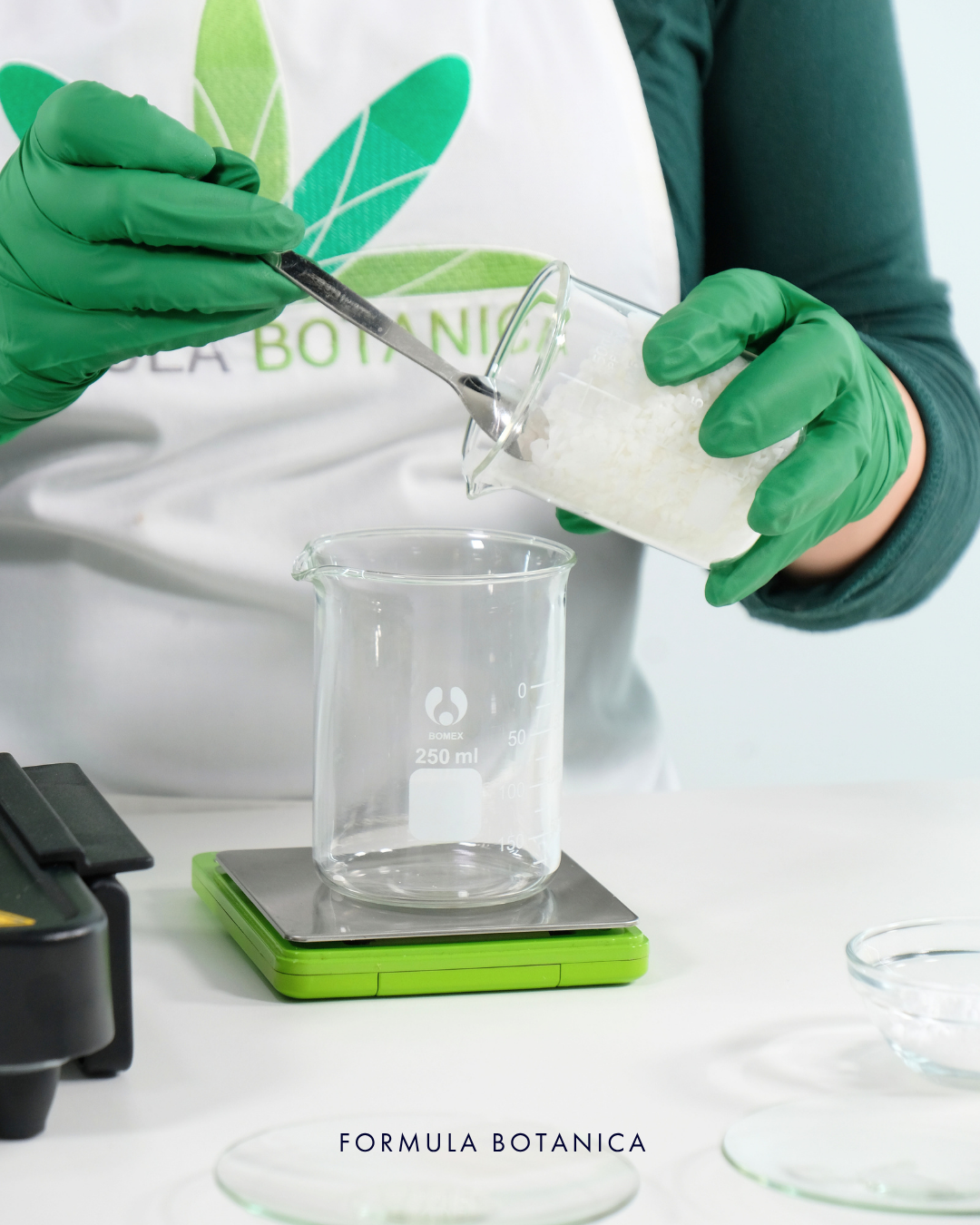
And now for the ingredients! To make 100g of this conditioner bar (which makes enough for about 2 medium conditioner bars), you’ll need:
- 73g Aminosensyl™ HC
- 13g Cetyl alcohol
- 8.5g Jojoba oil
- 3.5g Squalane
- 1g Geogard ECT
- 0.2g Rosemary CO2 extract
- 0.4g Clary sage essential oil
- And 0.4g Lavender essential oil
We dive deeper into these ingredients, what they are, and their benefits in the section below. You’ll also find a handy list of ingredient suppliers at the bottom of this post.
Ingredient breakdown
And now for the full ingredient breakdown! Here are all the ingredients we’ve used to make this conditioner bar, and why:
1. Aminosensyl™ HC
INCI: Brassica Alcohol (and) Brassicyl Valinate Esylate
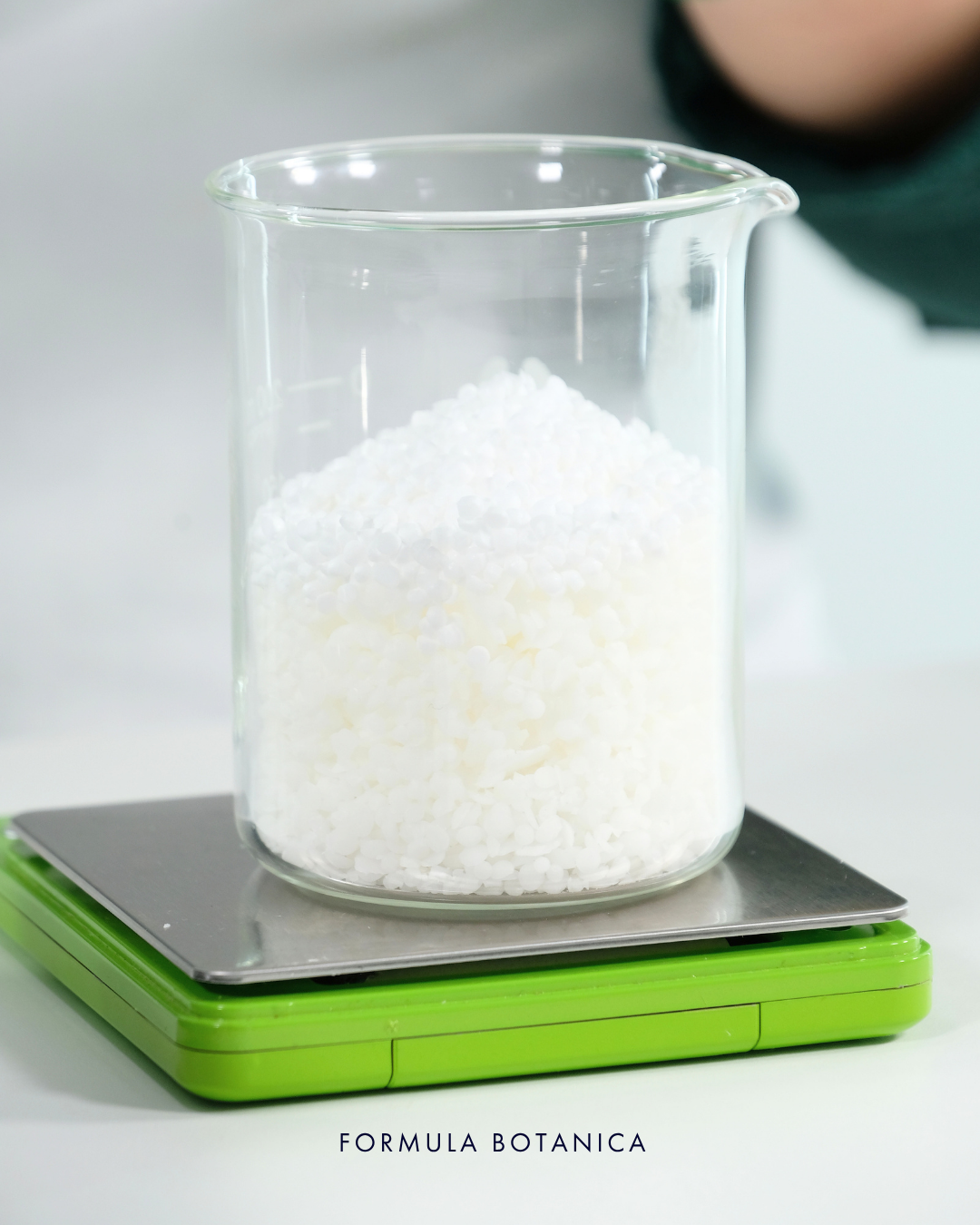
First up, we picked Aminosensyl™ HC, which is the star ingredient of this conditioner bar.
Don’t let the name put you off – this is a plant-derived conditioning ingredient made from brassica plants (the broccoli and kale family).
It’s a clever ingredient that adapts to your hair, giving light conditioning for fine hair and deeper nourishment for thick or curly hair. It also provides a bit of texture and firmness to the conditioner bar. Now, just so you know, this ingredient isn’t widely available, but we’ve linked a couple of suppliers that do carry it at the bottom of this post.
2. Cetyl alcohol
INCI: Cetyl Alcohol
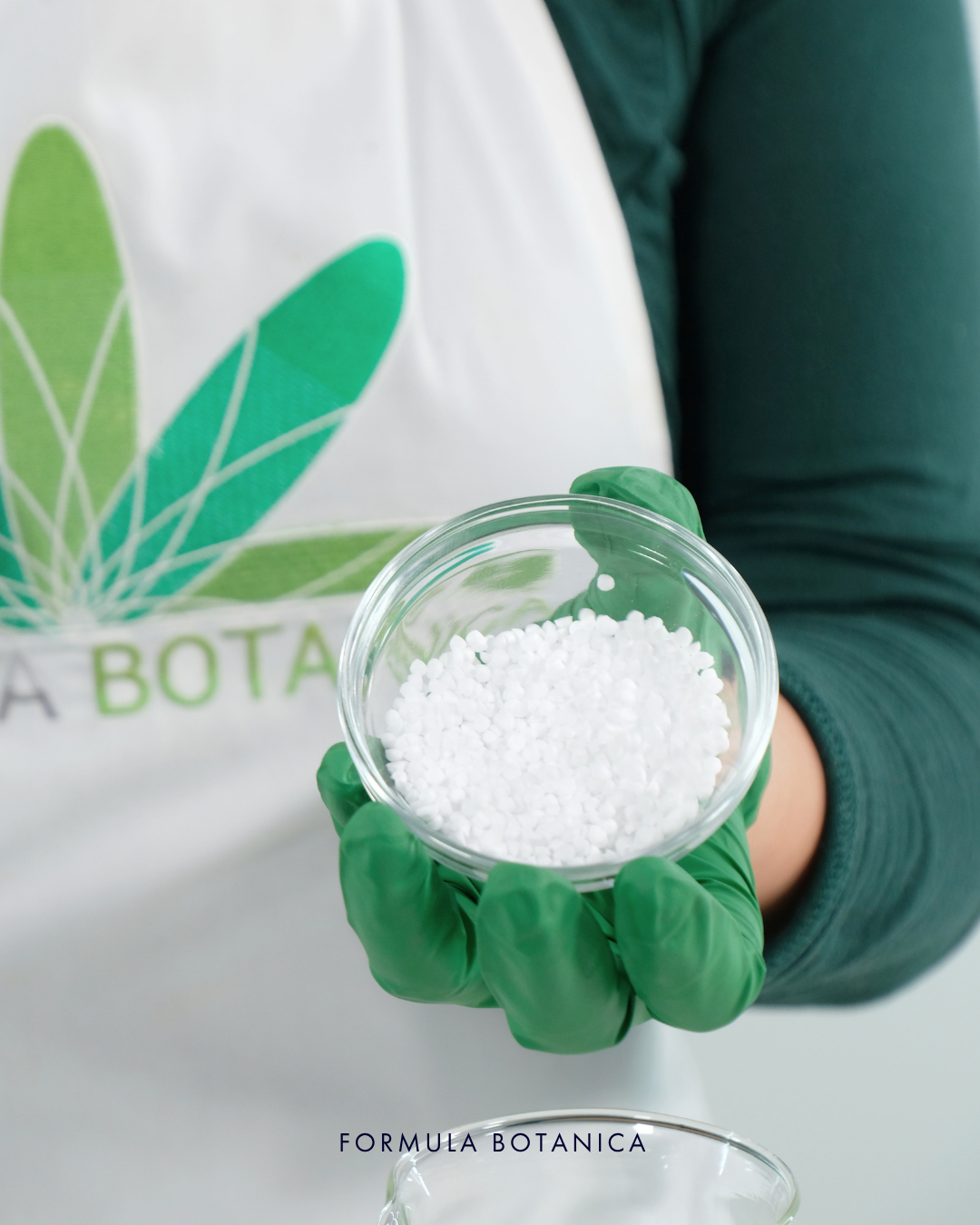
Up next is cetyl alcohol, a waxy, coconut-derived co-emulsifier and thickener which gives the bar its solid structure while adding conditioning and moisturising properties.
It’s widely available and cheap to source, and comes in small, round white pellet flakes.
3. Jojoba oil
INCI: Simmondsia Chinensis Seed Oil
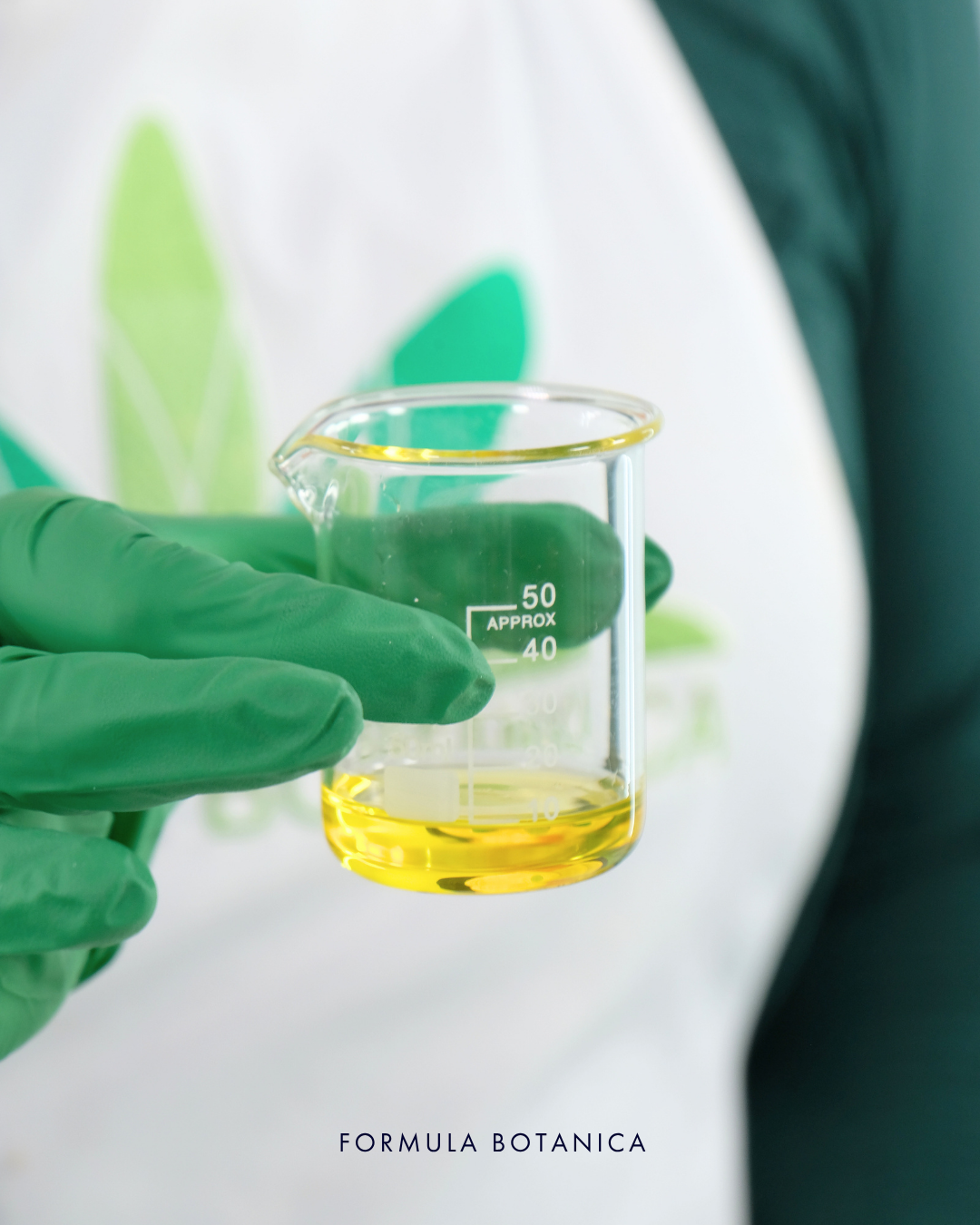
And now for our botanical oils! First up, we have jojoba oil, which is actually a liquid wax that closely mimics your scalp’s natural oils.
Jojoba is lightweight and rests on the outside of the hair shaft, and has softening and smoothing effects which can help tame frizz.
It’s incredibly stable, doesn’t go rancid easily, and provides moisture without weighing your hair down, which is why it works so well across different types and why we selected it. It’s also cheap and widely available.
If you’d like to learn more about this amazing botanical oil, you’ll like this post:
4. Squalane
INCI: Squalane
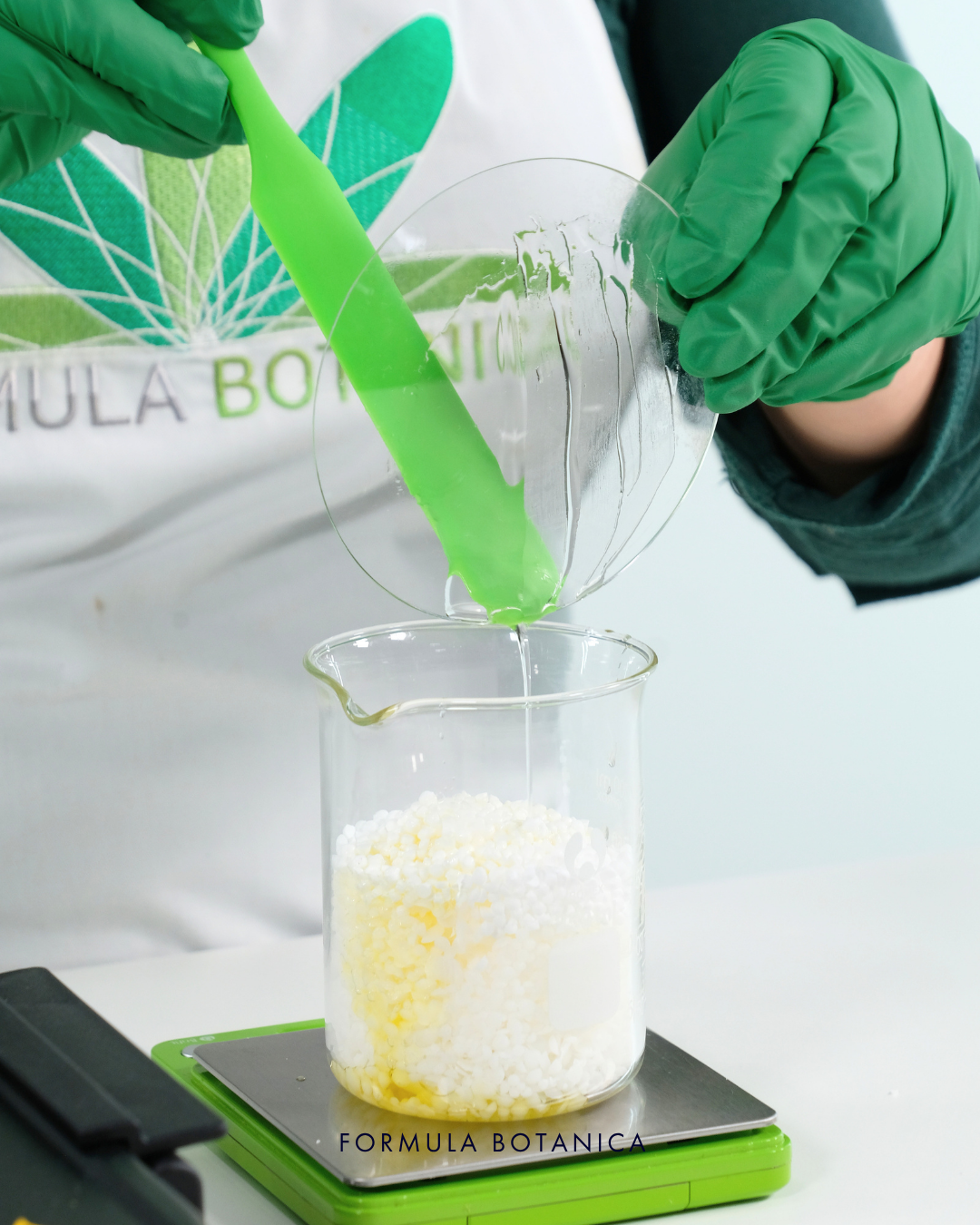
Up next, we picked squalane, a widely available natural silicone alternative which provides beautiful slip, making your hair feel smoother and more manageable, without any of the buildup or heaviness.
Squalane is also great for fine hair that gets weighed down, and is rich enough for thicker textures. You can learn more about it below:
5. Geogard ECT
INCI: Benzyl Alcohol & Salicylic Acid & Glycerin & Sorbic Acid
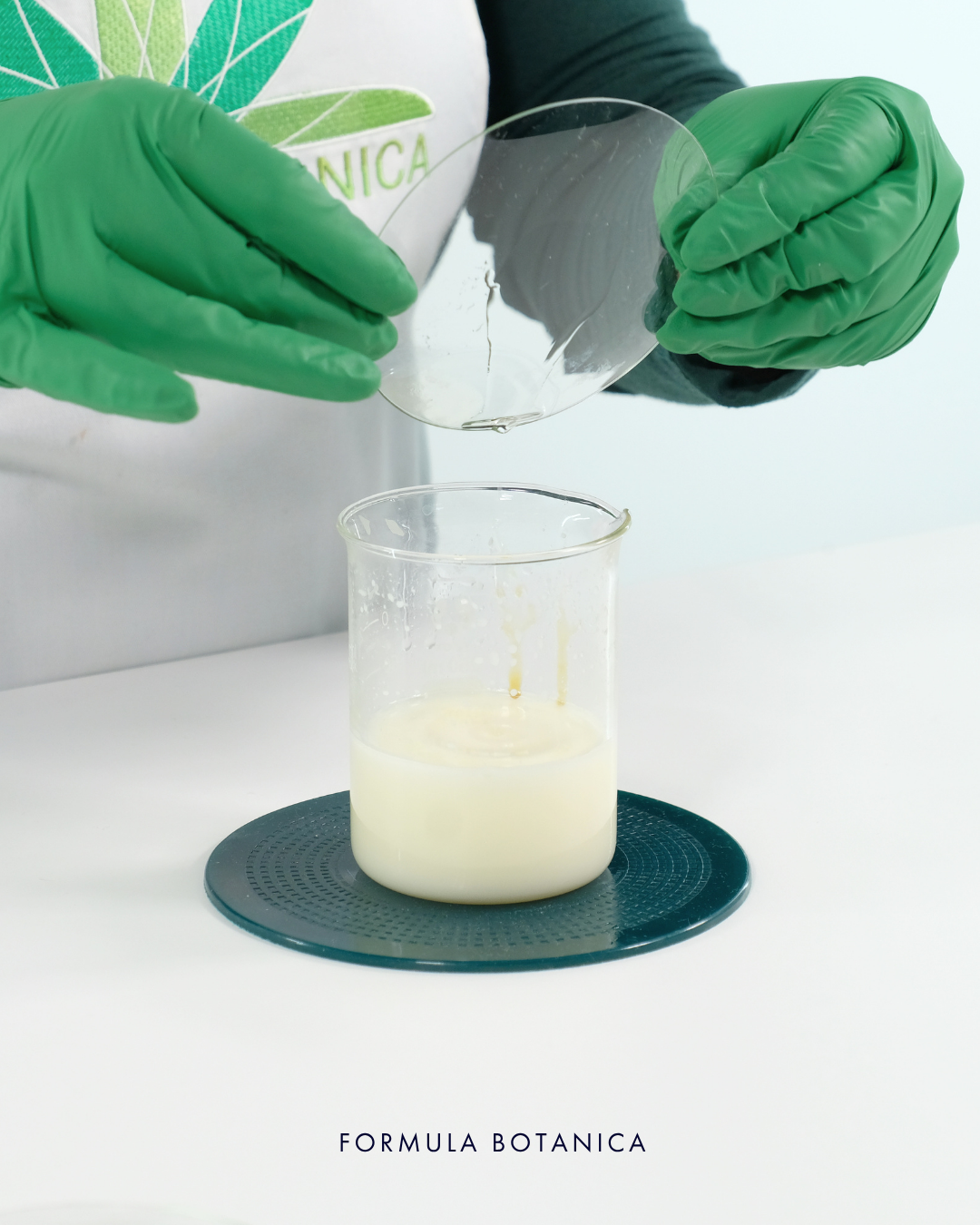
Georgard ECT is the preservative we picked for our conditioner bar. It is a blend of four different chemical compounds that can be found in nature, and is a broad-spectrum preservative, meaning it protects against a wide range of microorganisms. It’s widely available and compliant with COSMOS and Ecocert standards.
You might be wondering why a preservative is needed in a solid bar. The reason is simple: although the bar itself is solid, it will come into contact with water during use.
And when you introduce water to a cosmetic product, this creates an environment where bacteria and mould can grow, so adding a preservative helps keep your conditioner bar safe and stable over time.
You can learn more about the importance of preservation and natural preservatives in the posts below:
6. Rosemary Co2 extract
INCI: Rosmarinus Officinalis Leaf Extract
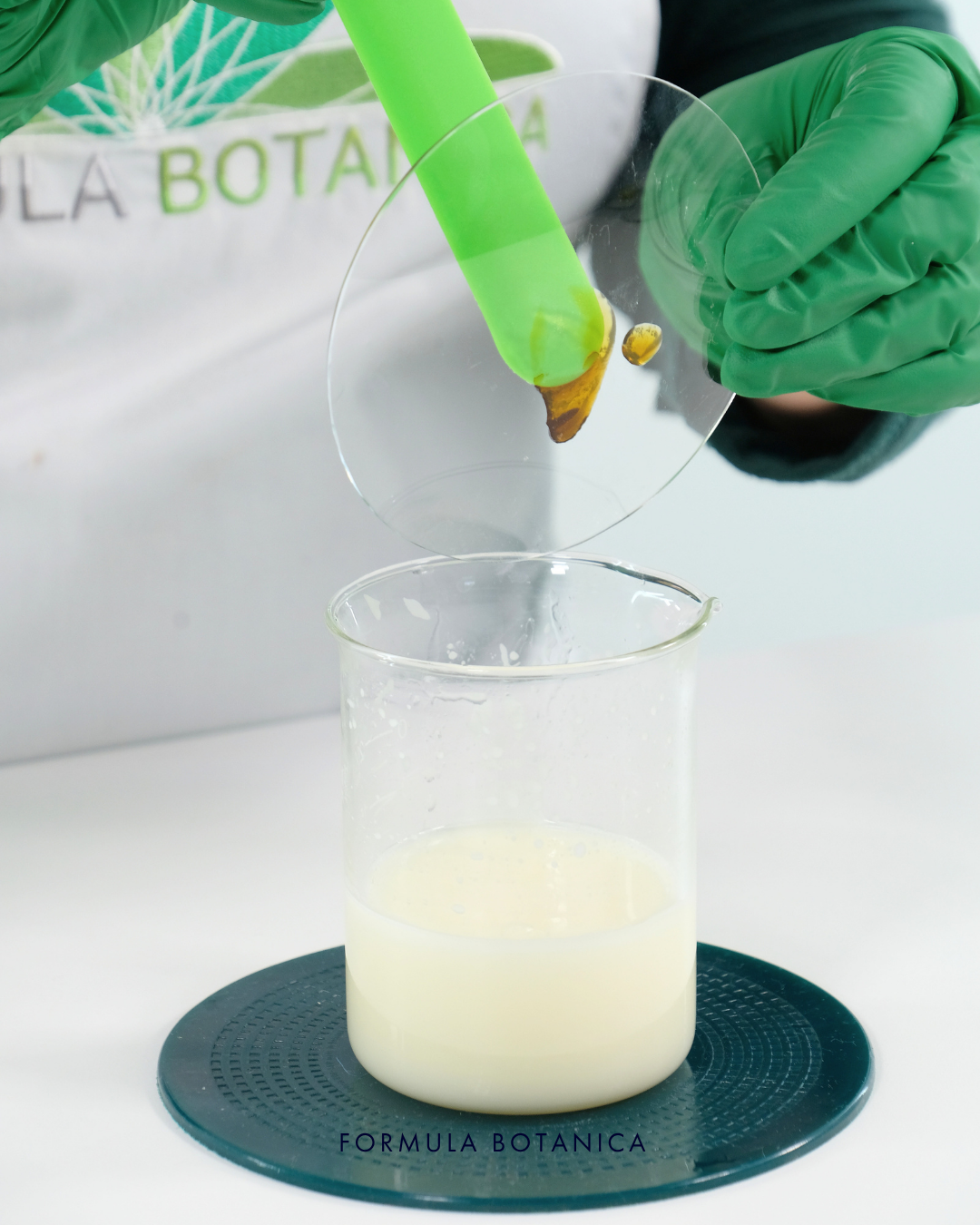
Now for our lovely botanicals. Rosemary Co2 is a potent antioxidant and antimicrobial extract derived from the popular rosemary herb that helps protect oils from oxidation (rancidity) and helps extend the shelf life of products.
It also has a lovely characteristic scent, and you can learn more about the benefits of this ingredient below:
7. Clary sage & lavender essential oils
INCI: Salvia Sclarea Leaf Oil | Lavandula Angustifolia Flower Oil
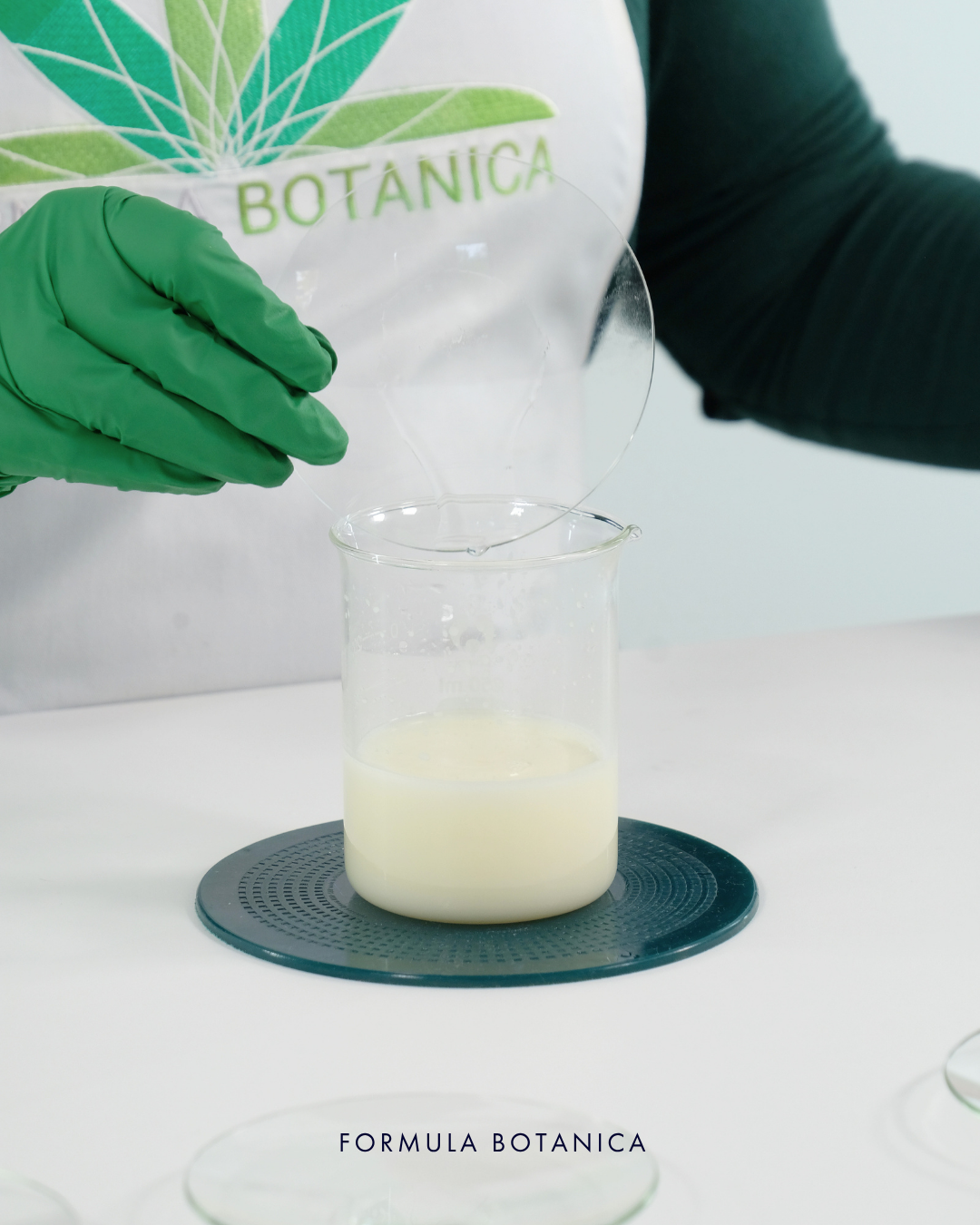
Finally, we picked clary sage and lavender essential oils, which have a calming and uplifting effect and give our conditioner bar a pleasant, refreshing scent.
Clary sage is particularly lovely for haircare as it helps balance oil production.
You can source all of these ingredients from cosmetic ingredient suppliers worldwide, and we list a few recommendations at the bottom of this post.
How to make this solid conditioner bar
- Makes: 100g (Enough for 2 medium-sized bars)
- Estimated time: 10 minutes (Excluding setting time)
- Level: Beginner-friendly
| Phase | Ingredients | INCI | Weight (g) |
| A | Aminosensyl™ HC | Brassica Alcohol (and) Brassicyl Valinate Esylate | 73.00 |
| A | Cetyl alcohol | Cetyl Alcohol | 13.00 |
| A | Jojoba oil | Simmondsia Chinensis Seed Oil | 8.50 |
| A | Squalane | Squalane | 3.50 |
| B | Geogard ECT | Benzyl Alcohol & Salicylic Acid & Glycerin & Sorbic Acid | 1.00 |
| C | Rosemary Co2 extract | Rosmarinus Officinalis Leaf Extract | 0.20 |
| C | Clary sage essential oil | Salvia Sclarea Leaf Oil | 0.40 |
| C | Lavender essential oil | Lavandula Angustifolia Flower Oil | 0.40 |
| Total: 100.00 |
Step-by-step method:
Here’s how to make a universal (and natural) conditioner bar in 6 easy steps:
- Step 1: Weigh the Aminosensyl™ HC, cetyl alcohol, jojoba oil, and squalane
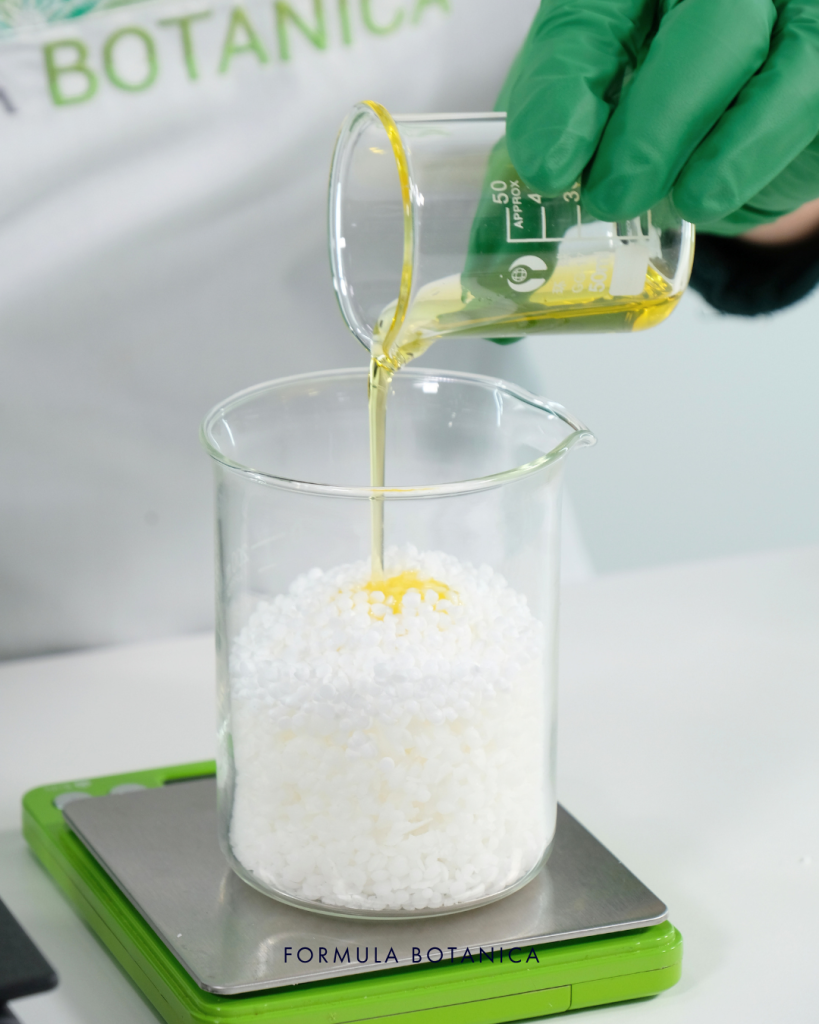
Start by weighing the Aminosensyl™ HC, cetyl alcohol, jojoba oil, and squalane in a glass beaker or heatproof glass bowl, taring the scale after each addition, using the ‘tare’ button to reset the scale.
- Step 2: Heat your ingredients to 75-80°C.
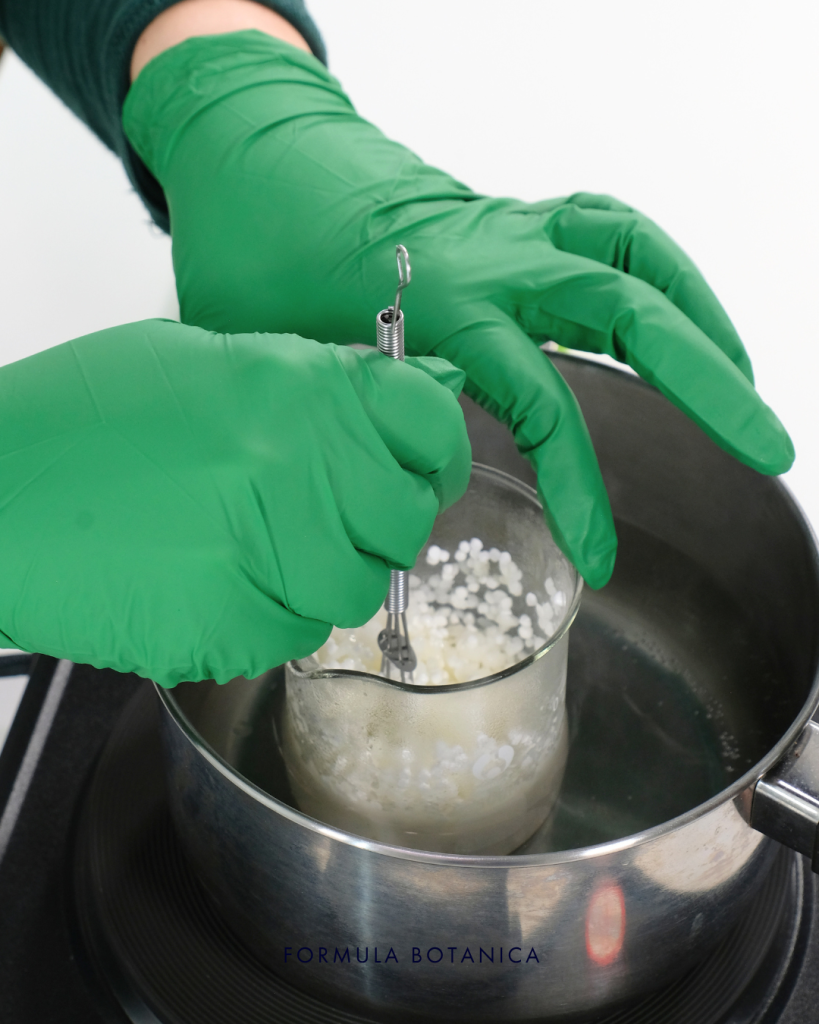
Next, add your beaker or bowl to your water bath and gently heat to about 75-80°C, until your ingredients have melted into one unified, smooth blend.
This will form the base of your conditioner bar.
- Step 3: Let the blend cool slightly
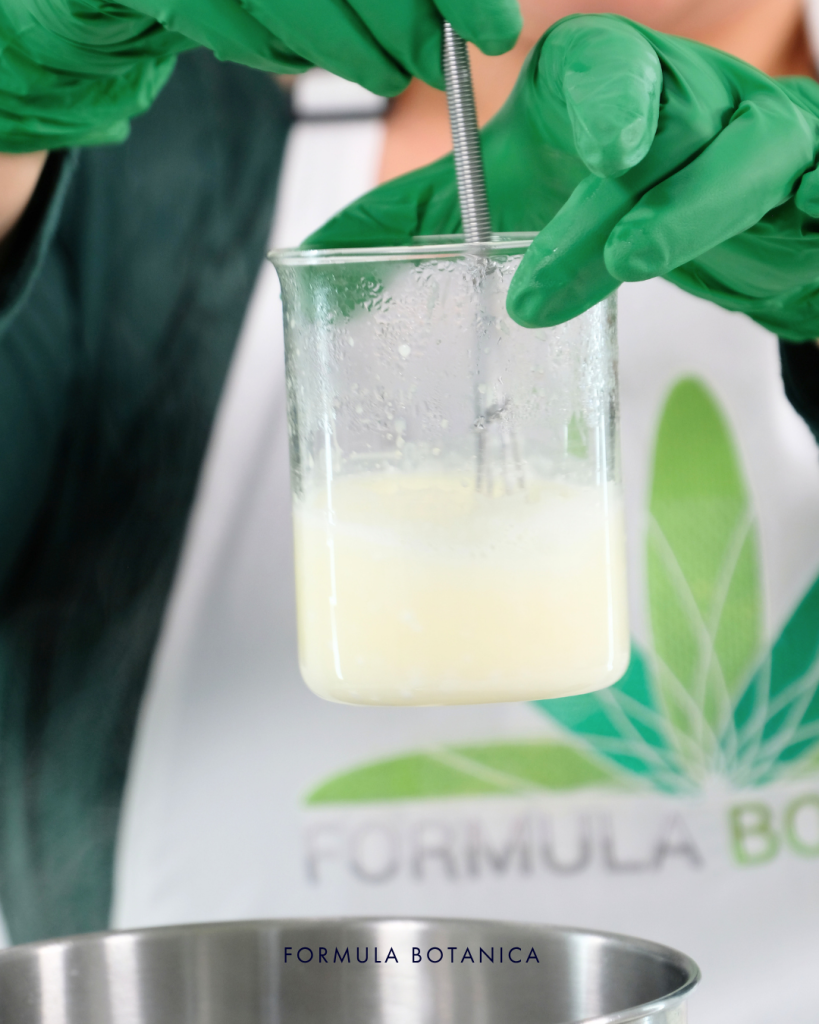
Once everything’s melted and combined, remove your beaker or bowl from the heat and let your blend cool slightly.
This is important because you’re about to add your heat-sensitive ingredients, and heat could damage their beneficial properties.
- Step 4: Add your heat-sensitive ingredients
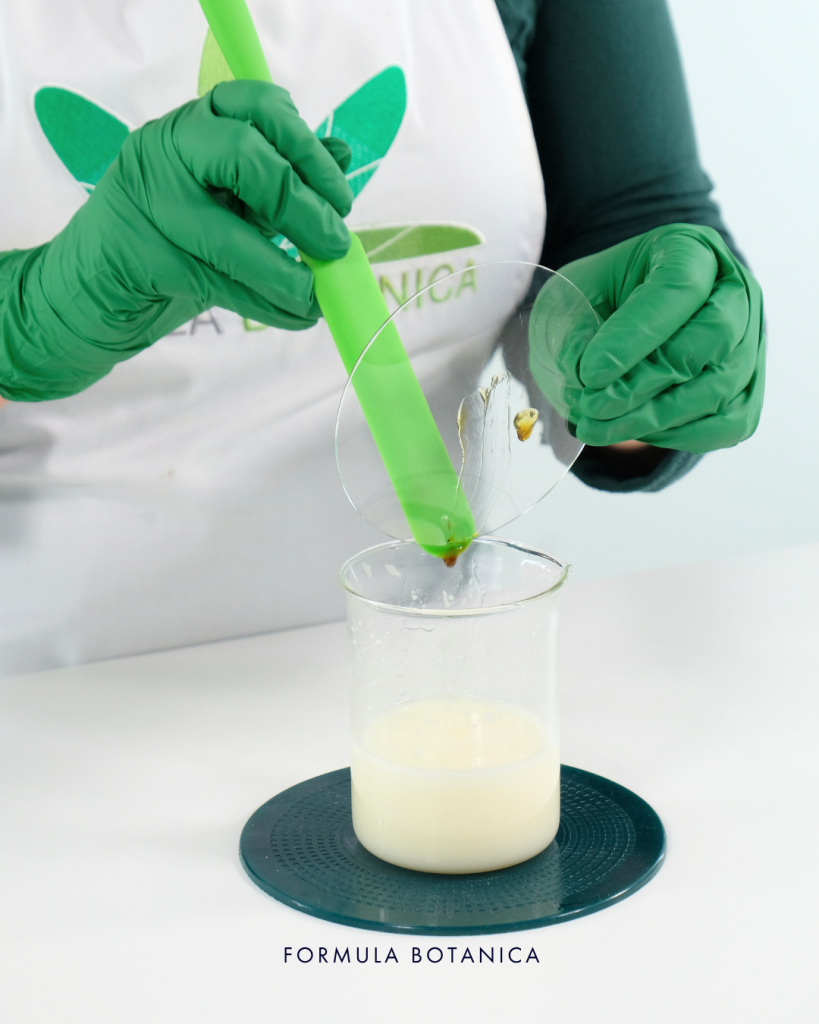
Once the blend’s cooled a bit, add your heat-sensitive ingredients. So that’s your Geogard ECT, rosemary Co2 extract, and your clary sage and lavender essential oils.
- Step 5: Stir your ingredients & pour into moulds
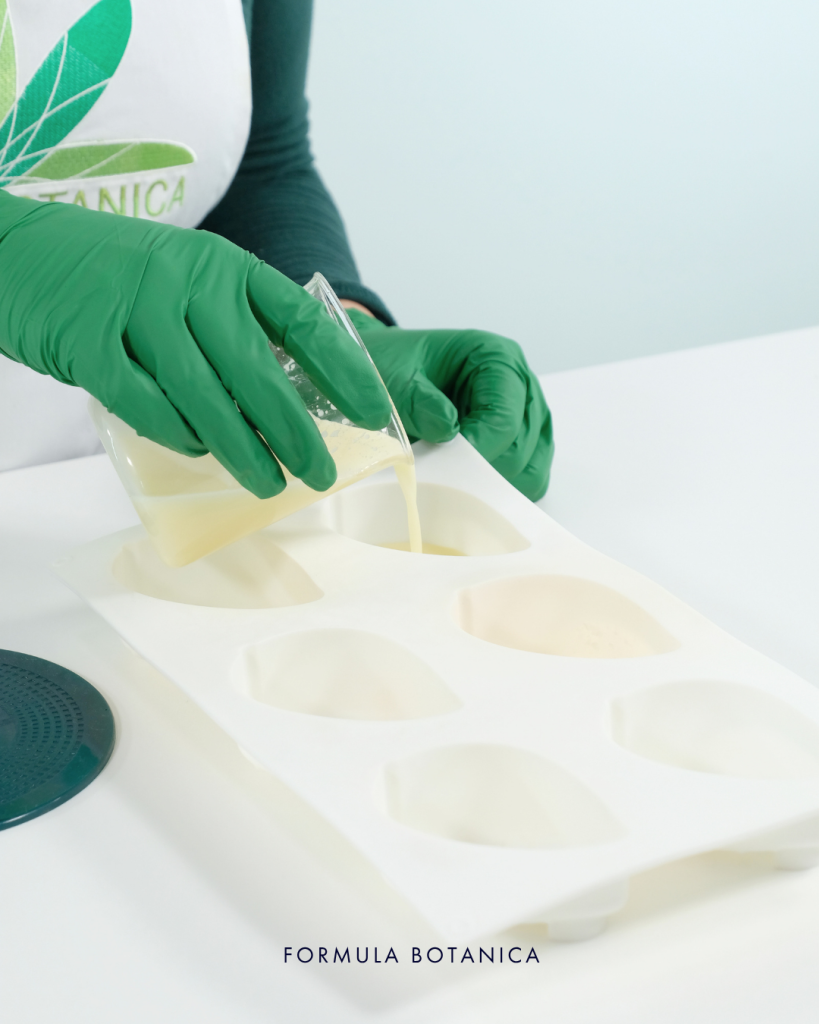
Stir your blend thoroughly to ensure any heat-sensitive ingredients are evenly incorporated, then carefully pour the mixture into your chosen moulds. Your mixture should have a smooth, creamy consistency with a gentle herbal scent.
We’ve used large leaf-shaped and smaller botanical moulds here, but feel free to use whatever you have on hand – ice cube trays work great too.
If you have any mixture left over, you could pour it into different moulds to create a variety of conditioner bar shapes (which is what we’ve done!).
- Step 6: Let the bars set
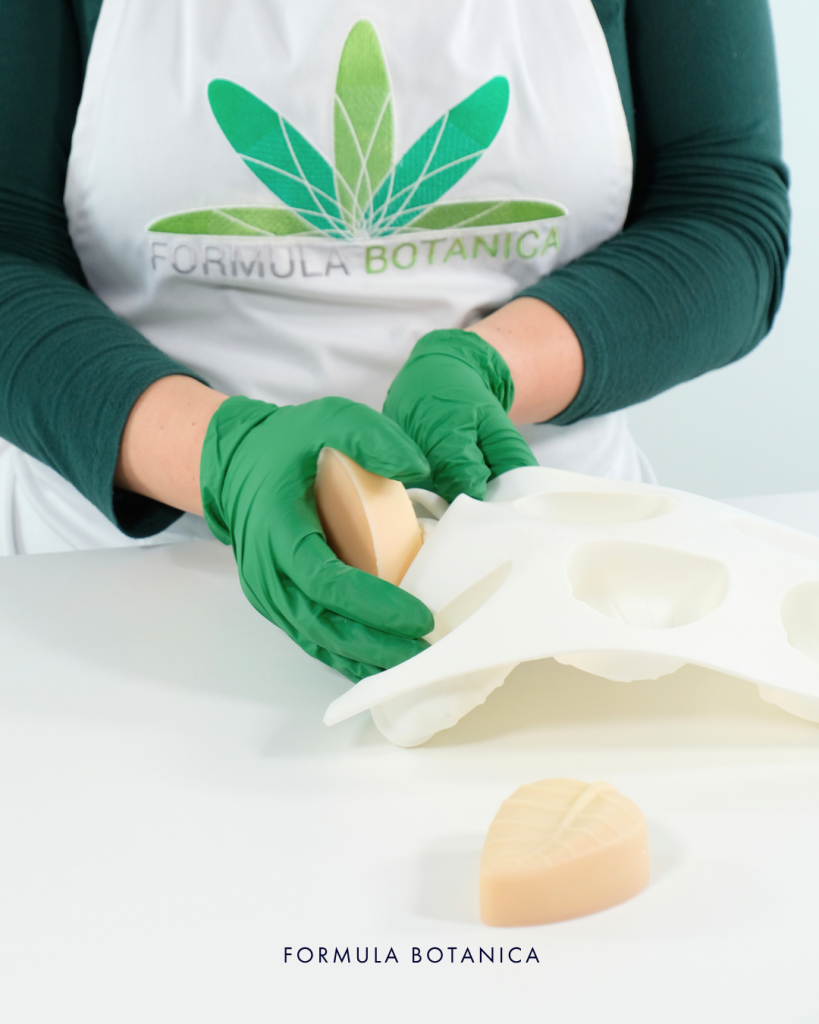
Finally, allow your bars to set. This typically takes a few hours (around 3-4 hours in our experience, but this will vary depending on your location). You can also pop your bars into the fridge to speed things up.
Once fully set and cooled, gently unmould your bars, and your homemade conditioner bars are ready to use!
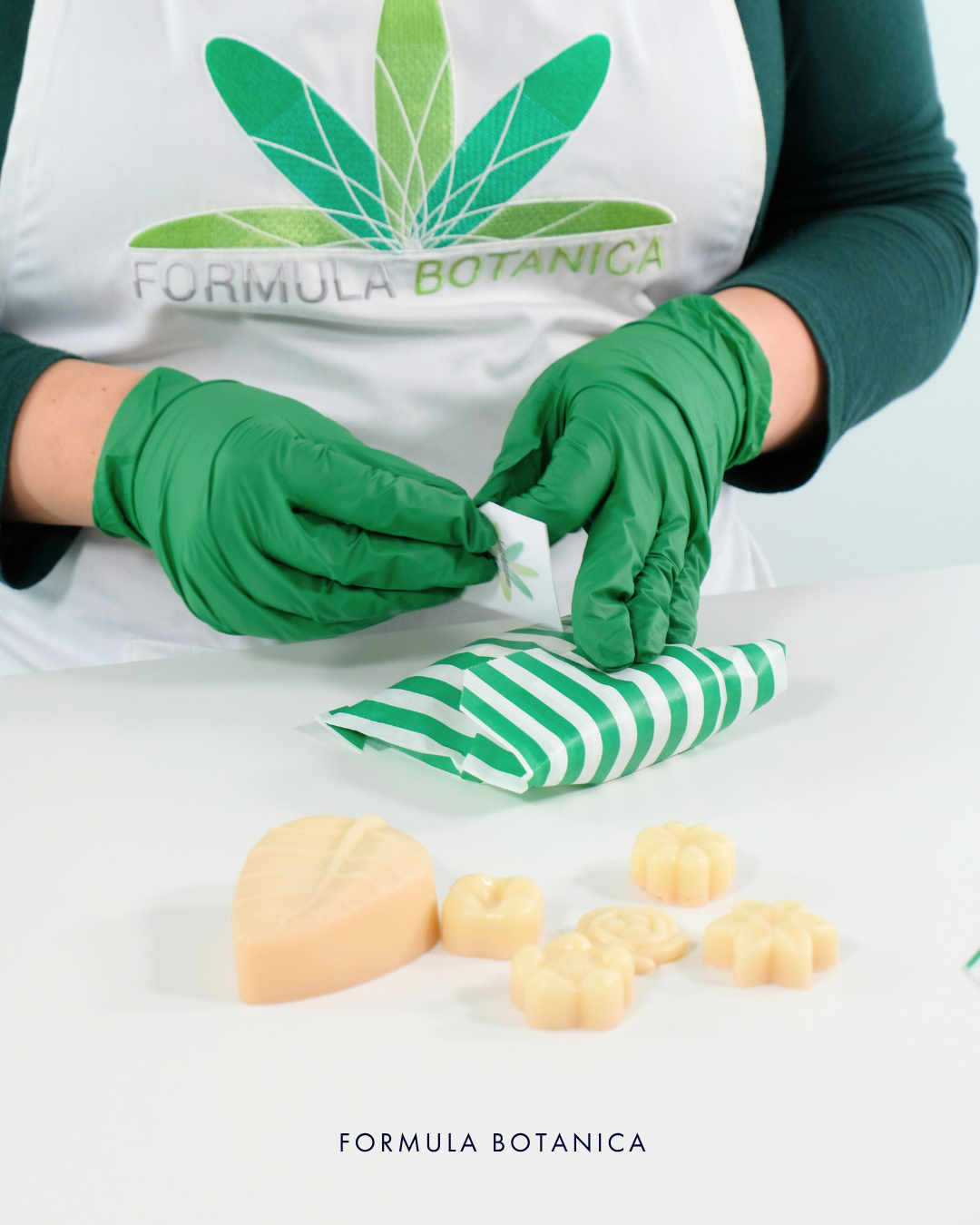
If you’d like, you could package your bars in a small box or bag and give some to family and friends, as they make a great, thoughtful, handmade gift. We used a simple striped paper bag for ours.
Because these bars are highly concentrated, a little goes a long way. One bar can last as long as 2-3 bottles of liquid conditioner. To keep them in good condition, store them in a dry place between uses – ideally on a soap dish with drainage.
How to use your conditioner bar
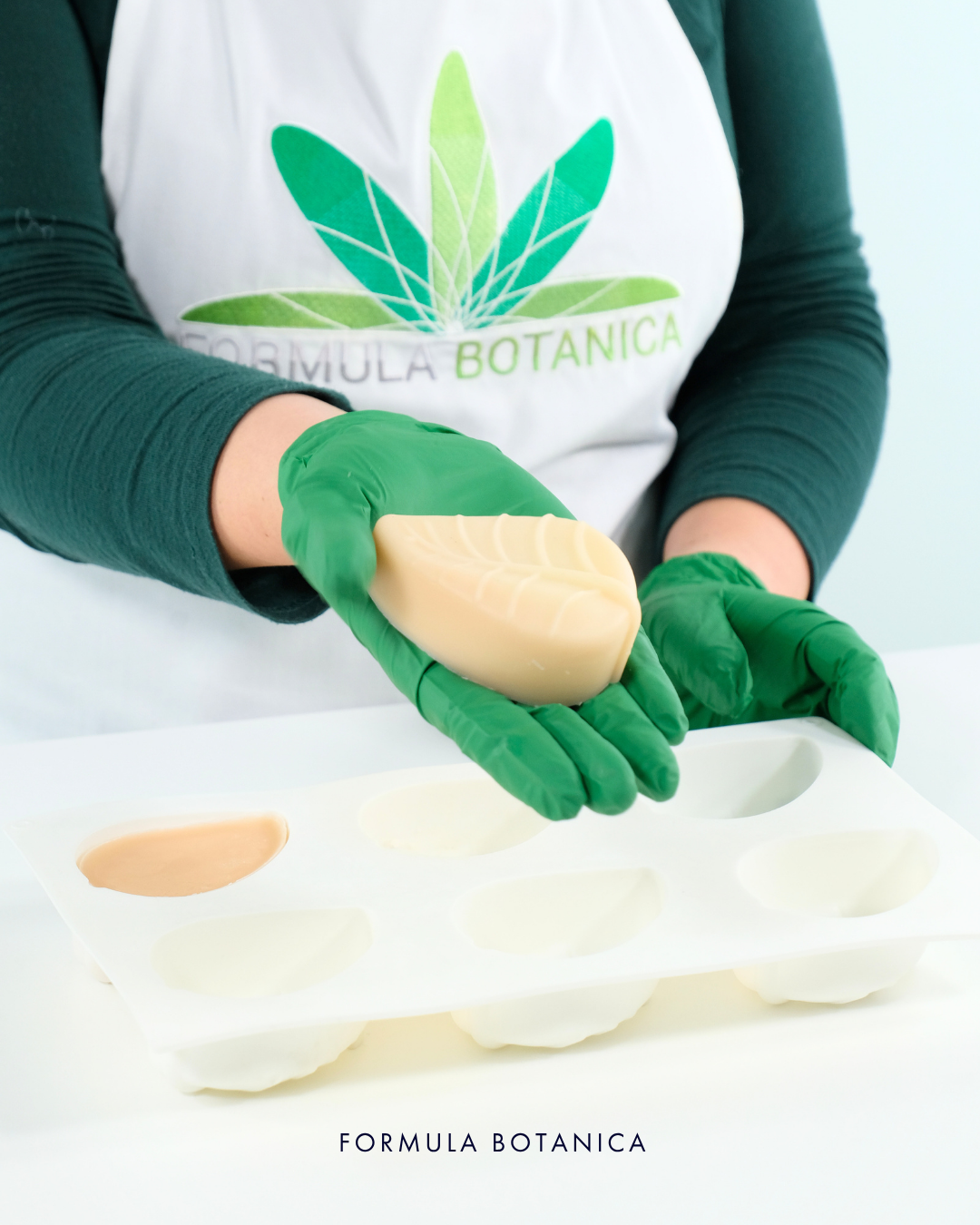
To use your conditioner bar, simply wet it and rub it between your hands until it creates a light, milky foam. Glide the bar over damp hair, focusing on mid-lengths and ends where conditioning is most needed, then rinse.
For fine or straight hair, use it as you would a traditional conditioner – apply, leave for a few minutes, and rinse thoroughly. For textured, curly, or very dry hair, it can also double as a co-wash, gently cleansing while deeply nourishing your hair.
You could also use this bar as an intensive conditioning treatment when your hair needs a little extra care.
Customisation & substitution tips
One of the best things about this bar is how customisable it is.
Once you’ve got the base formula, you can tailor it to suit your hair type, ingredient preferences, or simply what you already have at home.
For example, jojoba oil and squalane can be swapped for other oils or emollients, such as wheatgerm oil, coconut oil, or lightweight esters. As a general guide, choose richer oils for dry hair and lighter ones for fine hair. The Geogard ECT can also be substituted for another broad-spectrum option, provided it’s suitable for this type of formulation and used at the recommended rate.
You could also personalise your bar with other actives, like proteins or plant extracts, to target specific hair needs like strength, hydration, or shine, or experiment with different essential oils. Just make sure the overall ratio remains the same.
And of course, you can endlessly customise the final bar shape. Just be warned: it’s highly addictive!
Become a formulator instead of a recipe-follower
We hope you enjoyed this post and had fun making this conditioner bar! If you did, share your experience and photos on social media using #FormulaBotanica as we’d love to hear from you and see how your bars turned out (and which shapes you picked!).
You’ve just made a product that most people assume requires specialist training. And how easy was that? Imagine what else you could be making now that you have this knowledge.
No more relying on store-bought products, just products you make yourself, tailored exactly to your needs.
Join our free training to learn how to create your own customised products from scratch – and start formulating with confidence!
Suggested suppliers
Below is a list of recommended worldwide suppliers you can use to source the ingredients for this conditioner bar:
INKY Ingredients (UK)
Aroma-Zone (EU)
Aromantic (UK)
Alexmo Cosmetics (EU)
Manske (EU)
The Soap Kitchen (UK)
Ellemental (EU)
Lotioncrafter (USA)
Essential Labs (USA)
Go Native NZ (New Zealand)
Naturally Balmy (UK)
O&3 – The Oil Family (UK/EU)
Soap & More (Canada)
Handymade (EU)
FAQ
- What is a hair conditioner?
A hair conditioner is a rinse-off product you use after shampooing to nourish and condition your hair, leaving it soft, shiny, and more manageable.
- What is a solid hair conditioner?
As the name indicates, a solid hair conditioner is like a normal conditioner you use after shampooing to nourish and condition your hair, just in a solid form. If you’d like to learn how to make your own shampoo bars, check out this post.
- What are the advantages of solid cosmetics?
Solid cosmetics are concentrated products that come with a range of benefits. They’re lightweight and don’t typically require any packaging, which significantly reduces transportation costs and the environmental impact of distribution.
They also tend to have longer shelf lives, a smaller carbon footprint, and produce less waste, making them a lower impact choice compared to traditional liquid beauty products.
- What does this conditioner bar look, feel, and smell like?
This is a smooth, solid off-white/peachy yellow bar with a lovely, calming lavender and clary sage scent. It feels very conditioning when used on hair, and is suitable for all hair types. It also works great as a co-wash for textured hair types and dry hair.
- What makes this conditioner bar so special?
This conditioner bar has rich conditioning and moisturising properties that coat the hair shafts and moisturise the scalp. It’s the perfect follow-up to your shampoo or shampoo bar and makes for a great, thoughtful gift, as it suits all hair types.
Plus, with the growing demand for solid beauty and zero-waste, this conditioner is right on trend! And you can make it right at home.
- How do you use a solid conditioner?
To use a solid conditioner, wet the bar and rub it between your hands. This will create a light foam. Next, glide the bar over your hair, wait a few minutes, then rinse it out, just like a traditional conditioner. You can also use it as a co-wash if you have dry, curly, or textured hair.
- Can you customise this solid conditioner bar?
Absolutely! This conditioner bar is fully customisable. You can add active ingredients like hydrolysed proteins for extra nourishment or swap out the botanical oils, oil-soluble extracts, or essential oils to suit your unique hair needs or preferences. Just make sure the overall ratios remain the same and that all the ingredients are oil-soluble.
- Are solid conditioners waterless?
This is a myth. While solid conditioners don’t contain water in them, they require water for their production, distribution, and more. However, solid conditioners do have a lower carbon footprint and produce less waste than traditional conditioners, as they require less space and often need no packaging. They also last longer than traditional liquid products.
You can learn more about the myth of waterless beauty in this post.
FREE TRAINING
Learn how to become an
Organic Skincare Formulator
FREE TRAINING
How to become an
Organic Skincare Entrepreneur
FREE TRAINING
How to become an
Organic Skincare Entrepreneur


Miroslava is a former grading tutor at Formula Botanica. She has a Ph.D in neuroscience, expertise in biology and chemistry, and a lifelong passion for natural cosmetic formulation.