Micellar water was born out of a problem. French tap water runs hard, and hard water strips and irritates skin. Pharmacists solved this with a water-based cleanser that lifts makeup and dirt yet is gentle enough to skip the rinse. That pharmacy fix is now one of the most reached-for products in beauty routines across the globe.
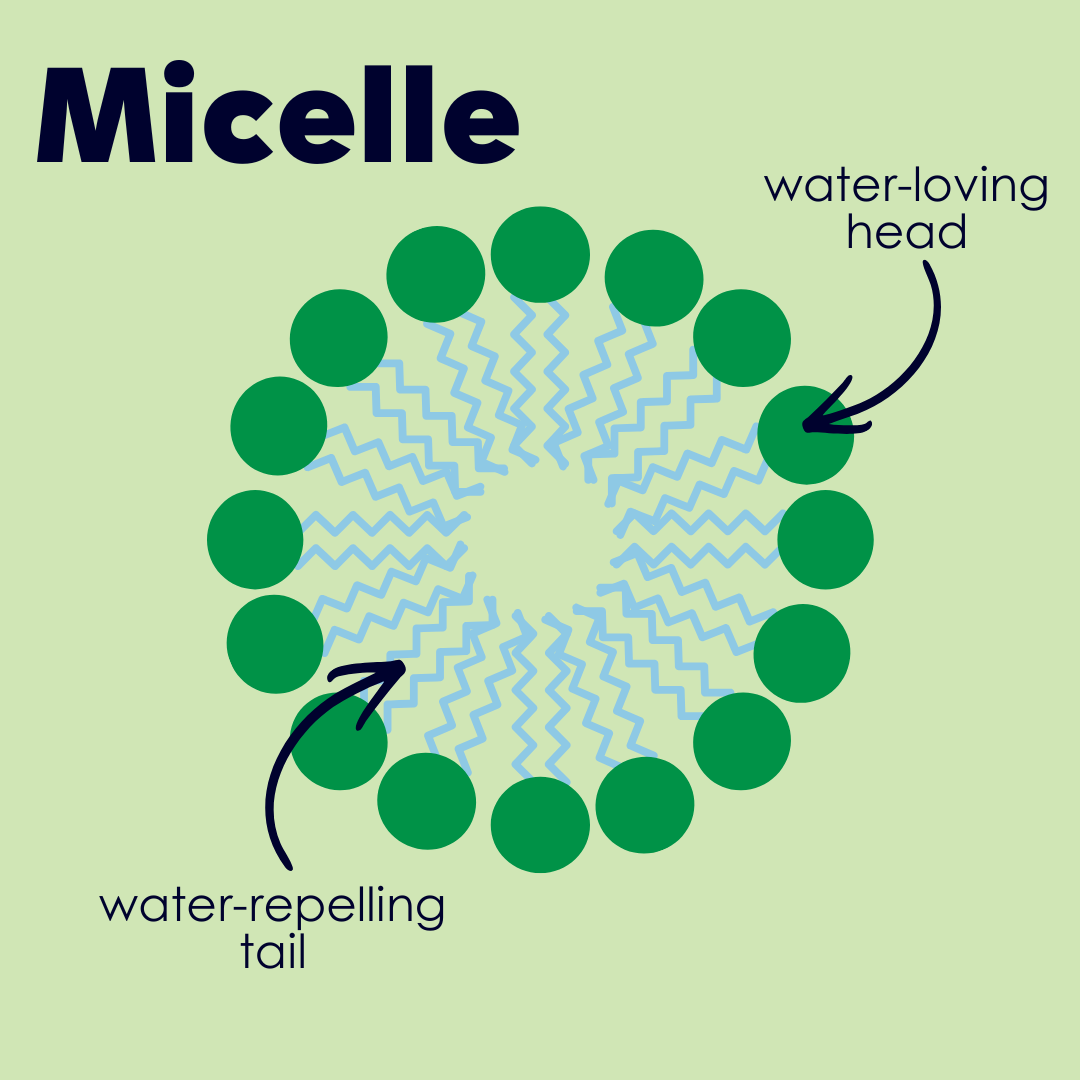 The trick lives at a molecular level. A micellar water isn’t just water and a fragrance. It’s built on micelles, tiny spheres formed by surfactant molecules that arrange themselves with oil-loving tails pointing in and water-loving heads facing out. Sweep one across your skin, and the tails grab hold of sebum and makeup while the water half keeps everything suspended and easy to wipe away.
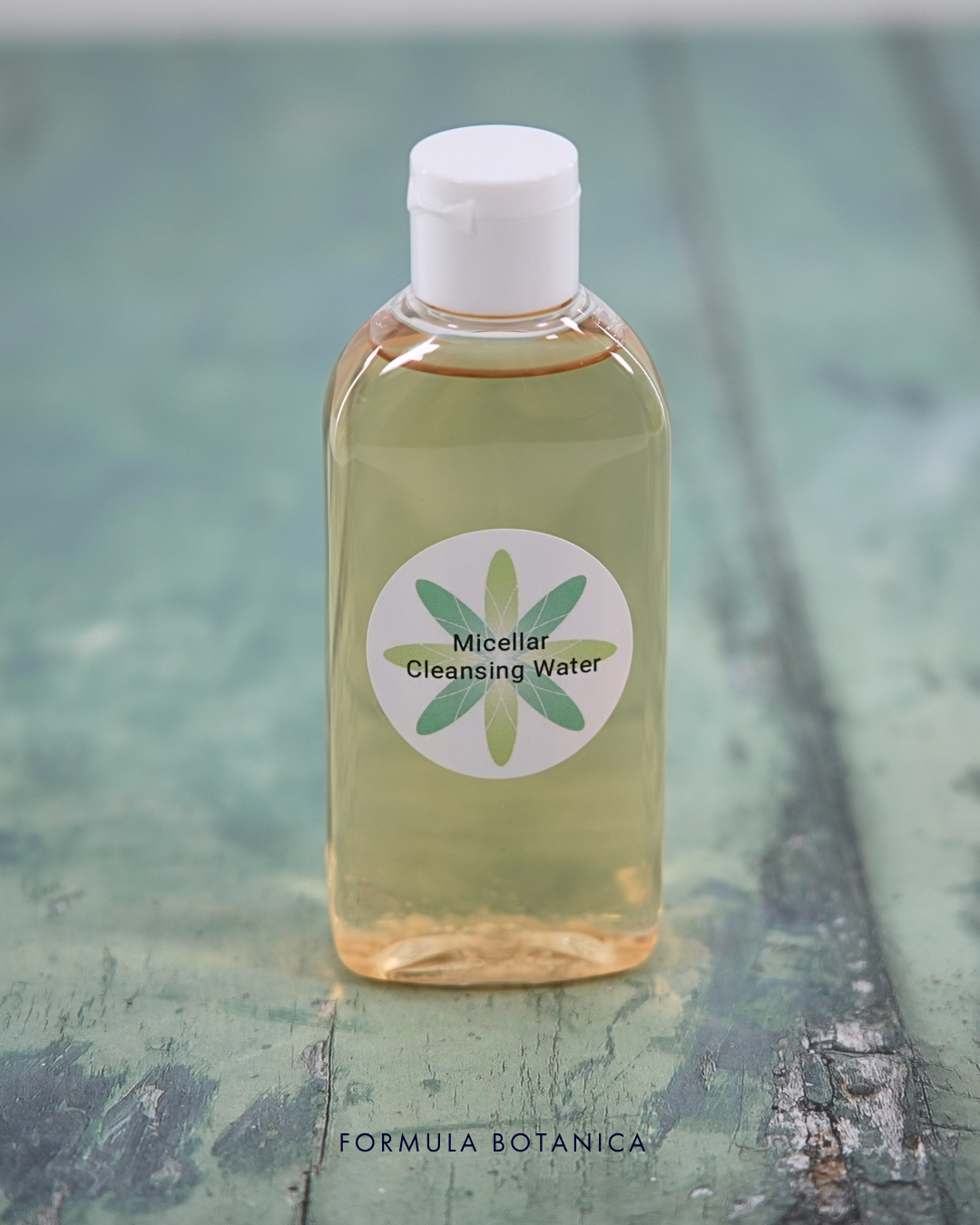
In this formula, we’ll show you how to make a micellar water with jasmine and aloe. Fragrant jasmine hydrosol gives the base its floral character, aloe juice adds a soothing, calming layer, and saffron extract steps in as the antioxidant active. It’s a formula worth trying if you want a first look at working with surfactants.
What you’ll need to make a micellar water
Equipment
Here’s everything you’ll need to make a micellar water with jasmine & aloe. You don’t need any complicated equipment or a professional lab setup to make it. All you need is:
- A digital kitchen scale to measure your ingredients
- A clean glass beaker, bowl, or measuring jug to weigh and mix your ingredients in
- A glass stirring rod or a clean spoon to stir your mix
- pH strips or a pH meter if you have one to test the pH (don’t worry, this is super easy and we’ll show you how to do it in the method!)
- A bottle to store your finished product
You’ll also need to wear disposable gloves and an apron, and tie your hair back before you start making this jasmine and aloe micellar water, to keep everything hygienic.
As for your formulation space, all you need is a clean and clear counterspace that you wipe down before starting, and sanitise with 70% isopropyl alcohol or ethanol.
You can easily find all of this equipment online or in kitchenware stores, if you don’t already have it at home. Otherwise, you can also find it on our Formula Botanica Amazon page.
Want a full breakdown of why each tool matters, and what to buy first if you’re building a kit from scratch? Check out the 11 essential tools you need to get started formulating.
Ingredient shopping list
To make your micellar water, you’ll need:
- Jasmine hydrosol (preserved) — the direct answer to that French hard water problem, Jasmine hydrosol is a softer, naturally scented water. Look specifically for a preserved hydrosol rather than an unpreserved one, since preservation is what keeps the scent and stability intact over time. Tip: If jasmine isn’t your scent, feel free to swap it for another floral hydrosol, like rose or orange blossom (neroli).
- Aloe vera juice — a preserved liquid form rather than gel straight off the plant, chosen because it soothes without interfering with the jasmine scent. More on how aloe behaves in formulas like this one in our guide to aloe vera in skincare.
- Dermofeel® PA-3 — this is a naturally-derived ingredient called a chelator that binds any trace minerals naturally present in water-based ingredients, protecting the preservative system and keeping the formula stable for months. This doesn’t mean our ingredients are contaminated with metals; it’s just a normal part of cosmetic chemistry. Tip: If you can’t find Dermofeel® PA-3, you can replace it with Sodium Phytate.
- Panthenol (Provitamin B3) — moisturises and promotes skin suppleness. This ingredient is great for relieving dry skin.
- Sorbitol — a type of sugar alcohol naturally found in fruits. Works alongside panthenol and sodium lactate to reinforce that hydrating finish.
- Sodium lactate — naturally found in skin where it helps maintain the skin’s own moisture balance, and does the same job here as a humectant.
- Saffron extract — better known as one of the world’s most expensive kitchen spices, saffron carries the antioxidant load in this formula, which is very beneficial to the skin, as it helps prevent free radical damage, which can lead to premature ageing. Tip: If you can’t find saffron where you are, you can replace it with another extract of your choice like chamomile, calendula, or cucumber. Check what’s available from ingredient suppliers near you to really make this formulation your own.
- Sodium Cocoyl Glutamate — a coconut and fermented sugar-derived surfactant, and the ingredient actually doing the cleansing work here. Gentle enough for sensitive skin while still lifting makeup and dirt.
- Dermosoft® 1388 eco — the preservative, keeping the formula safe and stable across its shelf life. Tip: If you’d like to learn more about why preservation is so important and how to safely preserve your natural products, check out this post: Everything you wanted to know about natural preservatives
- Lactic acid — you’ll use this to adjust the pH. All you need is a tiny drop, so just get the lowest quantity you can.
How to make a jasmine & aloe micellar water, step-by-step
- Makes: 100g
- Level: Beginner-friendly
- Estimated Time: 5 minutes
- Method: One pot, cold-process (no heat required)
| Phase | Ingredients | INCI | Weight (g) |
| A | Jasmine hydrosol | Jasminum Officinale Flower Water | 60.00 |
| A | Aloe juice | Aloe Barbadensis Leaf Juice, Citric Acid, Sodium Benzoate, Potassium Sorbate | 23.90 |
| A | Dermofeel® PA-3 | Sodium Phytate, Aqua, Alcohol | 0.10 |
| B | Panthenol/Pro-vitamin B5 | Panthenol | 2.00 |
| B | Sorbitol | Sorbitol | 2.00 |
| B | Sodium lactate | Sodium Lactate | 2.00 |
| B | FSS Phyto-Biotics saffron extract | Water & Crocus Sativus Meristem Cell Extract | 2.00 |
| C | Sodium Cocoyl Glutamate (SCG) | Sodium Cocoyl Glutamate | 5.00 |
| D | Dermosoft® 1388 eco | Glycerin, Aqua, Sodium Levulinate, Sodium Anisate | 3.00 |
| E | Lactic acid (or citric acid) | Lactic Acid / Citric Acid | q.s.* (*as needed) |
| Total: 100.00 |
Step-by-step method:
Here’s how to make a micellar water with jasmine & aloe, step-by-step. The whole process is really straightforward, as you mix everything into one recipient and don’t need to heat anything. It’s as easy as it gets!
- Step 1: Weigh the base ingredients
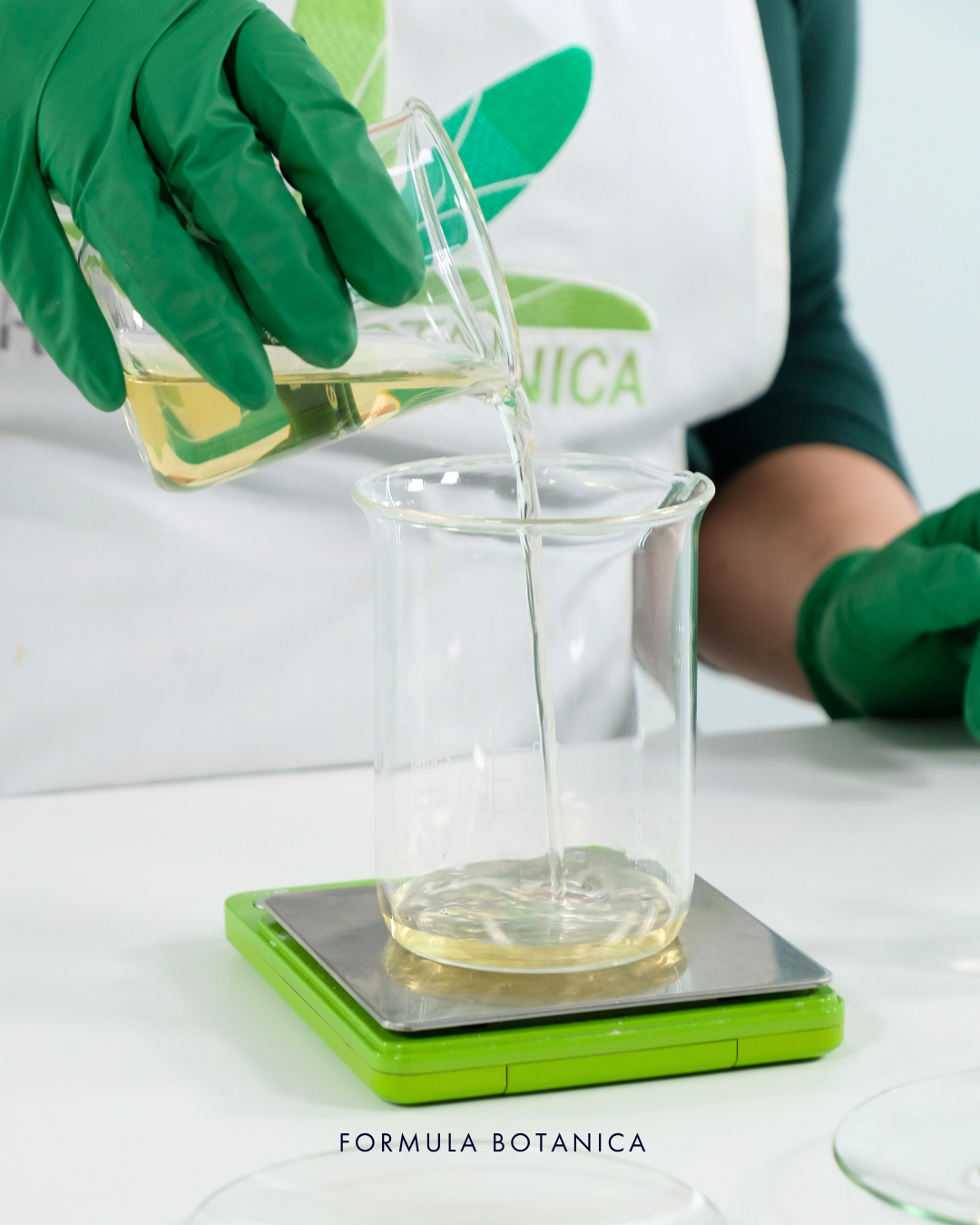 Let’s start with the base. Start by weighing your jasmine hydrosol, aloe vera juice, and Dermofeel® PA-3 (or Sodium Phytate) in a clean beaker, bowl, or measuring jug, taring the scale after each addition using the ‘tare’ button to reset the scale.
- Step 2: Weigh the humectants + add the saffron extract
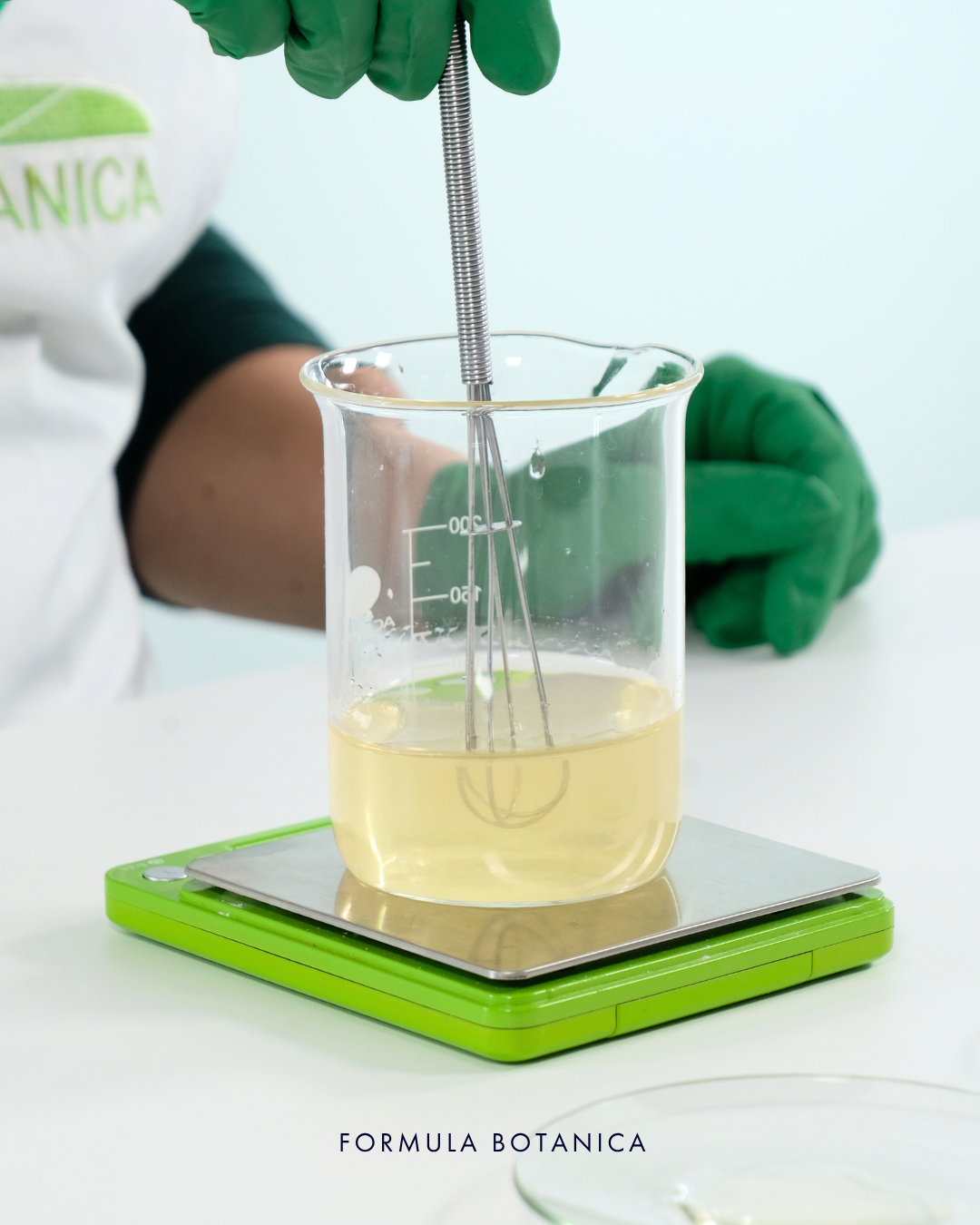 Next, add your humectants to your blend, taring the scale after each addition. So that’s your panthenol, sorbitol, and sodium lactate.
Then, add the saffron extract and stir well.
- Step 3: Add the surfactant (SCG) and preservative + check and adjust the pH
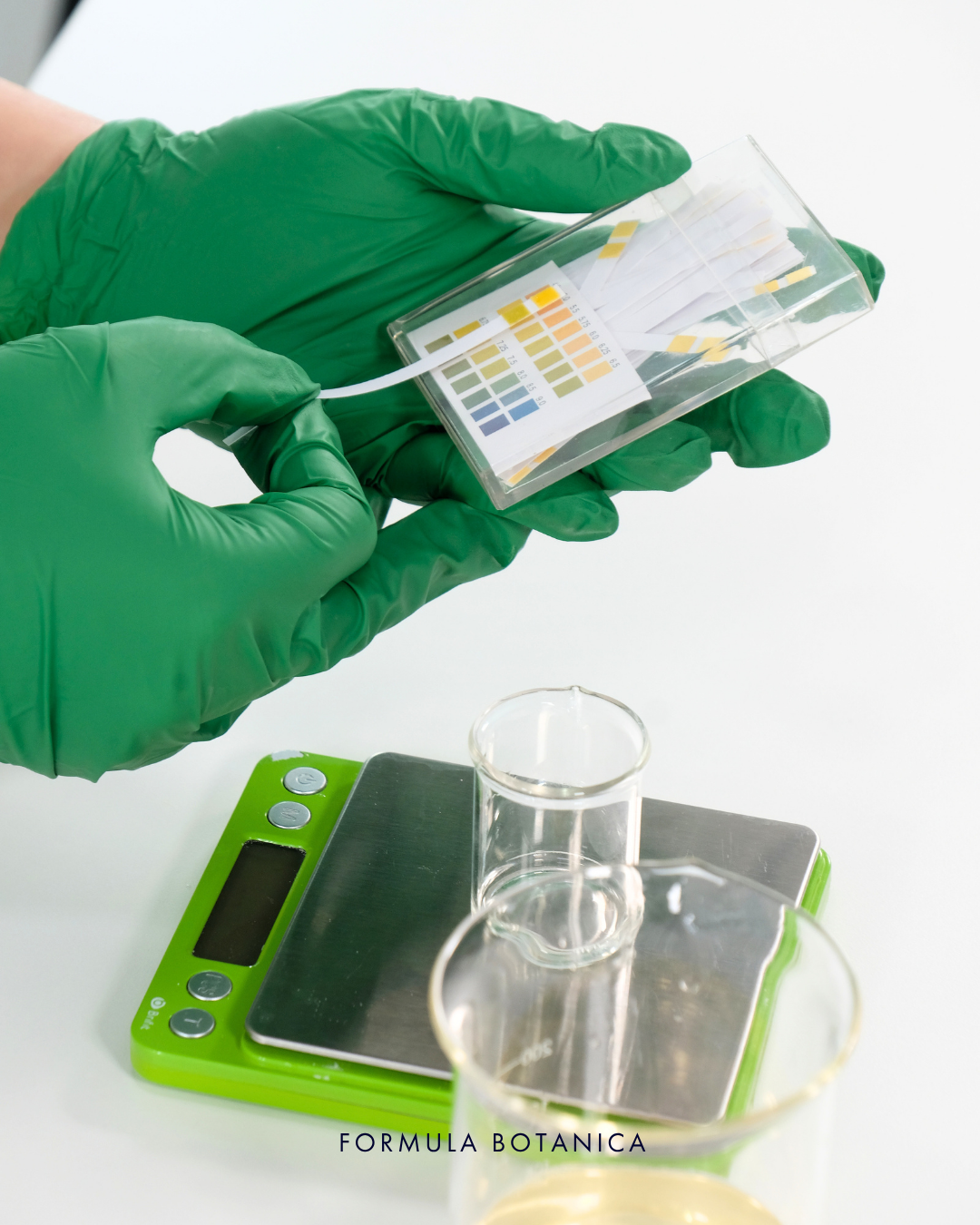 Next, add the Sodium Cocoyl Glutamate to the mix and stir well before adding Dermosoft® 1388 eco. Give it one last stir.
Before you bottle up your formulation, you need to make sure you check the pH. Don’t worry, this is super straightforward.
To measure the pH, simply dip a pH strip into a small bit of the micellar water, compare the colour to the chart (you want it around 5.2 to 5.5), and you’re done!
If the number is higher than 5.5, just add a tiny drop of lactic acid (or citric acid) and test again. If you’d like to learn more about why it’s important to test pH when formulating, check out this post:
What can go wrong if you don’t control your formulation’s pH?
- Step 4: Package & label
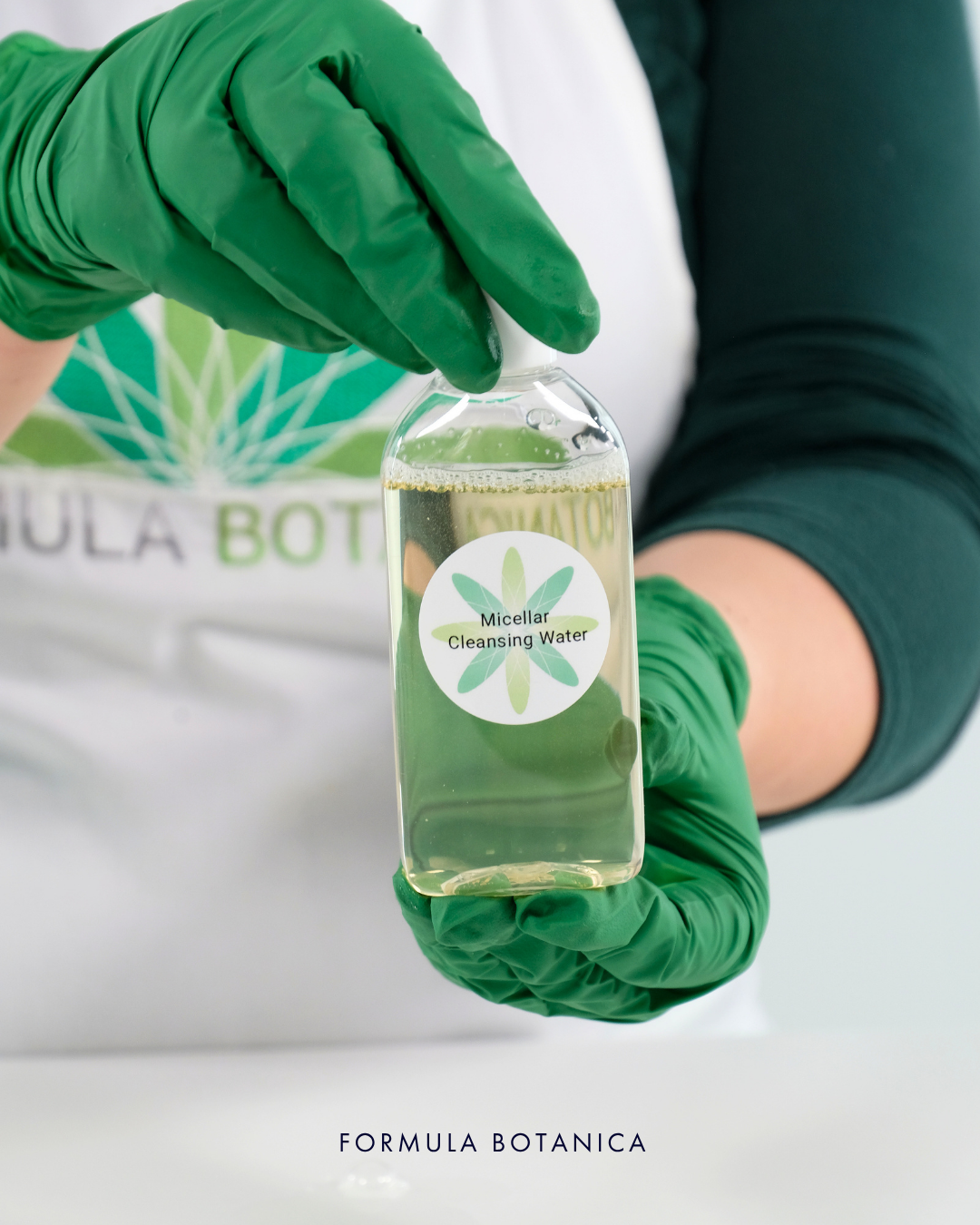
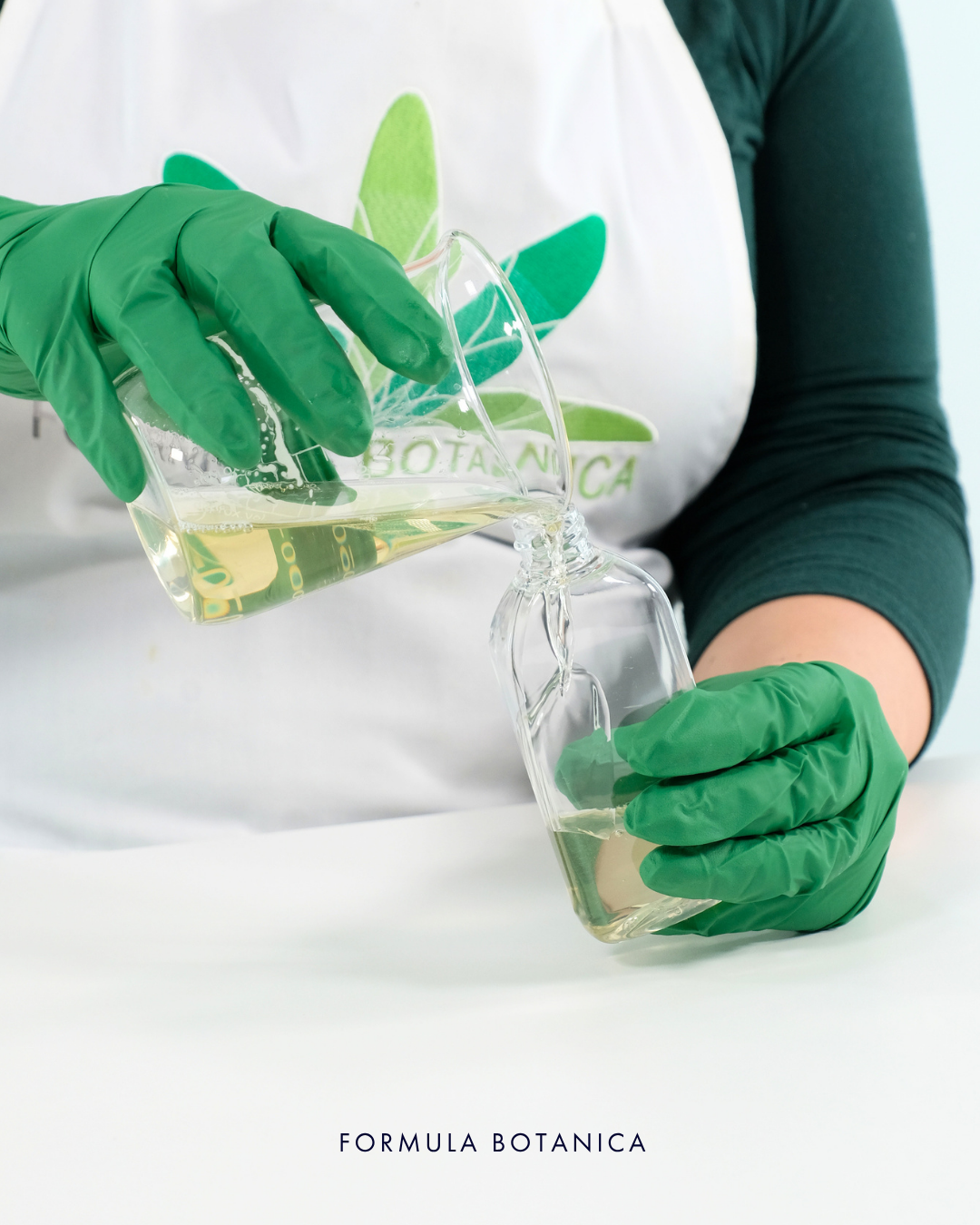 All that’s left to do is pour your mix into a bottle.
If you see any bubbles, don’t worry; they’ll settle in a matter of minutes. Next, label your bottle with the name and date, and that’s it!
You’ve just made a professional-quality micellar water in less than 5 minutes. How easy and satisfying was that?
Using your micellar water
Now that you’ve made your very own jasmine and aloe micellar water, you’re probably super eager to try it, and we totally get it!
This micellar water is gentle enough for daily use and suitable for all skin types. Store it in a cool place, and it’ll keep beautifully for months.
To use, simply pour a small amount onto a cotton pad and gently wipe across your face to remove makeup and daily grime. The micelles will do all the work for you, grabbing onto impurities and lifting them away while the aloe and other ingredients will leave your skin feeling soft and lovely.
But the best thing about this micellar water is that you can endlessly customise it. More on this below!
Notes & customisation tips from the Formula Botanica team
Before we wrap up this post, here are some formulation notes and customisation tips from the Formula Botanica team, and just some general thoughts about why we love this jasmine & aloe micellar water!
First of all, this micellar water is incredibly easy to make, and that’s what our Cosmetic Scientist Natalie loves about it.
This formulation is a simple blend of hydrosols, humectants, and some actives, and is ideal for beginners with no experience (or even advanced formulators!). You can make it using only a bowl and a spoon; you don’t need any fancy or expensive equipment. It also has a lovely jasmine aroma.
In Natalie’s own words, “This is super easy to make. It’s just cold mixing ingredients, and none of the ingredients are difficult to dissolve. It also has a lovely light jasmine aroma which is not overpowering when used on the face. And saffron is obviously the star of the show.”
FAQs
Do I need a preservative to make a micellar water at home?
Yes. Because it’s water-based, it’s vulnerable to mould, yeast and bacteria without one. Choose a preservative that works in the 5.2–5.5 pH range this formula sits in, and always challenge test before selling.
Is PHMB safe in micellar water?
PHMB (polyaminopropyl biguanide) is a preservative commonly found in store-bought micellar waters. In the EU, it’s classified as a Category 2 suspected carcinogen. This is a precautionary classification, applied when study data raises a question but isn’t conclusive enough to confirm or rule out a cancer link. The EU Scientific Committee on Consumer Safety has also limited its concentration in cosmetics to 0.1%. For any future updates on PHMB, refer to the CosIng database as ingredients are constantly being reviewed in light of new research.
This formula doesn’t use PHMB. It’s preserved instead with Dermosoft 1388 Eco, a preservative that meets safety and efficacy standards without carrying the same regulatory flags.
Can micellar water replace a cleanser?
It can replace a first cleanse or double-cleanse step. For heavier makeup or sunscreen, following with a proper cleanser is still worth doing.
Is micellar water the same as toner?
No. Micellar water removes makeup and impurities, while toner is a follow-up step that balances and preps skin after cleansing.
Does homemade micellar water need to be rinsed off?
No, that’s the entire point of a micellar formula. The micelles let you wipe everything away without water.
Is micellar water suitable for oily or acne-prone skin?
Yes. This formula is alcohol-free and won’t strip skin the way some toners can.
Where can I learn how to formulate professionally?
Join us at Formula Botanica, where tens of thousands of students and followers have taken our award-winning online courses to learn how to formulate organic skincare and haircare for themselves or to sell. Start with our free training and learn the secrets behind making professional-grade products from the comfort of your home!
Your next steps
If you enjoyed making this, here are ten more beginner-friendly formulas worth trying: 10 best beauty products to make at home
This micellar water is exactly the kind of formula you’ll learn to build and adapt inside our courses at Formula Botanica, the world’s leading online organic cosmetic formulation school. Formulation is a skill anyone can learn, no science background needed. It opens the door to making skincare, haircare, and cosmetics you fully understand and can shape around your own needs.
Our free training is the easiest place to start if you want to go beyond this one recipe and learn the fundamentals behind it.


Timi was a key member of the Formula Botanica team from 2015 to 2020; first as our Education Manager and then as Head of Formulation & Research. You can find out more about the Formula Botanica team here.