Long before charcoal turned up in beauty aisles, it was already trusted to pull things out of where they didn’t belong. Ancient Egyptian physicians used charred wood to treat wounds. Hospitals still keep activated charcoal on hand today to treat certain poisonings, because it’s so good at binding to substances and holding onto them. This trapping process is called adsorption. Charcoal has an enormous, porous surface area that acts like a molecular magnet, catching molecules against its surface rather than absorbing them the way a sponge would.
That same trapping action is what makes charcoal such an interesting ingredient to formulate with. In a cleansing balm, it adds a mild binding effect of its own, on top of the oil cleansing already happening underneath it. Oil cleansing runs on a simple bit of chemistry. You massage an oil or balm onto dry skin, and it dissolves the oil-soluble dirt, sebum, and makeup that build up throughout the day, because like dissolves like.
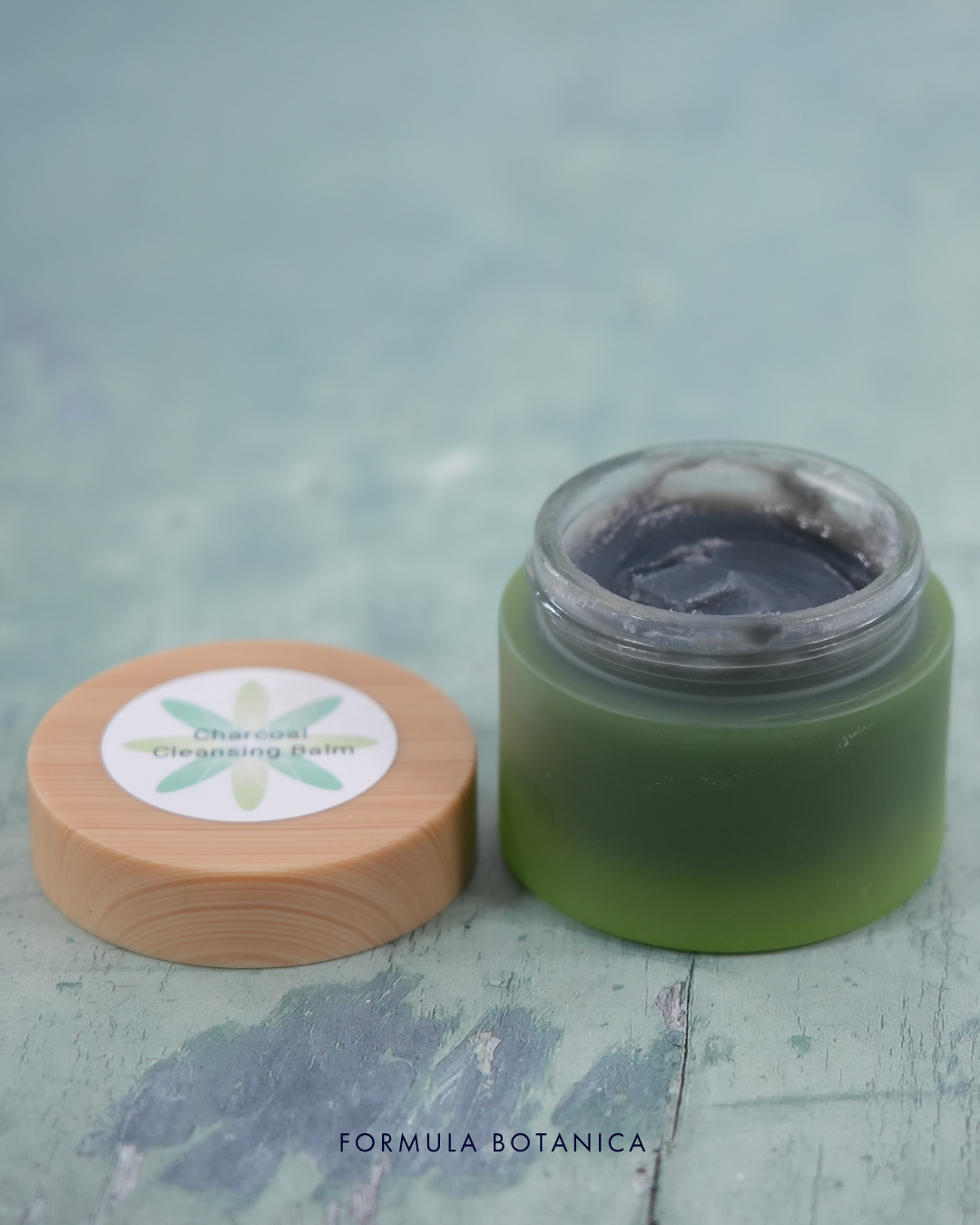
Put the two together, and you get a formula that’s as fun to make as it is to look at. Melted down, our butters and oils start out a warm gold. Stir the charcoal through, and the whole batch turns a deep, glossy black in seconds, one of those small moments in formulating that never quite stops being satisfying.
In this formula, we’ll show you how to make a charcoal cleansing balm that melts into the skin, lifts away makeup and daily grime, and leaves a soft, conditioned finish behind, while doubling as a genuinely useful introduction to anhydrous (oil-based) formulating. You’ll also see how butters, waxes, and oils behave together, and how just one small adjustment can change the finished texture.
What you’ll need to make a charcoal cleansing balm
Equipment
Here’s everything you’ll need to make a charcoal cleansing balm. You don’t need any complicated equipment or a professional lab setup to make it. All you need is:
- A digital kitchen scale to measure your ingredients
- Two heatproof glass beakers or jars (one for your butters, one for your oils)
- A glass stirring rod or a clean spoon to stir your mix
- A water bath (a saucepan with a few centimetres of water works well)
- Jars to package your finished balm
You’ll also need to wear disposable gloves and an apron, and tie your hair back before you start making this charcoal cleansing balm to keep everything hygienic. We also recommend wearing a face mask for this formulation since SCI is irritating to the airways if inhaled. Activated charcoal is also very fine, and you don’t want to breathe it in while you’re weighing or stirring it. It will also happily stain your countertop, your clothes, and your hands if you let it, so be sure to protect your clothes and work surface.
As for your formulation space, all you need is a clean and clear counter space that you wipe down before starting, and sanitise with 70% isopropyl alcohol or ethanol.
You can easily find all of this equipment online or in kitchenware stores, if you don’t already have it at home. Otherwise, you can also find it on our Formula Botanica Amazon page.
Want a full breakdown of why each tool matters, and what to buy first if you’re building a kit from scratch? Check out the 11 essential tools you need to get started formulating.
Ingredient shopping list
To make your cleansing balm, you’ll need:
- Cupuaçu butter — in the same botanical family as cocoa butter, but softer and lighter on the skin. Its balanced fatty acid profile makes it deeply nourishing without feeling heavy.
- Cocoa butter — gives the balm its solid structure at room temperature and adds a rich, conditioning feel as it melts into the skin.
- Myrica wax — a plant-derived wax made from myrica berries. It firms up the texture and helps the finished balm glide smoothly across the skin.
- Lecithin — enhances texture and feel.
- Passionfruit seed oil — brings antioxidants to the formula along with a subtle, fruity scent.
- Macadamia nut oil — known as a vanishing oil, since it absorbs into the skin quickly without leaving a greasy residue behind.
- Activated charcoal powder — disperses through the oil phase to give the balm its colour. Its porous surface can adsorb some oil-soluble impurities, helping to lift excess sebum and certain environmental pollutants from the skin. It won’t fully dissolve, which is expected.
- Vitamin E (Tocopherol) — an antioxidant that also helps slow down rancidity in the oils and butters over the balm’s shelf life.
- Alpha-bisabolol — a naturally occurring compound derived from chamomile and candeia trees. It’s valued in skincare for its anti-inflammatory and calming properties, which make it a popular choice for sensitive or easily irritated skin.
- Cedarwood essential oil and sweet orange essential oil — together they build an earthy, citrus scent. Swap either for a different essential oil blend if you’d prefer a different scent profile.
- Sodium Cocoyl Isethionate (SCI) powder — optional. A gentle, coconut-derived surfactant that helps the balm emulsify with water, allowing it to rinse away more readily and leave less oily residue on the skin. More on this in the method below!
How to make a charcoal cleansing balm, step-by-step
- Makes: 100g
- Level: Beginner-friendly
- Estimated time: 20 minutes, including melting time
- Method: Melt and pour, water bath required
| Phase | Ingredients | INCI | Weight (g) |
| A | Cupuaçu butter | Theobroma Grandiflorum Seed Butter | 25.00 |
| A | Cocoa butter | Theobroma Cacao (Cocoa) Seed Butter | 10.00 |
| A | Myrica wax | Myrica Cerifera (Bayberry) Fruit Wax | 7.00 |
| A | Lecithin | Lecithin | 2.00 |
| B | Passionfruit seed oil | Passiflora Edulis Seed Oil | 32.00 |
| B | Macadamia nut oil | Macadamia Ternifolia Seed Oil | 19.95 |
| B | Activated charcoal powder | Charcoal Powder | 0.75 |
| C | Sodium Cocoyl Isethionate (SCI) | Sodium Cocoyl Isethionate | 2.00 |
| D | Vitamin E | Tocopherol | 0.50 |
| D | Alpha-bisabolol | Bisabolol | 0.30 |
| D | Cedarwood essential oil | Cedrus Atlantica Bark Oil | 0.20 |
| D | Sweet orange essential oil | Citrus Sinensis (Orange) Peel Oil | 0.30 |
| Total: 100.00 |
Step-by-step method:
Here’s how to make a charcoal cleansing balm, from melting your butters through to pouring your finished batch.
- Step 1: Melt the butters, wax, and lecithin (Phase A)
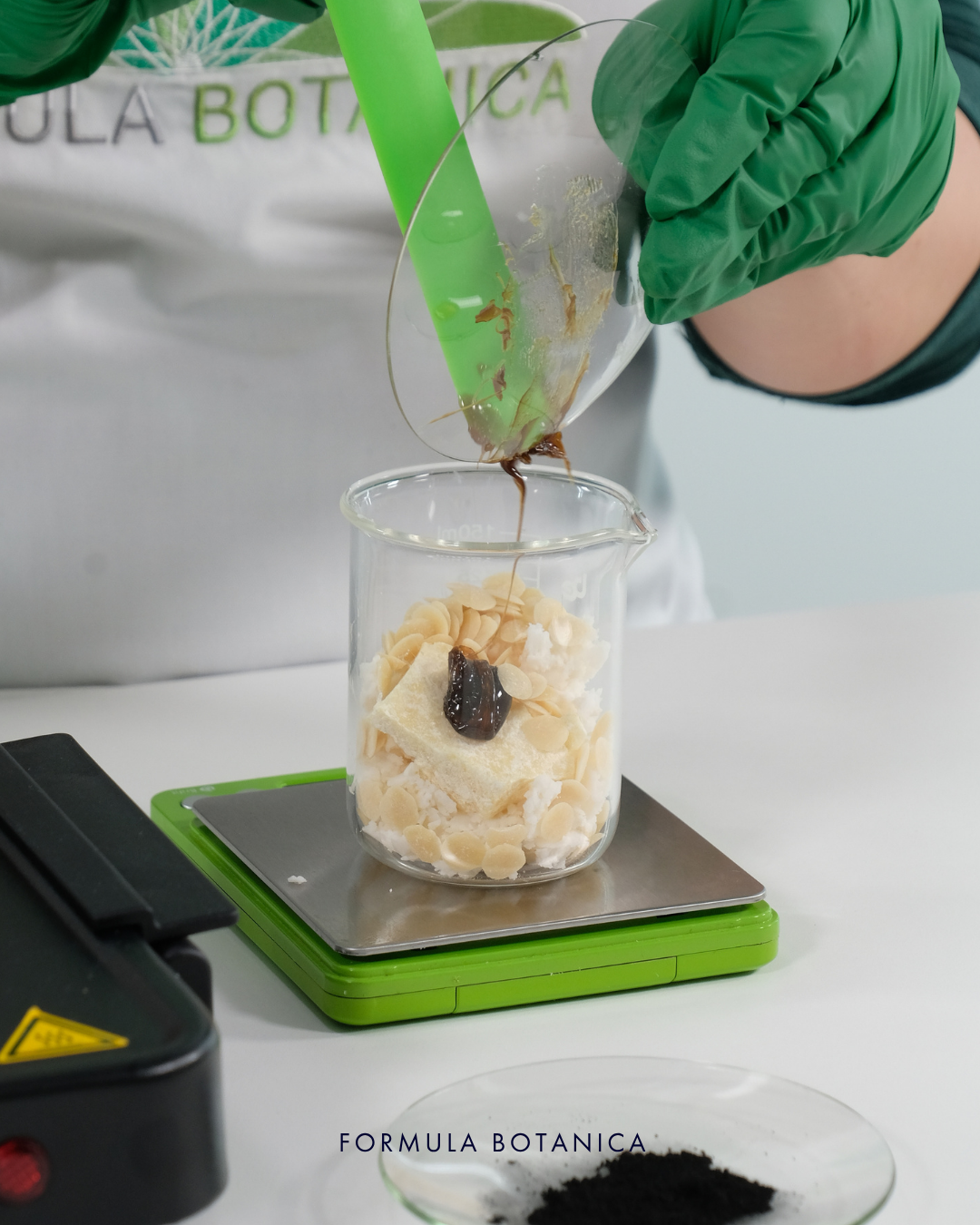 Weigh your cupuaçu butter, cocoa butter, myrica wax, and lecithin into a heatproof beaker, taring the scale after each addition. Place the beaker into your water bath and let everything melt together slowly until it reaches 60-65°C.
- Step 2: Blend the oils and charcoal
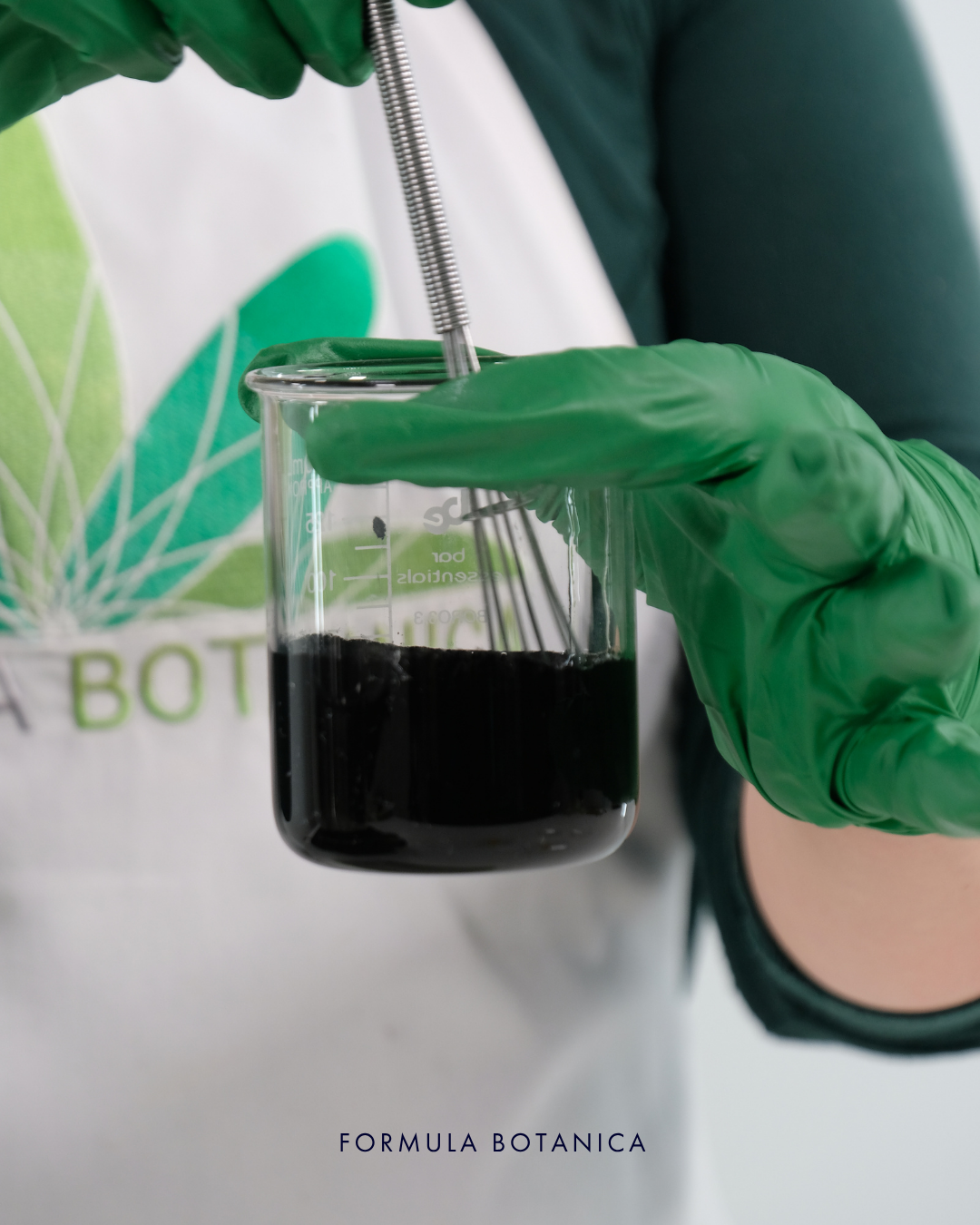 While Phase A melts, weigh your passionfruit seed oil and macadamia nut oil into a second beaker. Add the activated charcoal powder and stir it through. It won’t dissolve, but dispersing it now stops it from clumping once it meets the butters.
- Step 3: Combine and add the finishing touches
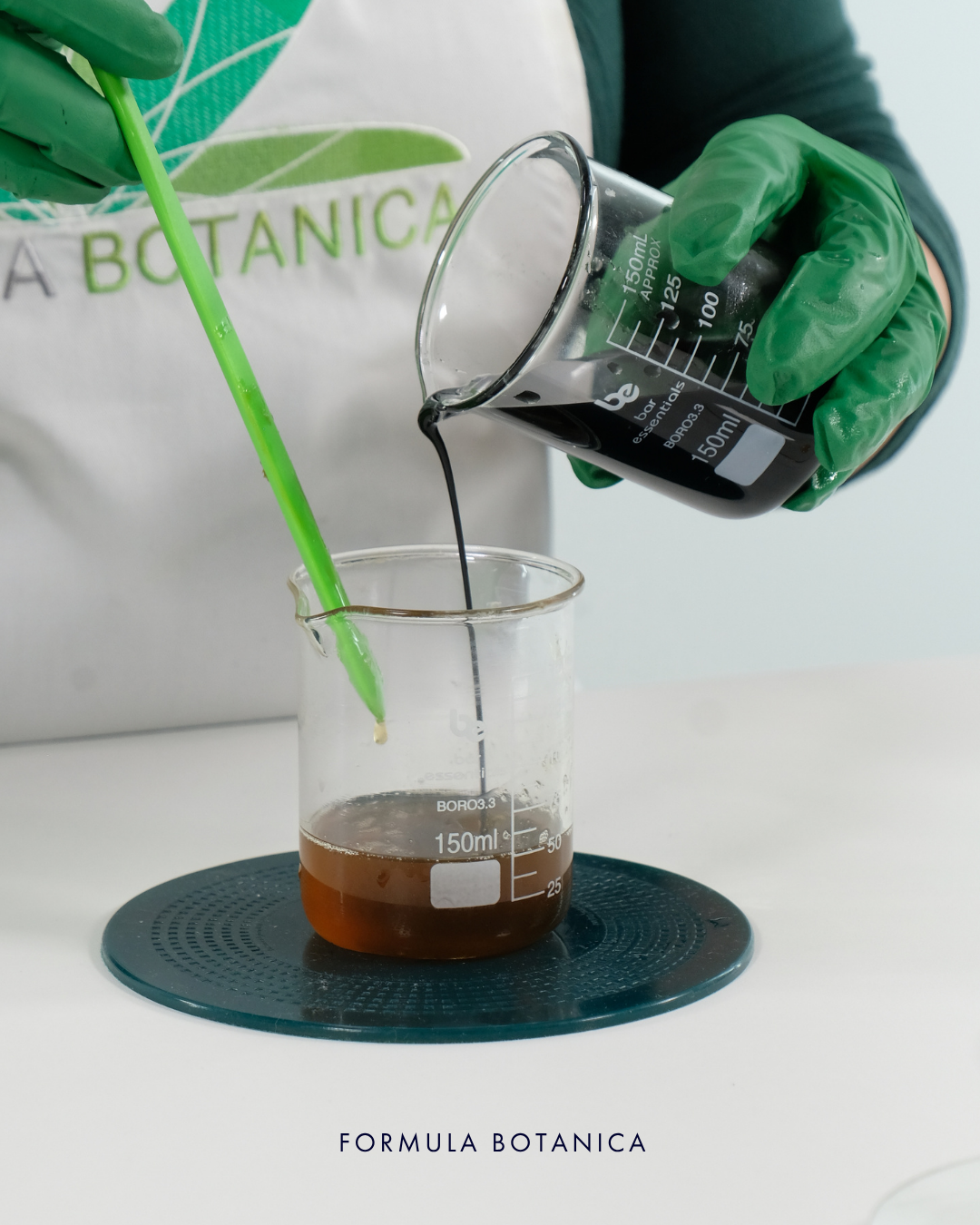 Once Phase A has fully melted, remove it from the water bath and let it cool to 45-50°C.
Want a version that rinses away completely? This is the point where you’d add your SCI. Weigh out 2g of Sodium Cocoyl Isethionate powder and add it to your melted ingredients. It disperses into the mixture, and it’s what changes the balm from a rich, conditioning cleanser into one that emulsifies with water and washes off cleanly. Since SCI adds weight, reduce the macadamia oil to 19.95g to accommodate the additional ingredient. If you’re skipping the SCI for a final formulation that leaves a soft, conditioned finish behind, increase your macadamia oil to 21.95g.
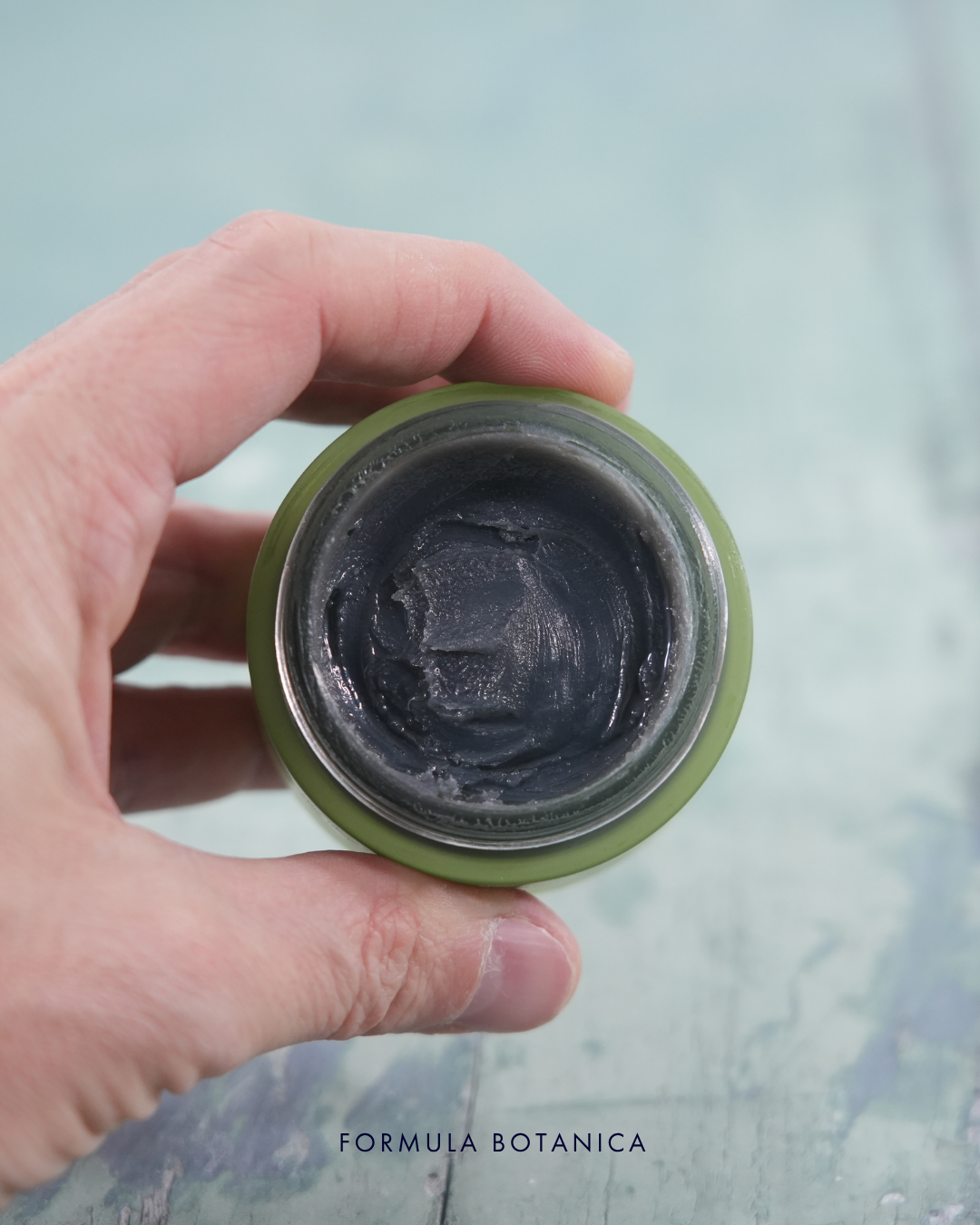
Pour the oil and charcoal blend from Phase B into it and stir. You’ll see the mixture turn from golden to a deep, even black.
Add your vitamin E, alpha-bisabolol, cedarwood essential oil, and sweet orange essential oil, and stir well.
- Step 4: Pour and package
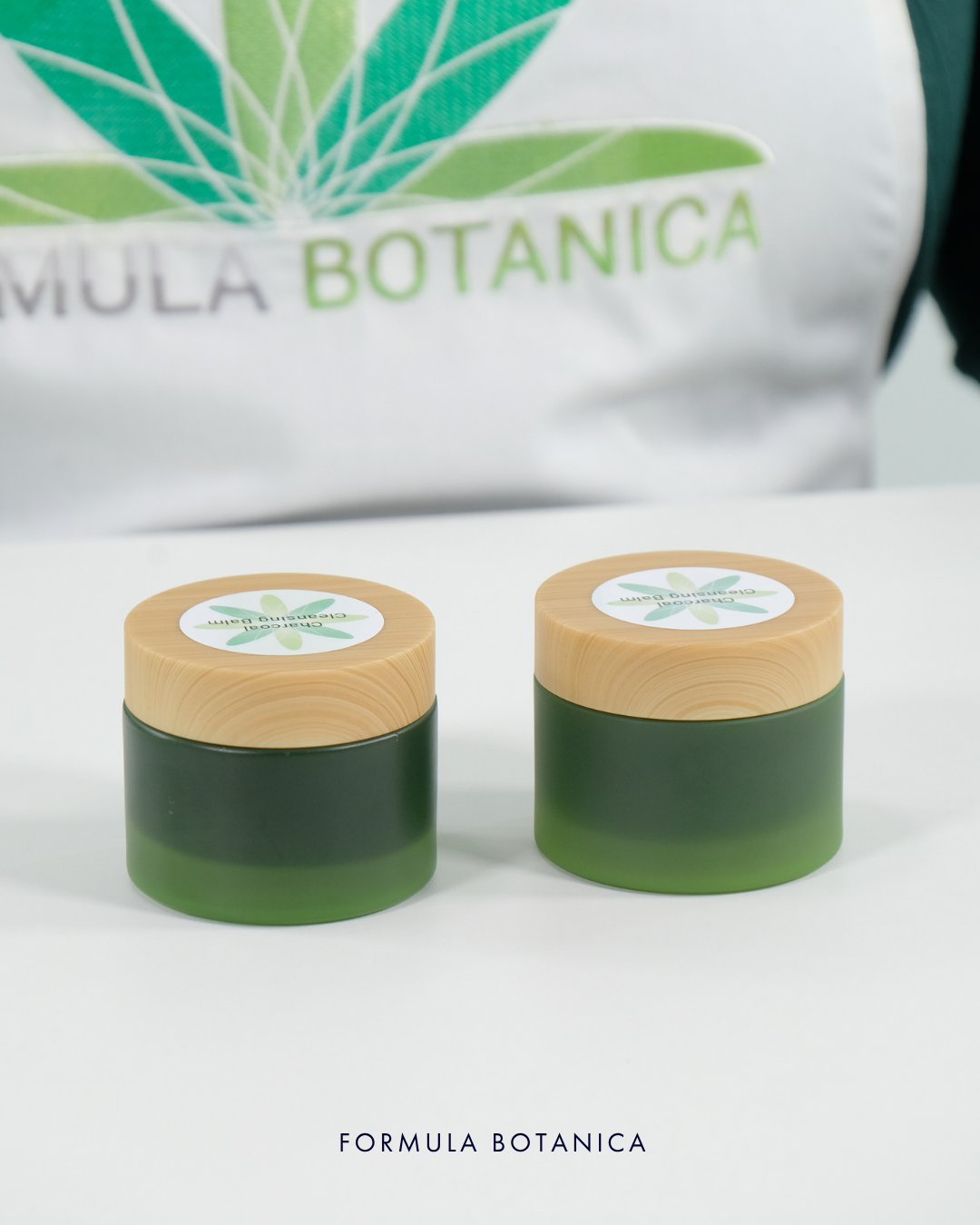 Stir continuously as the balm cools so the charcoal (and SCI powder, if you’ve added it) doesn’t settle at the bottom of the beaker. Once the balm has cooled slightly but is still pourable, pour the balm into your jars and leave it to set.
Now you know how to make a charcoal cleansing balm! We recommend trying both versions so you can see which formulation you prefer.
Using your cleansing balm
To use your cleansing balm, massage a small amount into dry skin. Add a splash of warm water and work it in. What happens next depends on which version you made.
The version made without SCI turns into a rich oil that you can wipe away with a warm, damp cloth. It leaves a light, conditioning residue behind, which makes it a lovely first step in a double cleanse, or a treat on its own for dry or mature skin.
The version made with SCI turns milky and rinses away completely with water, leaving skin feeling clean rather than coated. That makes it a better fit if you have oilier skin, or if you want a balm you can use as your only cleanser rather than as the first step of a double cleanse.
Both versions are suitable for all skin types. Store either balm in a cool, dry place, and it will keep well for months.
Notes & customisation tips from the Formula Botanica team
Cleansing balms are one of the most forgiving anhydrous formulas you can make, and small tweaks change the finished texture a surprising amount. A few things worth knowing as you experiment:
Avoiding a greasy finish. Balance heavier butters with dry, fast-absorbing oils like macadamia or passionfruit seed oil, the way this formula does. A touch of lecithin also improves skin feel without emulsifying the balm. Charcoal and clays help here too, since both reduce greasiness while adding a creamier texture and a light, gentle exfoliation as you massage the balm in.
Working with charcoal. Activated charcoal disperses rather than dissolves, so keep stirring through the cooling stage to stop it settling. It’s completely harmless on skin, but it will mark fabric and worktops, so glove up and protect your space before you start.
Storage and packaging. Because this balm is anhydrous, it’s naturally more resistant to microbial contamination than a water-based product, provided you keep water out of the jar. If you’re using a jar, store it somewhere cool and dry, keep the lid closed between uses, and scoop with a small spatula rather than your fingers to avoid introducing moisture.
Making it your own. The essential oil blend, the charcoal amount, and the SCI addition are all easy to adjust. Leave the charcoal out entirely for a paler, more neutral balm, or swap the essential oils for a scent you prefer.
FAQs
Does a cleansing balm need a preservative?
No, not if you keep it anhydrous. Oil-based formulas like this one are naturally more resistant to microbial growth than water-based products, since most bacteria, yeast, and mould need water to grow. Just make sure water never gets introduced to the jar, whether from wet fingers or condensation, since that changes the picture entirely.
Is activated charcoal actually cleansing, or is it just for the look?
Both. Charcoal gives the balm its dramatic colour, but it also has a mild cleansing effect of its own through adsorption of sebum, dirt, dead skin cells, and trapped environmental pollutants, which adds a small boost on top of the oil cleansing already happening from the butters and oils.
Can I use a cleansing balm if I have oily skin?
Yes. The version without SCI leaves a light residue that some oily skin types prefer to avoid, but the SCI version rinses away completely, which tends to suit oilier or combination skin better, especially if you’re using it as a single-step cleanse.
Do I have to choose between the two versions?
Not at all. Some formulators make a full batch of each and pick depending on how their skin feels that day, or the season. The only difference between them is the addition of SCI powder.
What does the lecithin actually do in this formula?
In this formula, it’s predominantly there to enhance texture and feel, and also stabilise the oil mix. It’s the same lecithin used as an emulsifier in other formulas.
Where can I learn how to formulate professionally?
Join us at Formula Botanica, where tens of thousands of students and followers have taken our award-winning online courses to learn how to formulate organic skincare and haircare for themselves or to sell. Start with our free training and learn the secrets behind making professional-grade products from the comfort of your home!
Your next steps
If you enjoyed this tutorial on how to make a charcoal cleansing balm, here are ten more beginner-friendly formulas worth trying: 10 best beauty products to make at home
This balm is exactly the kind of formula you’ll learn to build and adapt inside our courses at Formula Botanica, the world’s leading online organic cosmetic formulation school. Formulation is a skill anyone can learn, no science background needed. It opens the door to making skincare, haircare, and cosmetics you fully understand and can shape around your own needs.
Our free training is the easiest place to start if you want to go beyond this one recipe and learn the fundamentals behind it.


Jilly Schechter is a Tutor at Formula Botanica, where she helps our students to become better organic cosmetic formulators. Jilly lives in Belgium and loves writing tutorials on how to make skincare and haircare.