Updated: 17.03.26
Do you secretly dream of making or even selling your own skincare or haircare, but aren’t sure where to start? You’ve come to the right place.
At Formula Botanica, the world’s leading online organic cosmetic formulation school, we have the blueprint to get you started and take you from complete beginner to professional formulator in no time – no knowledge or experience needed.
The first thing you’ll need when making your own cosmetic products (aka formulating) is a basic cosmetic formulation kit.
Don’t worry: you don’t need a fancy lab space or expensive equipment to get started. In fact, all you need are some basic tools, most of which you probably already have in your kitchen or can easily find online, and some counter space.
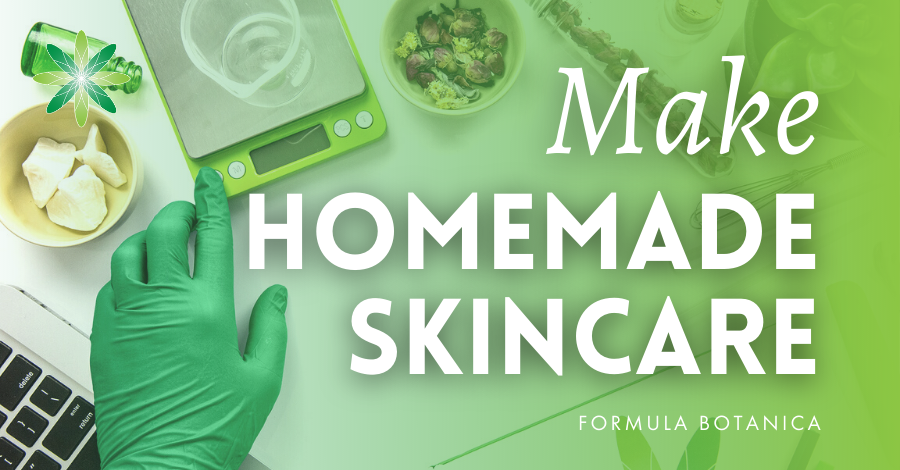
In this post, we’ll reveal the 11 essential formulation tools you need to create your own formulation kit and start making your own skincare and haircare from home. Are you ready? Let’s get started!
Setting up your formulation space
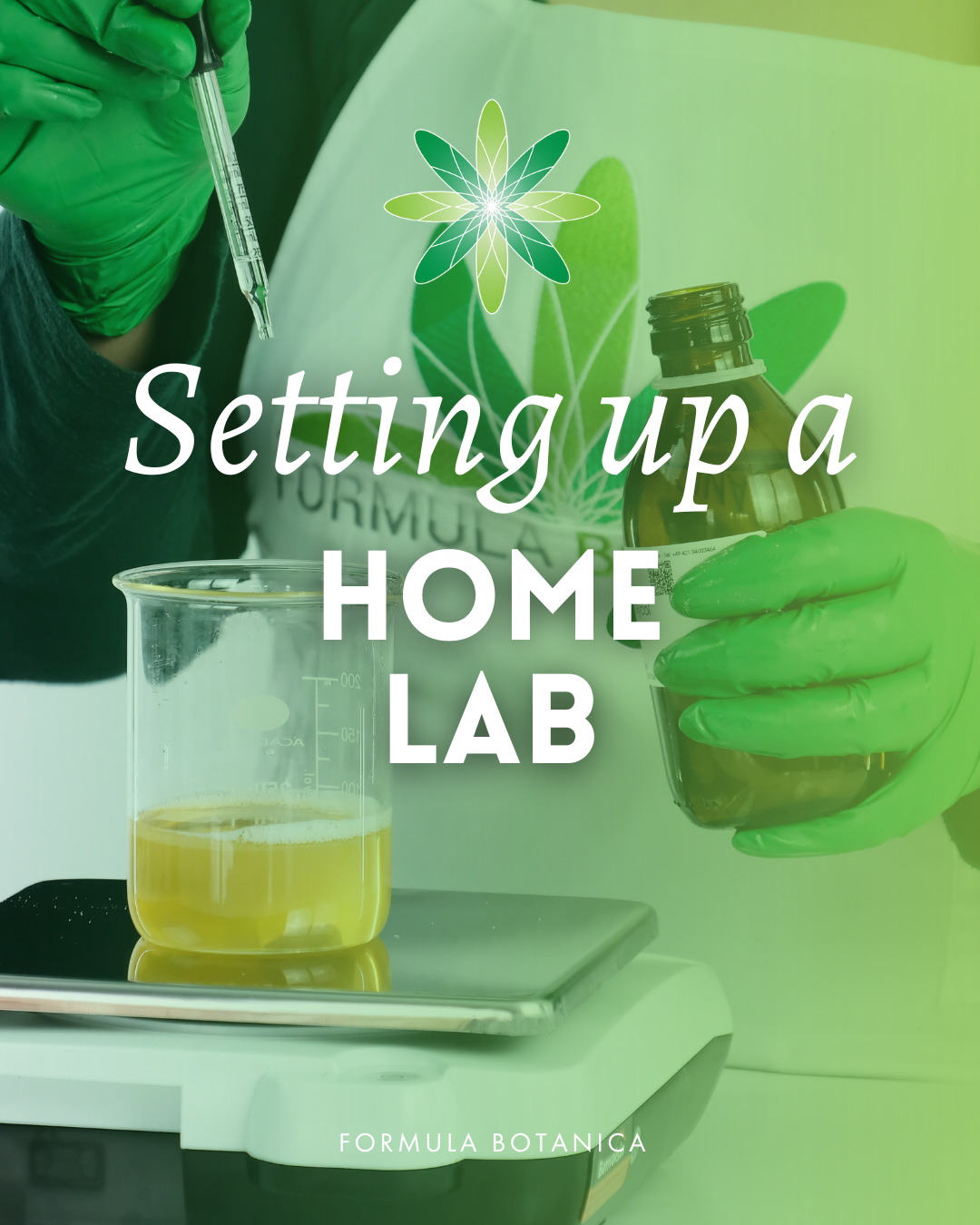
Before we talk about equipment, you’ll need to set up a formulation space.
One of the biggest myths about cosmetic formulation is that you need a professional lab space or setup to get started. We’re here to tell you that it’s simply not true.
All you need is some clean and clear counter space. That’s it. This could be a corner of your kitchen, a spare table, or even a desk in a spare room.
As long as it’s a clean and clear surface, you’re good to go!
Later on, if your interest grows and you decide to sell your own products, you may need to scale up, invest in additional equipment, and set up a dedicated home lab or other premises. But for now, a clean, sanitised counter space is more than enough!
If you’re interested in learning more about how to set up your own home lab, check out these posts:
To clean your formulation space, you just need some hot water and soap. Once it’s clean and dry, all that’s left to do is sanitise it with 70% isopropyl alcohol or ethanol (this prevents microbial contamination), and you’re ready to formulate!
The 11 tools you’ll need for your cosmetic formulation kit
View this post on Instagram
And now for the big reveal! Here are the 11 essential formulation tools you’ll need to set up your cosmetic formulation kit.
Don’t worry, these are widely available and accessible worldwide, and you probably already have most of them in your kitchen. You can also find all of the listed items on our international Amazon storefront.
1. Lab notebook
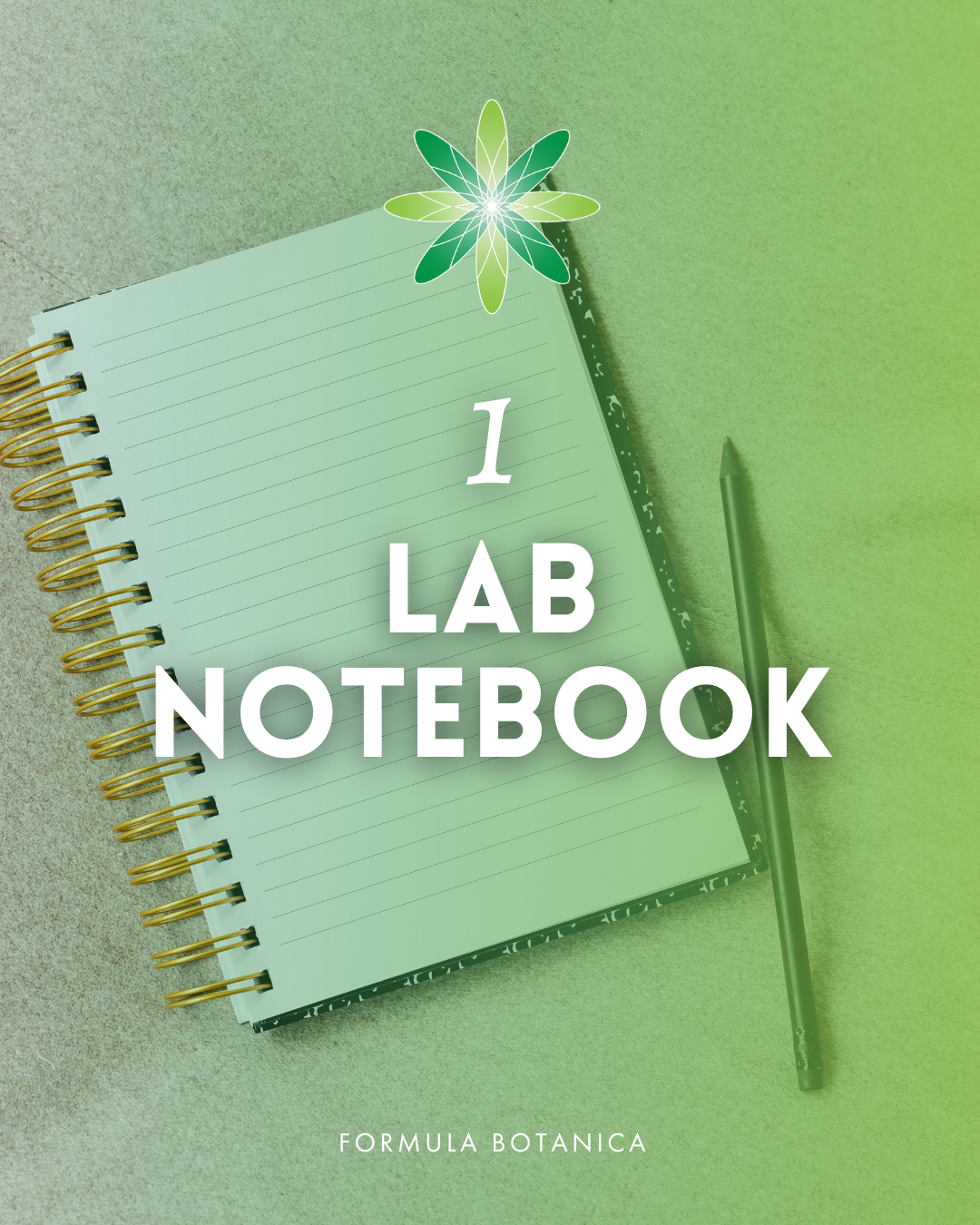
Let’s start with one of the most important (and also most inexpensive) tools in your cosmetic formulation kit: your lab notebook! It can be either digital or physical.
At Formula Botanica, we have a mantra: “If you don’t write it down, it didn’t happen.” It’s easy to think you’ll remember everything when you’re first starting out – but trust us, you won’t!
We can’t stress enough how important it is to keep notes of every product you make – not just when you’re learning, but also as you progress through your formulation journey. Keeping a detailed record of your formulations is also what professionals do.
This way, you can go back to it whenever you need.
To create your own lab notebook, you just need a document on your computer or a physical notebook and a pen. That’s it.
Use it to record your formulas (aka your recipes), the formulation method, and any notes and observations. This way, you can revisit your notes whenever you wish, which comes in really handy when you want to make a product again, troubleshoot issues, or tweak a formula.
2. Basic kitchen equipment & utensils
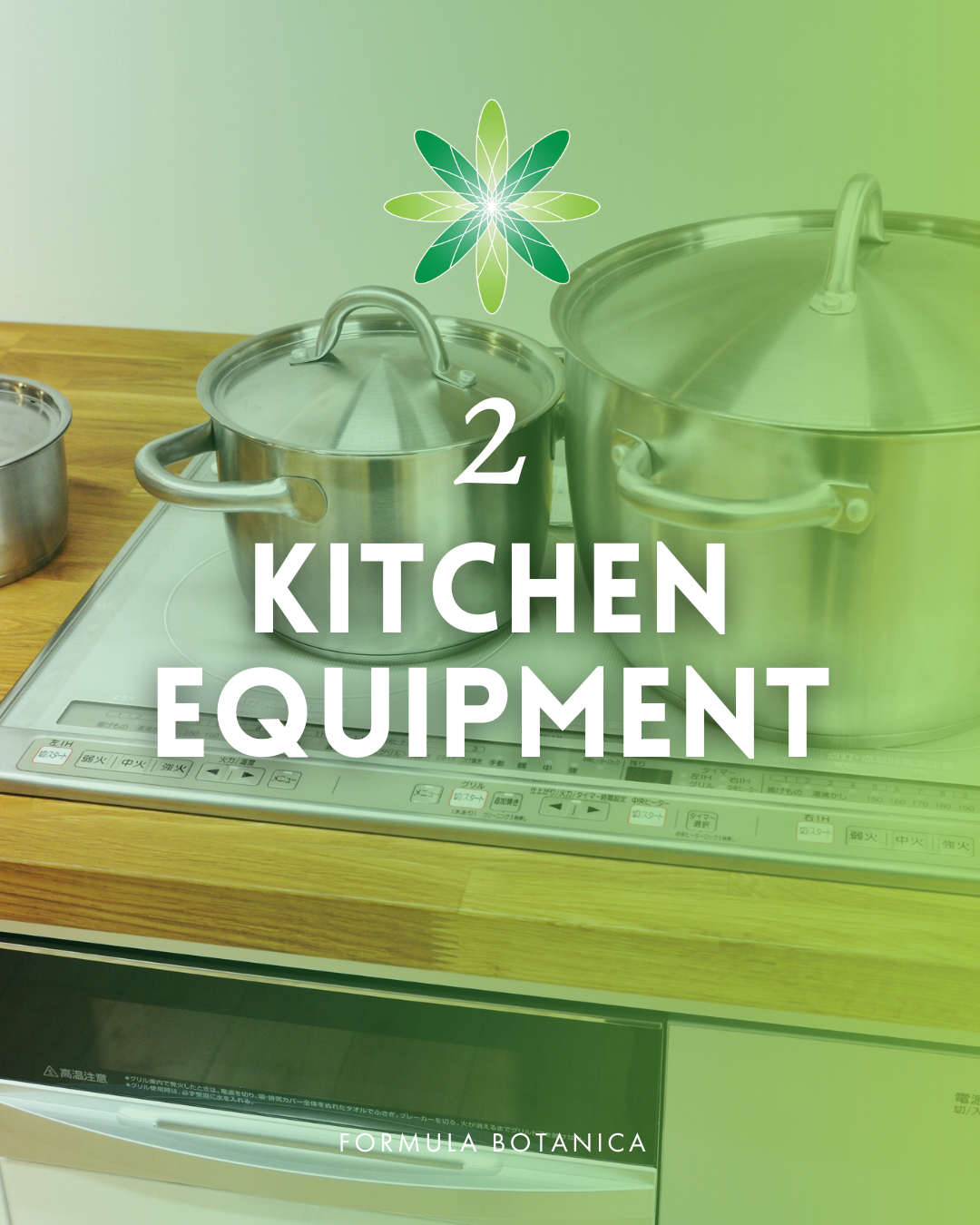
Next, you’ll need some basic kitchen equipment like heatproof bowls and pans, as well as some other basic kitchen utensils like chopping boards, spoons, and knives.
Bowls are great for weighing and mixing your ingredients, but also for heating. Most cosmetic products (especially balms, creams, lotions, and serums) need to be heated, so you’ll need heatproof bowls to make them.
You’ll also need some pans to set up a basic bain-marie or water bath, along with a heat source like a hotplate or your kitchen hob. This allows you to gently heat your ingredients without accidentally damaging their beneficial properties.
Along with these, it’s also useful to have basic kitchen equipment like cutting boards to prep your ingredients and protect your surfaces, as well as some knives and spoons. If possible, avoid using plastic or wood boards or utensils, as heat can damage them and they can often discolour, absorb oil and flavour, Instead, use durable materials like stainless steel or silicone.
For your first experiments, it’s perfectly fine to use the kitchen equipment you already have. But afterwards, if you can, consider buying a new set of tools just for formulation, and keep it separate from your everyday kitchen utensils, as it makes things more hygienic.
3. Glass beakers
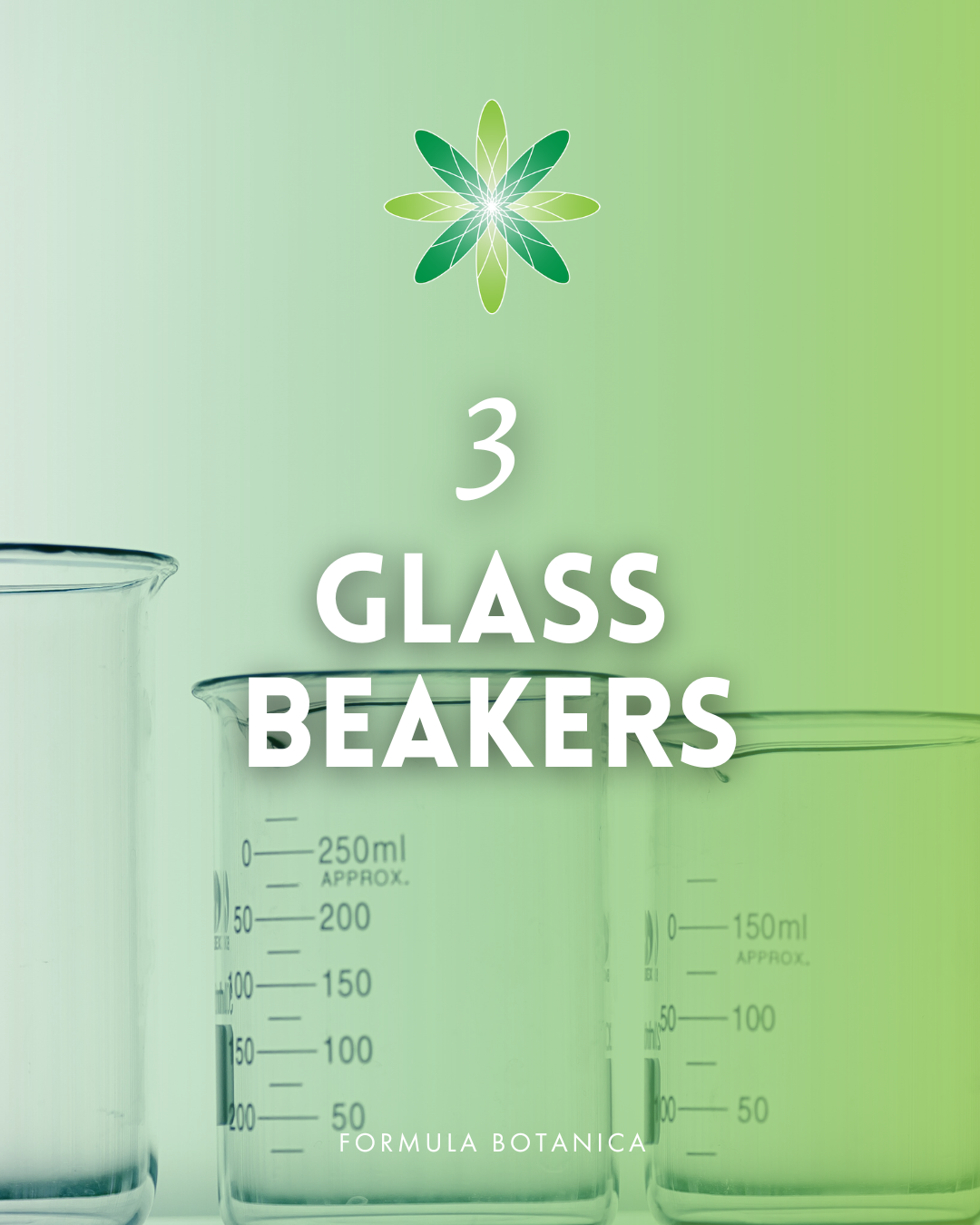
The third essential piece of equipment you’ll need for your basic cosmetic formulation kit is a small selection of glass beakers.
Glass beakers are widely available online as well as from speciality kitchenware and lab shops.
You’ll use beakers for almost everything you make, and they’re one of the tools that will make you feel like a real formulator. Plus, because they’re made from glass, they’re reusable, easy to clean, and heat-resistant!
Get a few different sizes to start. 100 and 250ml beakers are great for making creams, balms, and lotions, and for trial batches. Smaller beakers (10,20, or 50 mll) are great for weighing smaller quantities of ingredients like essential oils, actives, or preservatives. They’re also incredibly cute!
4. Glass rods or metal spoons
Next, you’ll need something to stir your formulations, and glass rods and metal spoons are perfect for that.
Glass rods are a staple in formulation, and you can grab a 10-pack online for very cheap. Rods are great for stirring all kinds of formulations, from oils to balms and creams, and they’re also easy to clean and very hygienic.
If you can, also get some long-handled stainless steel spoons as they’re great for stirring, as well as for measuring dry powders and thicker liquids.
5. Mini whisk
Up next, you’ll need one or more mini whisks to add to your cosmetic formulation kit. You might already have some whisks lying around in your kitchen, but if you can, buy some which are just for formulation.
Not only are these adorable, but they also come in very handy for blending liquids. You’ll also need to use these when making emulsions (aka creams, lotions, and serums).
6. Pipettes
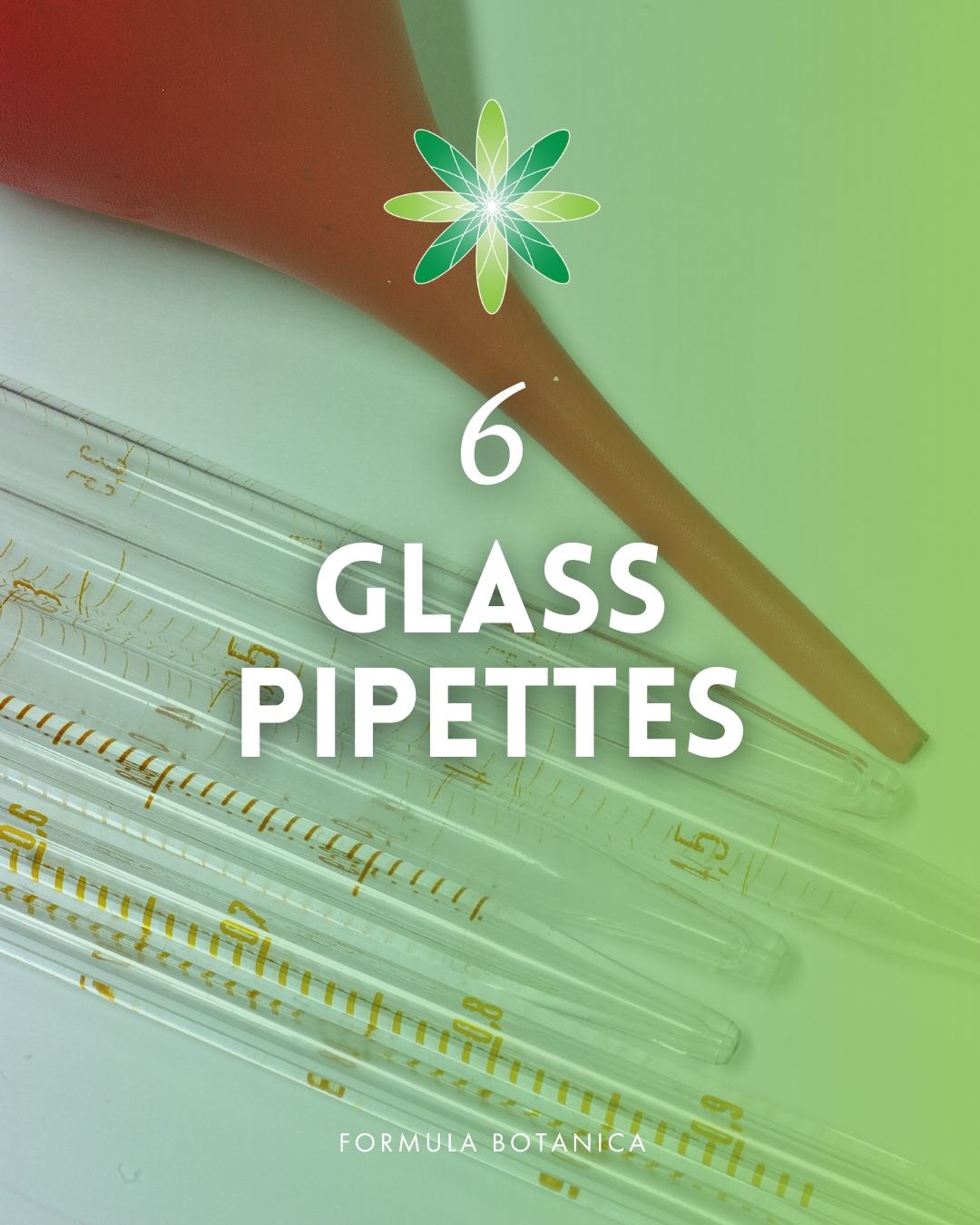
Next, you should get some pipettes for your cosmetic formulation kit.
Pipettes are great for measuring small amounts of liquid ingredients, especially essential oils and preservatives, which are only used in small quantities. This is also where your 10 ml beakers come in handy!
Pipettes come in single-use plastic or reusable glass options. At Formula Botanica, we recommend using glass pipettes if you can, as they’re more durable, easy to clean, and can be reused again and again!
7. Digital scale
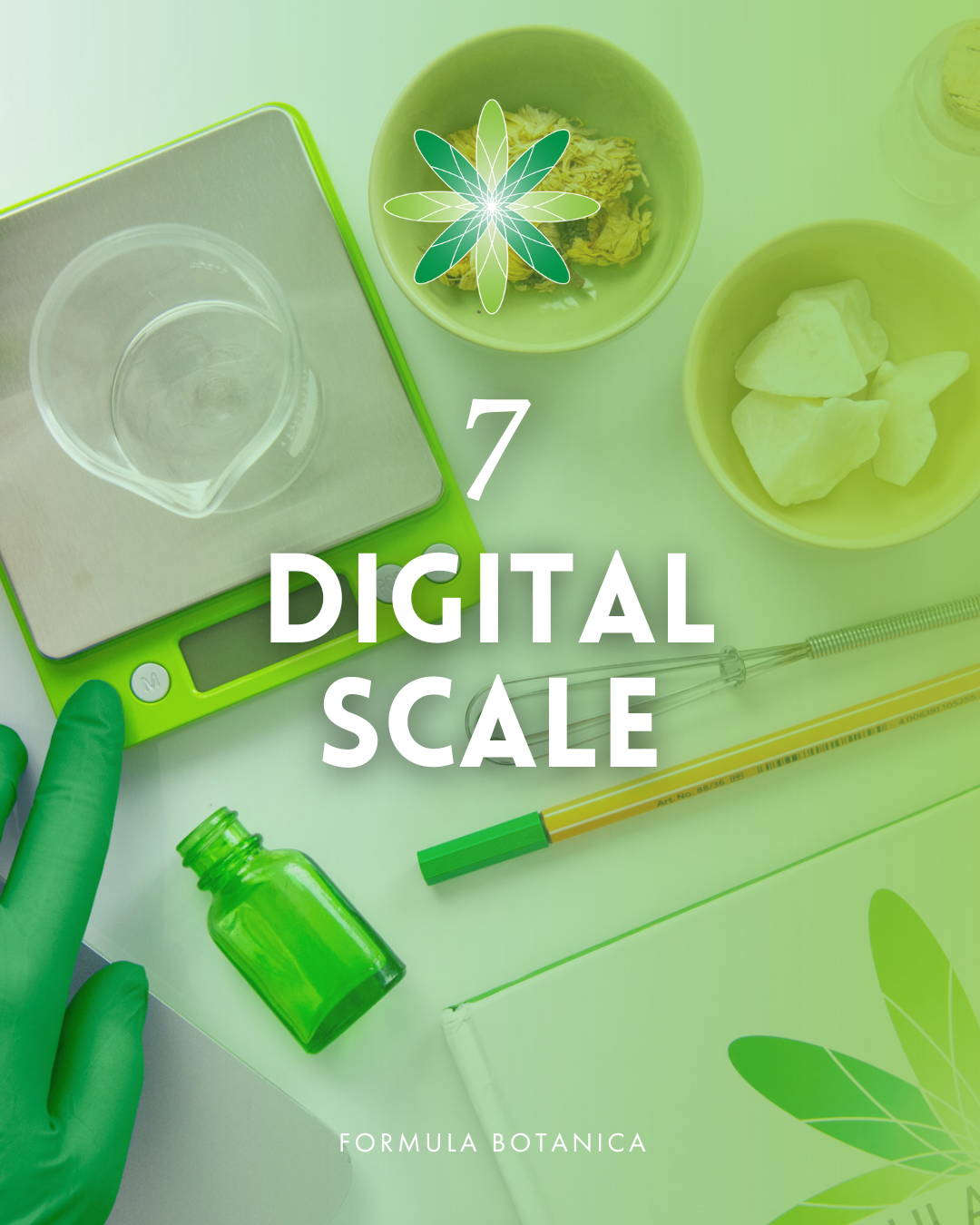
And now for one of the most important tools in your cosmetic formulation kit: scales!
When making your own skincare or haircare products, it’s crucial to be precise with your measurements. And for that, you need proper scales.
We recommend getting some jewellery scales, which have 0.01 g precision. These are super precise and perfect for measuring smaller quantities like essential oils, actives, or botanical extracts, which kitchen scales don’t always pick up.
Jewellery scales are also relatively inexpensive: you can find them online for around $10, €10, or £10! And you use them just the same as you would with your kitchen scale.
8. Thermometer
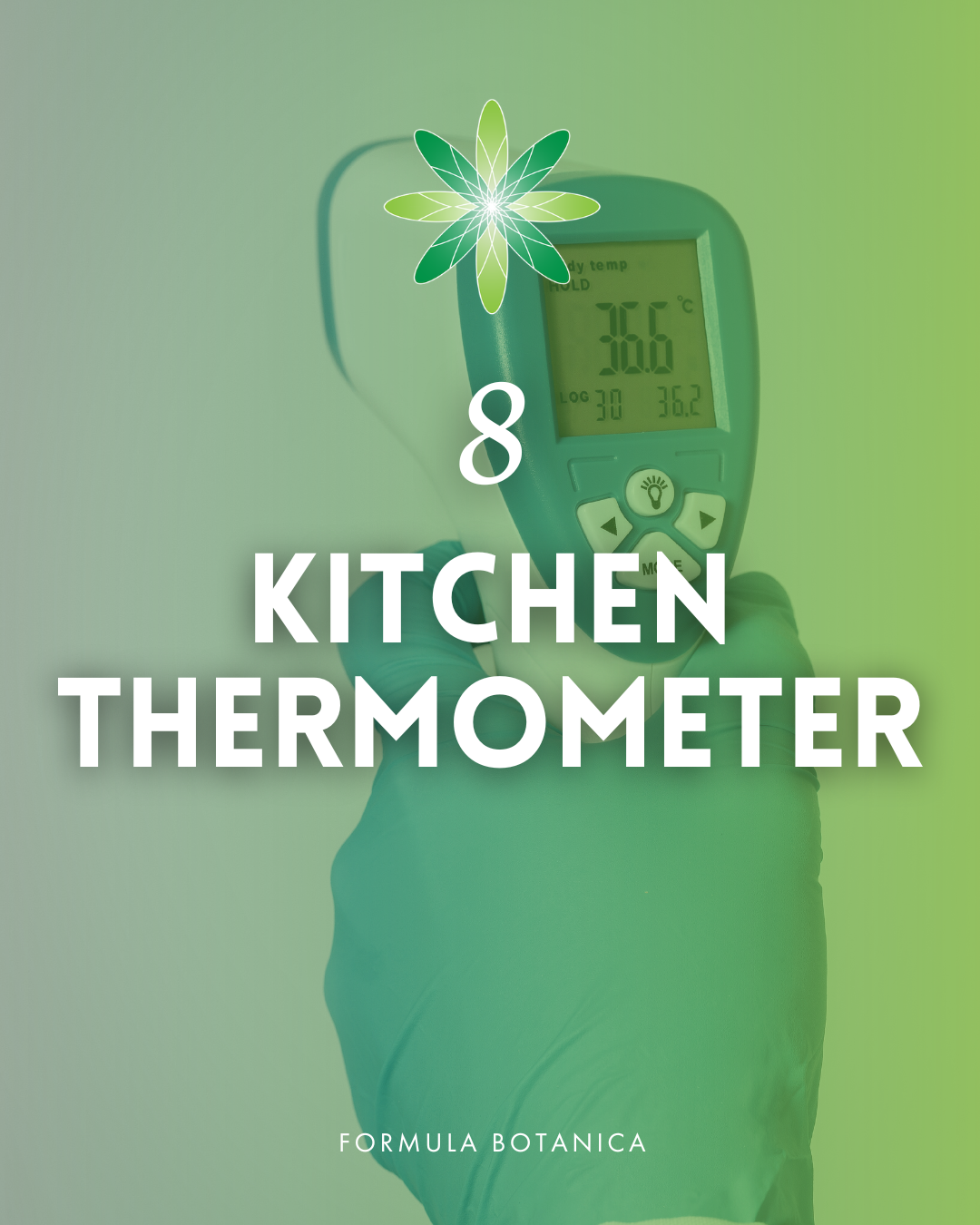
We also recommend buying a thermometer for your cosmetic formulation kit. If you want to make formulations that require heating, like your creams, lotions, serums, and balms, you’ll need to measure the temperature.
The more accurate you are with temperature, the less you risk burning your ingredients and accidentally destroying their beneficial properties – and, consequently, the better your final product will be!
There are several types of thermometers you can buy, from probe ones to digital infrared thermometers. You could also just use the thermometer you already have in your kitchen, just as long as you sanitise it before use (just like every other piece of equipment listed here).
9. pH strips
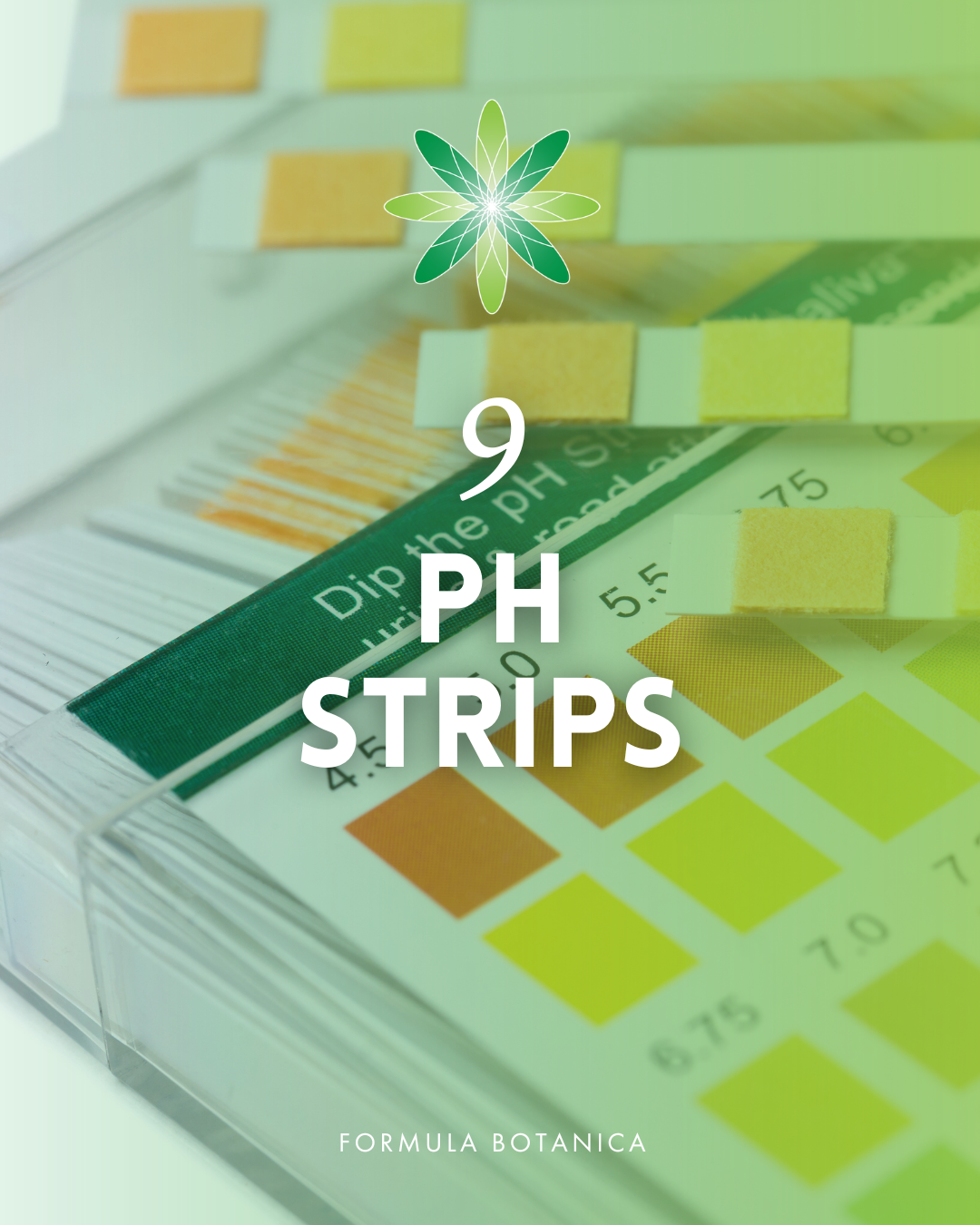
Next up, you’ll need some pH strips or a pH meter. We recommend getting pH strips to start, as they’re very beginner-friendly.
pH strips are a must for any water-based products you make, including gels, micellar waters, toners, and emulsions, as you’ll need to check their pH and make sure they fit within the skin-friendly range of 4.5-5.5.
Some products, like chemical peels, may require a more acidic pH, but you don’t have to worry about this for now.
Checking the pH of your products is incredibly important as it will keep them performing their best and also prevent the risk of skin irritation. We also explain this more in-depth in the post below:
What can go wrong if you don’t control your formulation’s pH?
pH testing might sound a bit daunting at first, but don’t worry: it’s very easy to do. And no, you don’t need to be good at science or be a chemist to do it!
We teach you everything you need to know about pH, from how to measure to how to adjust it, in our foundation Diploma in Organic Skincare Formulation. There, you’ll also learn everything you need to know about creating your own cosmetic products (aka formulation).
10. Sanitiser
While not technically a tool, you’ll also need a sanitiser in your basic cosmetic formulation kit. This is an absolute must, as you’ll need to sanitise your workspace and tools before formulating any type of cosmetic product.
Doing so helps prevent microbial contamination, which can be harmful to both your products and the person using them.
For this, you just need 70% isopropyl alcohol or ethanol (which you can find in your local supermarket or online). We recommend transferring it to a spray bottle, as it makes things easier.
To use, simply spray the alcohol onto a clean, dry work area and your equipment, and let everything dry completely before you start formulating.
The reason why we recommend using 70% alcohol instead of higher concentrations like 99% is because a higher concentration of alcohol evaporates too quickly and does not kill bacteria as effectively. The 30% water content is important because it helps the alcohol work properly to destroy bacteria.
So contrary to what you might think, using stronger alcohol does not mean your work surface will be cleaner or more sanitised. If you can only find 99% alcohol, dilute it with water using a 70:30 ratio.
Using a sanitiser is also part of Good Manufacturing Practice (GMP), which is a standard followed by industry professionals, and one we teach in our foundation Diploma in Organic Skincare Formulation. Our award-winning course also covers the differences between sterilisation, disinfection, and sanitisation.
11. Basic PPE
Speaking of GMP and professional standards, you’ll also need some basic Personal Protective Equipment (PPE) when making cosmetic products.
This is the final element you’ll need for your professional cosmetic formulation kit. Basic PPE includes:
- A clean apron
- Disposable rubber gloves (if you have sensitive skin, use powder-free nitrile gloves)
- A hair tie to tie your hair
- Protective glasses – especially when working with actives, botanical extracts, or essential oils
- A face mask when working with powders
PPE helps keep you and your products safe. Cosmetic ingredients are wonderful to work with, but that doesn’t mean they’re harmless. Some can irritate skin or eyes, or be harmful if inhaled.
Essential oils, for example, can irritate the skin if not used properly or accidentally spilt, and accidents can happen.
Learn how to make your own skincare & haircare
We hope you found this post useful! Remember, you can find all of the equipment listed above on our international Amazon storefront, as well as in other online shops and in basic kitchenware stores.
As you’ve seen, you don’t need any complicated tools or a fancy lab space to get started. All you need is some clean counter space and 11 essential tools (most of which you probably already have at home) to create a basic cosmetic formulation kit.
If you’re ready for the next step and would like to start formulating using the cosmetic formulation kit above, check out our free training and discover how easy, fun, and empowering it is to make your own natural and organic cosmetic products from scratch!
FREE TRAINING
Learn how to become an
Organic Skincare Formulator
FREE TRAINING
How to become an
Organic Skincare Entrepreneur
FREE TRAINING
How to become an
Organic Skincare Entrepreneur

Liz was Formula Botanica’s Content Coordinator between August 2020-2024. Liz worked as a professional blogger, journalist and site developer for many years and was also part of the Formula Botanica student community. Read more about the Formula Botanica Team.