If you’re reading this, chances are you want to become a formulator. And as the CEO of Formula Botanica, the world’s leading online organic cosmetic formulation school, I’m incredibly excited for you. Because that decision? It could change everything.
Formulation isn’t just about making skincare or haircare. It’s about taking control of what goes on your skin, reconnecting with a skill that’s been around for thousands of years, and rewriting the narrative the beauty industry has been telling us for over a century.
And the good news? Everyone can formulate. It’s a skill that can be learned, just like cooking. And it’s just as easy too!
Yet over my years at Formula Botanica, I’ve seen many people feel hesitant, thinking they don’t have what it takes to become a formulator, or believing they need to be a chemist or have a science degree to succeed.
In this post, I’m going to dispel some of those myths and share the top 5 things I wish I knew before becoming a formulator – so you can become one too.
Top 5 things you need to know to become a formulator
Here are the top 5 things I wish I knew before becoming a formulator:
1. You don’t need to be a chemist to formulate
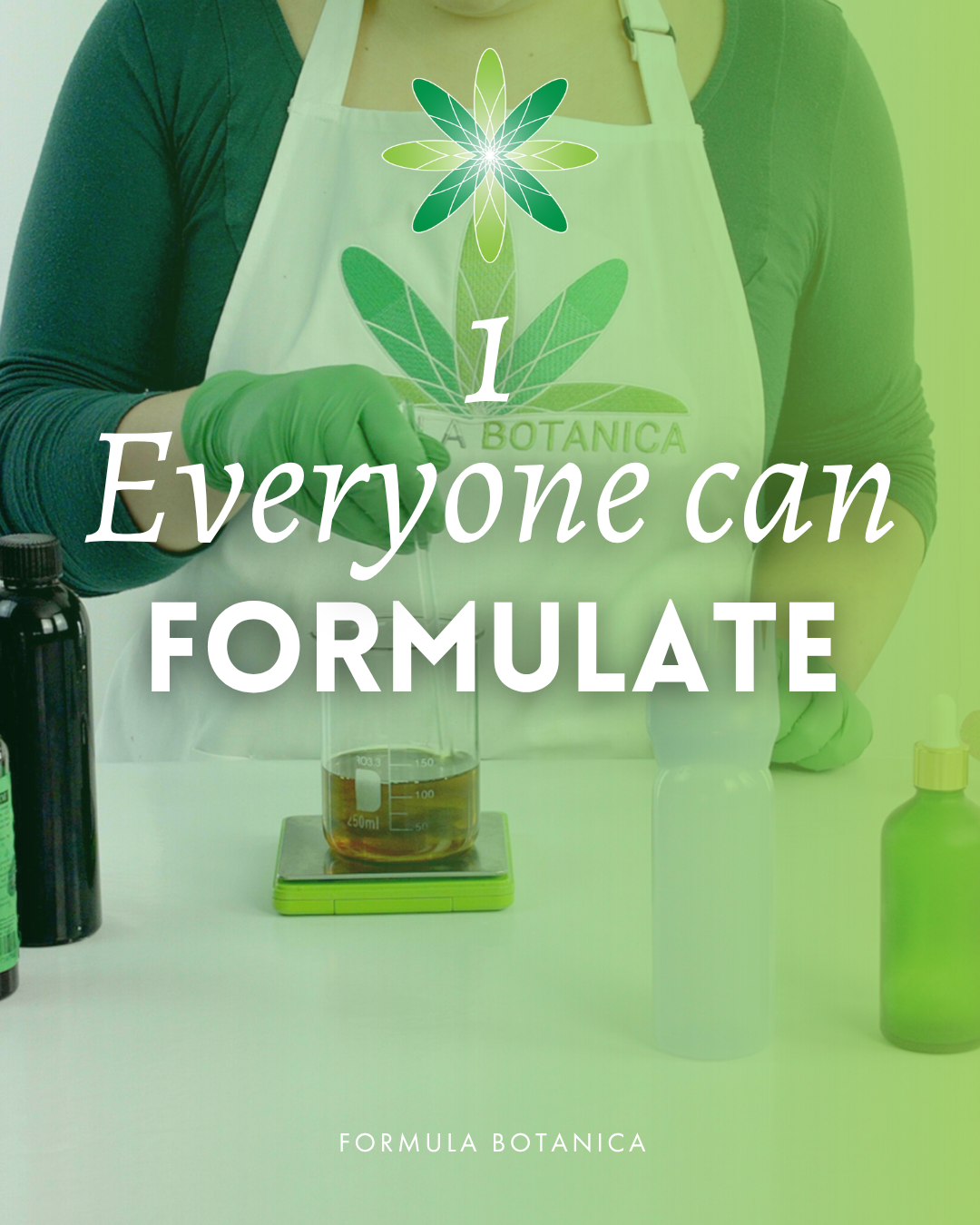
The first thing you should know about formulation is that you don’t need to be a chemist to formulate.
At Formula Botanica, we receive thousands of messages every week from people asking if they can enrol in our online courses without a science background or chemistry degree! And the answer is always a resounding yes.
The notion that only chemists can formulate is just a myth, spread by the beauty industry over a century ago.
Truth is, you don’t need a biology or chemistry degree to make your own skincare and haircare. In fact, you don’t even need to be good at science to start with! All you need is some curiosity and a willingness to learn.
But where did this idea that you need to be a chemist to formulate come from?
It all started over a century ago, with beauty pioneers like Helena Rubinstein cementing the image that only chemists in white lab coats and in a science lab could make professional-grade skincare and haircare. So the modern industry is only a few decades old!
You can find out more about its fascinating origin and history below:
Podcast 308: The woman who invented the modern beauty industry (and you’ve never heard her name)
Before that, people used to make their own beauty products, and recipes were shared within communities and passed down through generations.
Formulation was viewed as an essential life skill – just like cooking. It’s only in the last century that this knowledge has been lost.
Curious to learn more about where this myth came from? Listen to these podcast episodes:
Podcast 37: Do you need to be a cosmetic chemist to formulate skincare?
Podcast 307: Why you don’t need to be a chemist to formulate
The good news? In recent years, people have realised they can make their own skincare and haircare, and have been reconnecting with centuries of history by relearning that essential skill, and taking back control of the narrative and what goes on their skin.
And I’m proud to say that at Formula Botanica, we have played a key role in that. After all, our mission is to teach the world how to formulate!
2. You don’t need to buy lots of expensive equipment
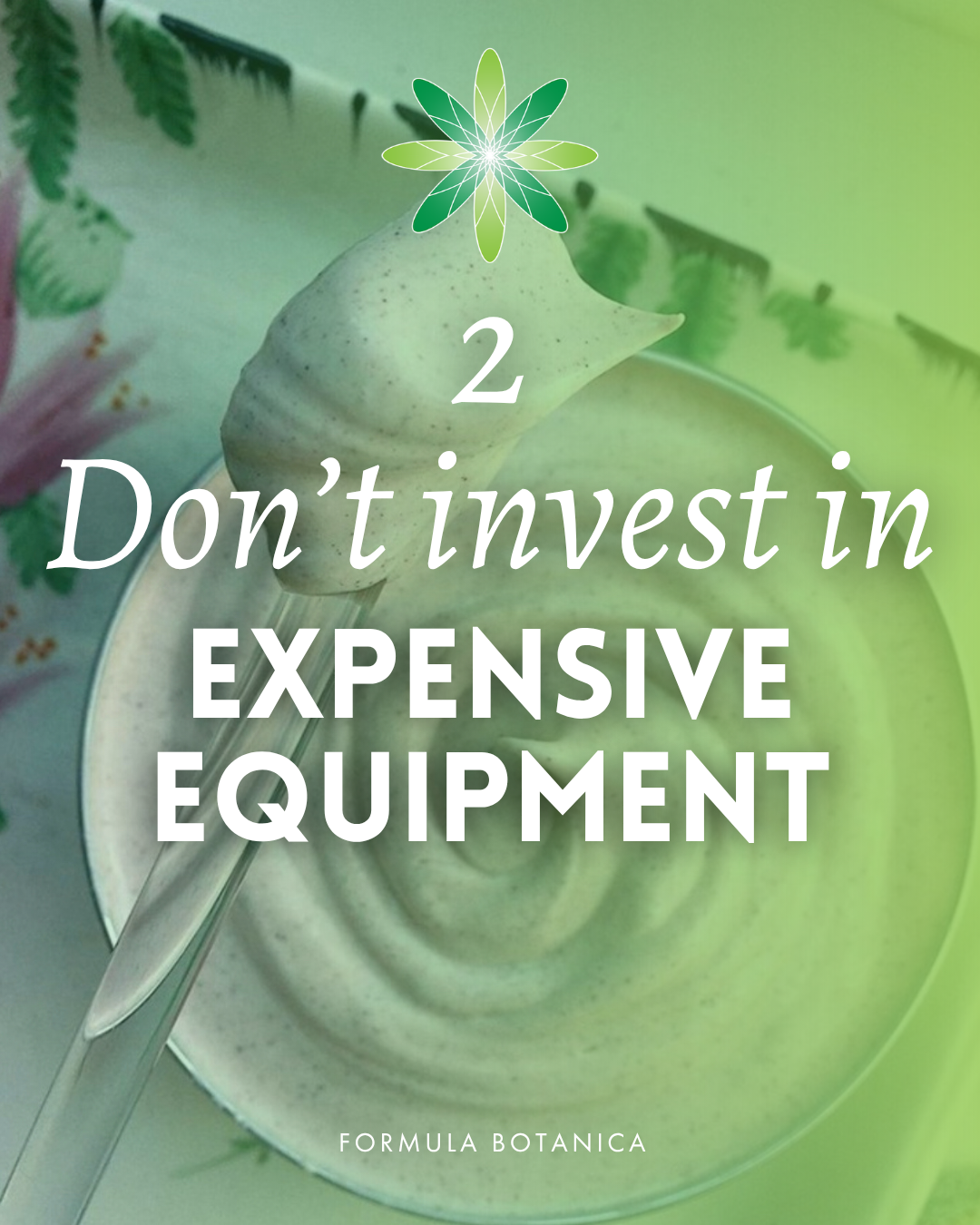
The second thing you should know if you want to become a formulator is that you don’t need expensive equipment to start with.
It’s easy to fall into the trap of thinking you need to invest in fancy lab equipment as soon as you start formulating. But you don’t.
In fact, when our students first enrol with us, we recommend they keep it incredibly simple and just buy a few simple and affordable tools like a couple of glass beakers or bowls, a few glass rods or spoons, a set of scales and a mini whisk.
If you want to learn more about what equipment you need when you first start out, and how to set up a basic formulation space on a budget, check out these posts:
Cosmetic formulation kit: 11 essential tools to get you started
You probably have most of this equipment in your kitchen already. If not, you can easily find it online or in basic kitchenware shops. As for your “home lab”, all you really need is some clean and clear counter space, not an actual lab!
To make your life easier, we’ve prepared a list of equipment we recommend you start with when you enrol with us at Formula Botanica.
View this post on Instagram
As you progress through your studies, you can choose to invest in more expensive equipment.
But before you can run, you first need to learn how to walk, and we certainly don’t want you to make a large upfront investment before you’ve made your first formulations!
I often give the example of a student who told me that she wanted to buy a big homogeniser and launch a brand selling emulsions after she’d completed our Diploma in Organic Skincare Formulation. I encouraged her to wait before buying any major equipment.
She came back to me a year later and told me she was so grateful because she’d decided instead to launch a range of facial oils after completing our foundation Diploma!
3. Buying botanical ingredients becomes addictive
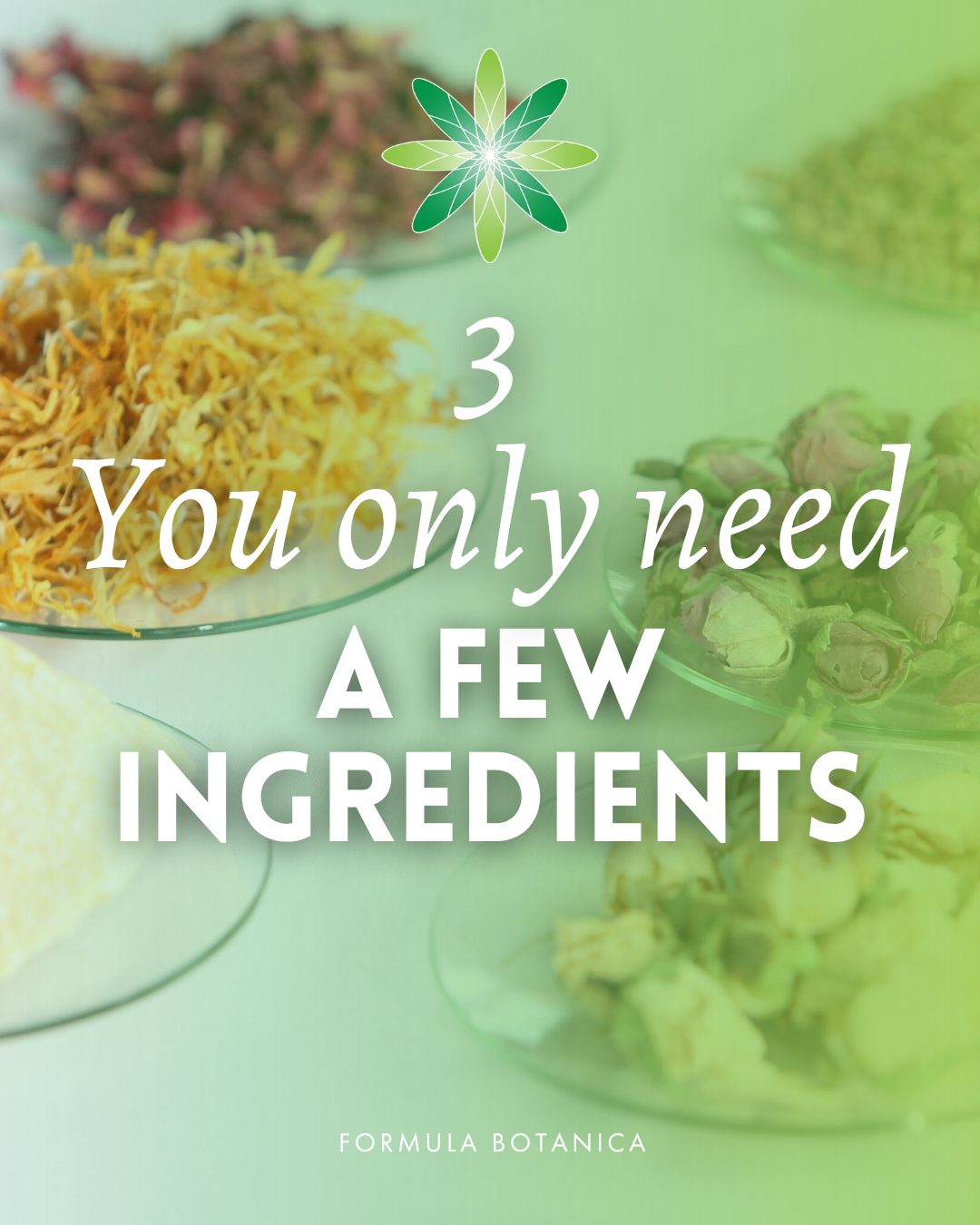
The third thing you should know before you become a formulator is that buying botanical ingredients is seriously addictive.
When students first enrol with us, one of the main questions we get is: “How much do I need to spend on ingredients while working through the courses?”
Typically, we suggest budgeting about half of your course fees for ingredients. But here’s the truth… once you start exploring botanicals, it’s hard to stop.
Now, this might not seem like a problem at first, but it’s very easy to get carried away!
You might go onto a supplier’s website looking for a single hydrosol (aka a floral water), and suddenly you’re wondering what everything else smells like, imagining how each ingredient could boost your formulations.
Before you know it, your basket is overflowing, and you’re buzzing with excitement waiting for it all to arrive!
While that excitement is part of the fun, it’s important to keep things in check. I recommend starting with just a few core ingredients, and only expanding your collection once you feel confident with the basics.
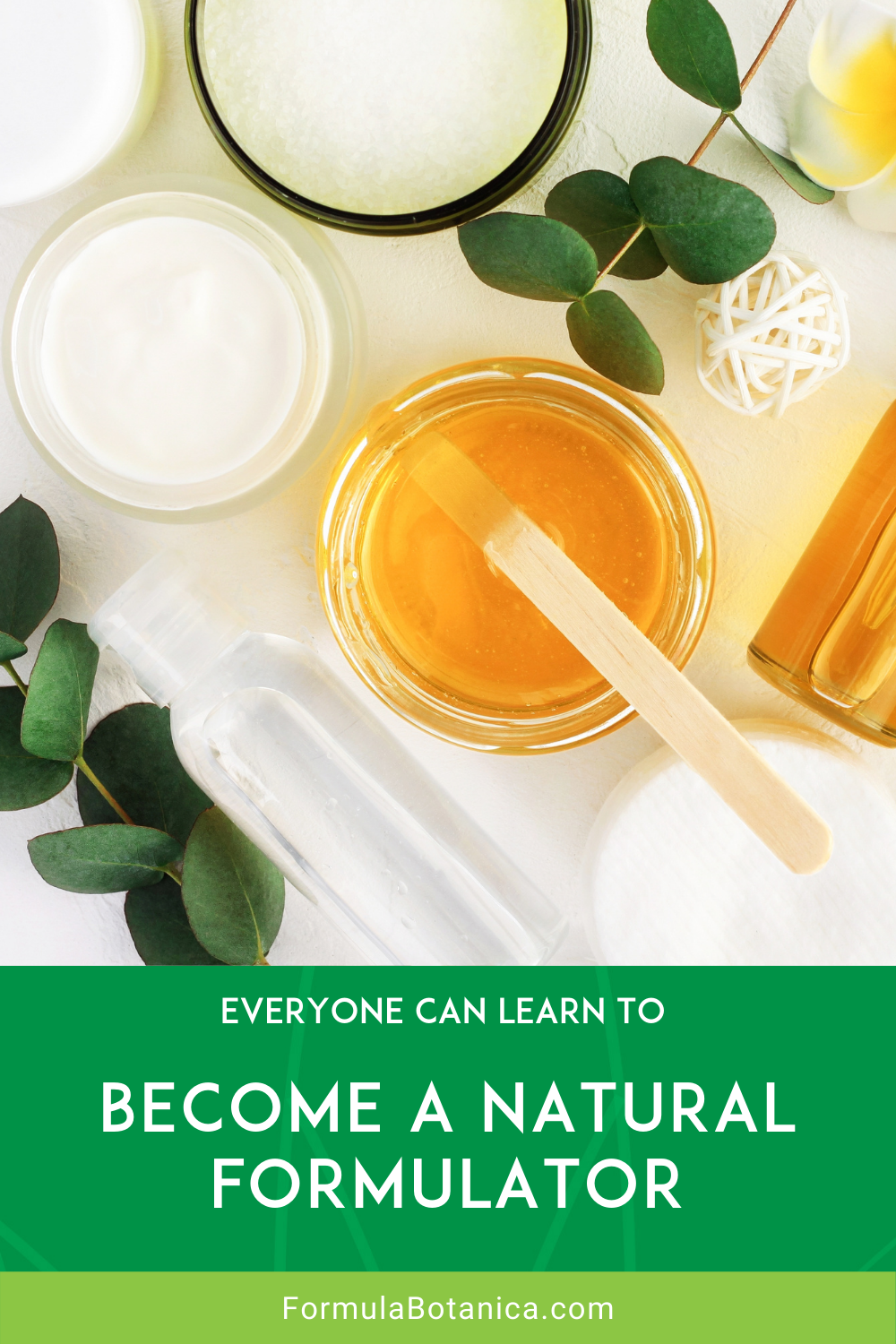
Most of us become formulators because we’re genuinely thrilled at the idea of working with leaves, herbs, roots, petals, flowers, buds, stems, barks, seeds, and oils – and this is hands-down the best part of formulating.
But if you overbuy ingredients, you’re likely going to:
- Spend more than you planned
- Risk wasting your precious ingredients
It’s also worth remembering that natural ingredients tend to have a shorter shelf life than synthetic ones. So, if you want to avoid unnecessary waste and save some money, start with only what you need.
Wondering where to start? Check out this post on the top 10 ingredients every new formulator should start with! When you enrol in our award-winning courses, we’ll also provide you with a complete ingredient shopping list to create your first formulations.
4. You’ll never want to buy another beauty product again
This is possibly the biggest surprise for most new formulators once they get started.
Once you learn how to formulate, you’ll be able to make any product out there, meaning you will never need or want to buy another beauty product again.
- Need a new lip balm? You can now formulate one.
- Need a new cleanser? You can now formulate one.
- Need a new shampoo? You can now formulate one.
Instead of heading to the shops, you can simply walk into your home formulation lab and create products tailored specifically to your skin and haircare needs – customised exactly to your liking.
View this post on Instagram
And the best part? When you make your own skincare or haircare, you’ll often realise that it’s higher quality and more cost-effective than what’s sitting on the shelves.
This is probably one of my favourite parts about formulation, and why people are also increasingly more interested in making their own cosmetic products.
5. You won’t believe how empowered you’ll feel
And lastly, following on from my last point, imagine how empowered you’ll feel being able to make your own skincare or haircare formulations from scratch using precious botanical ingredients.
When you formulate, you are in control. You no longer need to rely on the beauty counters of major department stores or supermarkets.
As a formulator, you’ll be able to whip up your own batch of serum, toner or micellar water.
You might also find yourself reading labels in the shops and thinking, “hmm, I could make that myself, but I could replace all of these synthetic ingredients with natural alternatives”!
And the best part? You can share your creations with family and friends. You could even start your own beauty brand!
Since opening our virtual doors in 2012, we have taught over 22,000 people worldwide how to create their own natural and organic skincare from scratch, using exquisite ingredients like cold-pressed plant oils, freshly distilled flower waters, exotic botanical butters, high-performance plant extracts, actives, and beautifully fragrant essential oils.
Many of our amazing graduates have since gone on to launch their own award-winning brands – and you could be next.
Ready to start your formulation journey?
I hope you enjoyed this post and that it’s given you a clearer idea of what it’s really like to be a formulator – and what to expect when you’re first starting out!
Becoming a formulator isn’t just about learning a skill – it’s about taking control over what goes on your skin, reconnecting with centuries of history, and discovering a creative, empowering side of yourself you may not have realised existed yet.
Formulation is fun, easy, and empowering. Everyone can do it. And you don’t need a science degree, a big budget, or any prior experience, as you’ve seen in this post.
All it really takes is curiosity and a willingness to learn. And that first step is closer than you think.
If you’re ready to take that step, I invite you to join our free training and start your formulation journey today. I can’t wait to see you there!
FREE TRAINING
Learn how to become an
Organic Skincare Formulator
FREE TRAINING
How to become an
Organic Skincare Entrepreneur
FREE TRAINING
How to become an
Organic Skincare Entrepreneur

Lorraine Dallmeier is a Biologist, Chartered Environmentalist and the CEO of Formula Botanica, the award-winning online organic cosmetic science school. Read more about Lorraine and the Formula Botanica Team.