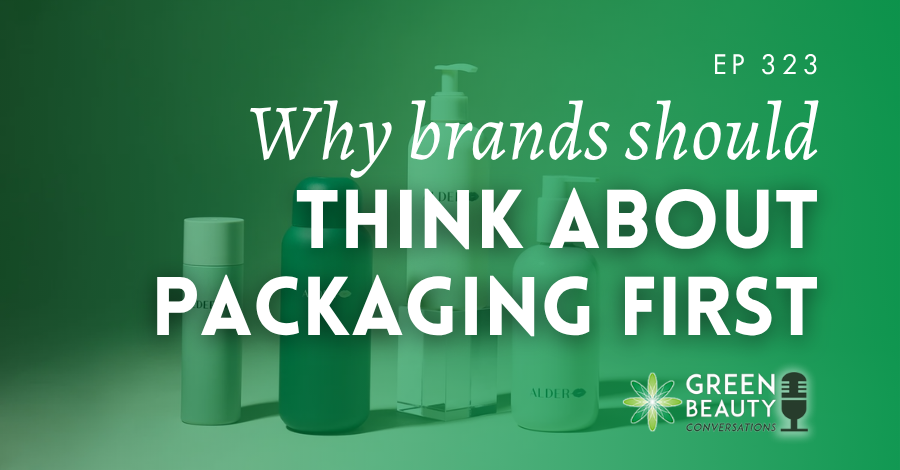
Picture this: you’ve done everything right. You’ve chosen what you believe is eco packaging, carefully selected materials, and aligned your brand with sustainability values. But what if the packaging you’re so proud of isn’t as sustainable as you think?
Truth is, packaging tends to be the last decision beauty founders make – squeezed in after formulation, branding and marketing. And yet, it plays a crucial role in a product’s environmental footprint.
In this eye-opening episode of Green Beauty Conversations, Formula Botanica CEO Lorraine Dallmeier uncovers the uncomfortable truths behind eco packaging – and why good intentions don’t always lead to lower-impact outcomes.
She is joined by Jerome Fraillon, founder and CEO of Alder Packaging, who shares what really happens behind the scenes of packaging design, manufacturing and disposal. His insights will challenge everything you thought you knew about sustainable packaging.
From hidden recycling issues to misleading “eco” materials, this conversation exposes the gaps between perception and reality in eco beauty packaging – and shows you how to make better decisions moving forward.
If you’re a beauty entrepreneur, formulator or conscious consumer, this is an episode you can’t afford to miss.

“Most brands go straight to recyclability as their metric of success – but that’s actually at the bottom of the waste hierarchy.” — Jerome Fraillon
In this episode with Jerome Fraillon, you will hear:
- Why packaging is often an afterthought: Most beauty brands start with a formulation, a story or a vision, leaving packaging decisions until the very end. Jerome explains how this approach creates problems, as packaging requires technical, logistical and sustainability considerations that need early planning. When rushed, brands often make decisions with limited knowledge and under time pressure, leading to unintended environmental consequences.
- The complexity behind “sustainable” packaging: Sustainability in packaging isn’t just about recyclability. Jerome breaks down the multiple dimensions of eco packaging, including material choice, refillability, reduction and sourcing. He highlights how brands tend to focus on what’s visible – like recycling – while overlooking less obvious but equally important factors such as transportation and material reduction.
- Common misconceptions about eco materials: From dark glass to bio-resins, Jerome shares examples of materials that appear sustainable but often aren’t. He explains why tinted glass may not be recyclable and how plant-based plastics still behave like conventional plastics at end of life. These insights reveal how marketing claims can obscure the real environmental impact.
- The truth about refillable packaging: Refillable systems are often seen as the gold standard, but their success varies widely by region. Jerome discusses why refillable packaging works well in some markets, particularly in Asia, but struggles in the US and Europe. He also explores consumer behaviour and infrastructure as key barriers to adoption.
- What indie brands should do differently: For founders just starting out, Jerome shares practical advice on navigating packaging decisions. He stresses the importance of speaking directly with suppliers, attending trade shows and seeking expert guidance early. This approach helps avoid costly mistakes, such as choosing packaging that isn’t compatible with a formulation.
Key takeouts:
- Eco packaging is more complex than it looks: Eco packaging isn’t defined by a single factor like recyclability. It involves a balance between material choice, production methods, transportation and end-of-life outcomes. Many brands oversimplify sustainability, focusing on visible cues rather than the full lifecycle.
- Recycling is not the ultimate solution: Despite its prominence, recycling sits low on the waste hierarchy. Jerome explains that reduction and reuse should come first, yet most brands default to recyclability because it’s familiar and visible. This mindset can lead to missed opportunities for more impactful changes, such as using less material or designing for refill systems.
- Not all “green” materials are better: Materials like bio-resins or tinted glass can give the impression of sustainability without delivering real benefits. Bio-based plastics, for example, still degrade like conventional plastics and may compete with food resources. Similarly, certain glass types can’t be recycled due to sorting limitations. Understanding these nuances is essential for making informed decisions.
- Local sourcing can significantly reduce impact: Transportation plays a major role in packaging’s environmental footprint. Shipping bulky packaging across continents unnecessarily increases emissions. Jerome highlights that sourcing packaging closer to the point of filling can be a simple yet powerful way to reduce impact, even if it requires compromising on design or aesthetics.
- Early planning is critical for better outcomes: One of the biggest mistakes brands make is treating packaging as an afterthought. Integrating packaging decisions early in product development allows for better alignment between formulation, functionality and sustainability. This proactive approach reduces waste, avoids costly errors and leads to more effective eco packaging solutions.
Meet our guest: Jerome Fraillon, founder and CEO of Alder Packaging
 With over 20 years of experience in beauty packaging engineering, Jerome Fraillon is a recognised leader in sustainable packaging innovation. Prior to founding Alder Packaging, he made far-reaching impacts on brands like Estée Lauder, Smashbox, Coty and Victoria’s Secret Beauty as an engineer and package developer before moving into a leadership role at one of the world’s largest cosmetic packaging companies.
In 2022, Jerome launched Alder with a mission to create personal care packaging that genuinely cares for the environment. As CEO, he leads a team of industry experts focused on guiding brands towards sustainable, forward-thinking packaging solutions.
His ability to combine technical expertise with strategic vision has positioned Alder as a trusted partner for beauty brands worldwide.
Find out more about Jerome & Alder Packaging:
- Website: Alder Packaging
- Social media: @withalder
- LinkedIn: Jerome Fraillon
Related episodes:
- Episode 225: Can cosmetic packaging be sustainable?
- Episode 226: The latest in greenwashing: “Recycle-ready”
Thank you for joining us for this episode of the Formula Botanica Green Beauty Conversations podcast. If you enjoyed listening, please share, subscribe and review this episode on Apple Podcasts, Spotify or Youtube so that more people can enjoy the show. Don’t forget to follow and connect with us on Facebook and Instagram.
FREE TRAINING
Learn how to become an
Organic Skincare Formulator
FREE TRAINING
How to become an
Organic Skincare Entrepreneur
FREE TRAINING
How to become an
Organic Skincare Entrepreneur


Lorraine Dallmeier is a Biologist, Chartered Environmentalist and the CEO of Formula Botanica, the award-winning online organic cosmetic science school. Read more about Lorraine and the Formula Botanica Team.