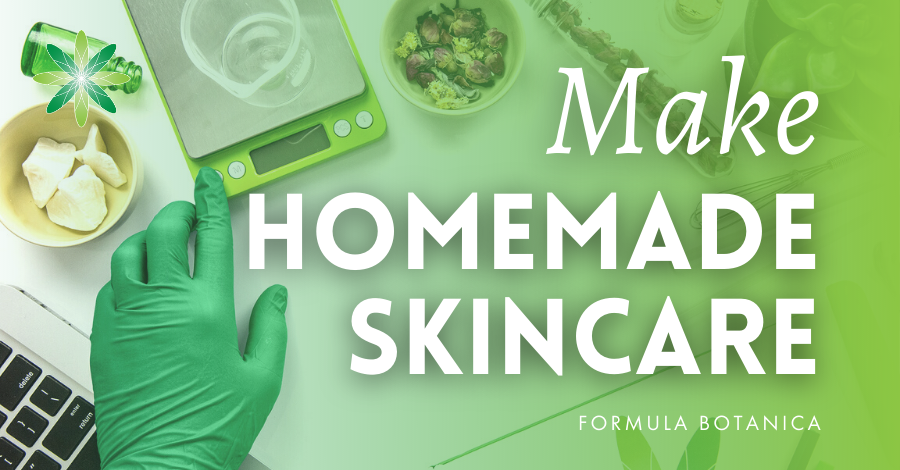
Could glycerine secretly be the next big skincare ingredient of 2026?
That’s the question the Formula Botanica team and I asked ourselves after attending an expert panel on trending cosmetic ingredients at an industry trade show last year.
During this panel, one of the cosmetic chemists stated that glycerine would be the next big ingredient in skincare.
At first, we were confused – glycerine, really?! After all, glycerine isn’t exactly what springs to mind when you think of exciting, cutting-edge ingredients – especially when you compare it to all the amazing actives in the market.
But the more we thought about it, the more we realised… he might be right. Glycerine is cheap, widely available, incredibly versatile, and backed by decades of science. And it’s practically in every skincare product out there.
In this post, we’ll break down what glycerine really is, why the beauty industry relies on it so heavily, and how you can use it to create your own high-performance skincare and haircare products and botanical extracts!
What is glycerine?
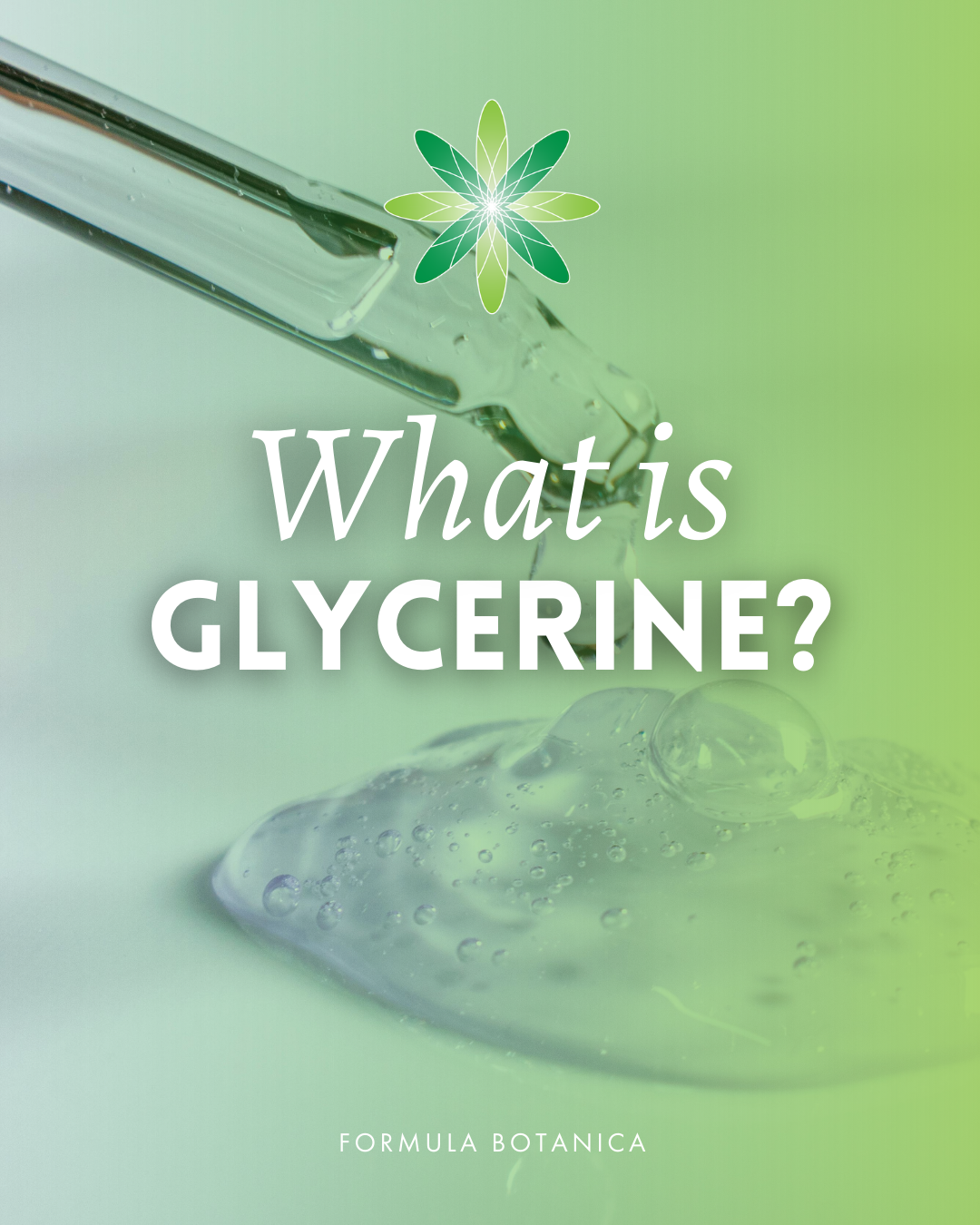
First things first – what actually is glycerine?
Glycerine is a clear, odourless, slightly syrupy and sticky liquid that’s been used for decades in the food and cosmetic industries. In fact, you’ve probably seen it listed on many product labels before, without even realising what it was!
In cosmetics, it is mainly used as a humectant – a special type of ingredient that helps attract moisture to the skin and help retain it, helping your skin stay soft, smooth, and hydrated.
If you want to learn more about humectants, check out this post:
Glycerine is also used in food as a sweetener, thickener, and preservative.
It is widely available and affordable, which is part of why the beauty and food industry rely on it so heavily!
Glycerine vs. glycerol: what’s the difference?
Glycerine is sometimes used interchangeably with glycerol in everyday language, but there is a slight difference when it comes to use.
Glycerol is the pure chemical name for the compound, while glycerine is the term more commonly used in commercial, cosmetic, and food contexts.
In practice, both usually refer to the same substance, which is typically high-purity glycerol.
Traditionally, glycerol was a natural byproduct of soapmaking, with soapmakers often extracting glycerine to sell separately. Today, most glycerol comes from vegetable oils, primarily palm oil and, to a lesser extent, coconut and soy.
These oils are composed of triglycerides, which are then split into glycerol and fatty acids.
The glycerol produced is chemically identical to the glycerine used in cosmetics. However, glycerol can also be derived from animal fats or produced through sugar fermentation, although these are less common.
Behind the scenes: What glycerine is actually used for
Glycerine is arguably one of the most widely used ingredients in the cosmetic industry.
You’ll find it in practically every water-based product out there – from gels and serums to moisturisers, lotions, and toners. In fact, you might be surprised to learn that glycerine is often found in high quantities in high-end, premium serums and creams!
But what exactly is it used for?
At its core, glycerine is mainly used as a humectant. It is also used as a wetting agent in cosmetic products. In other words, it helps disperse gums, actives, and powders that would otherwise clump if added directly to water.
For example, xanthan gum typically needs to be dispersed in glycerine first before being incorporated into a formulation (aka a cosmetic product), otherwise it would clump and not dissolve properly.
Essentially, glycerine is what’s known as a functional ingredient – it plays a specific role in the formulation. Its main role is as a humectant, and it also plays a secondary role as a wetting agent, helping ingredients mix properly and keeping the final cosmetic product stable and lump-free.
If you want to learn more about the different ingredient categories in formulations, check out this post:
Natural formulation 101: Beginner’s guide to skincare ingredients
The surprising benefits of glycerine
Glycerine might not seem like the flashiest ingredient out there, but there’s a reason it’s found in most cosmetic products, beyond its functional benefits.
Firstly, it’s got a well-documented and proven record as a hydrating ingredient.
In fact, at Formula Botanica, we would go as far as saying that glycerine could rival – and even surpass – many of today’s trendy and well-established actives when it comes to hydration. And we’re not the only ones to say it.
Glycerine is often used as the benchmark in moisturisation studies – controlled experiments designed to measure how well an ingredient or product increases skin hydration over time.
In some of these studies, glycerine matches and sometimes even outperforms the most glamorous actives such as hyaluronic acid!
In other words, the very ingredient that costs a fraction of the price of hyaluronic acid is the one the industry uses to prove everything else works.
Which makes you wonder – if the industry has known this for decades, why has it spent so long selling us something more expensive instead?
If you’re curious to learn more about this (and it’s a fascinating topic!), listen to these podcast episodes:
Podcast 301: I spoke to an active ingredient scientist… and it changed how I see skincare
Podcast 302: If your serum isn’t working, this is probably why
Amongst its other skin benefits, glycerine is also non-irritating for the skin. The list goes on and on, and we cover all the reasons why we think glycerine is so great in the post below:
Why we love glycerine at Formula Botanica
Glycerine might not look like a star ingredient at first glance, but at Formula Botanica, we believe it deserves a place at the top of the next big skincare ingredient list for 2026.
Why? Glycerine is a true multitasker and incredibly versatile.
As mentioned above, glycerine works as a humectant, solvent, and dispersant, while also providing visible skin benefits, making it one of the most valuable – and underrated – ingredients in modern skincare. It’s also cheap, widely available, and beginner-friendly.
Not only that, but in recent years, there’s been a growing focus on supporting the skin barrier, maintaining a healthy microbiome, and creating gentler products for sensitive skin.
Glycerine ticks all of these boxes, which is why some brands are now highlighting it as a star ingredient in their formulations.
And the best part? This isn’t just theoretical. You can use glycerine to make your own skincare and haircare products from scratch, whether you’re a complete beginner, a seasoned DIYer or an experienced formulator.
But before we get into that, I wanted to share some stories from our Formula Botanica team about their experience with glycerine.
What our team had to say
As part of this post, I asked our amazing team at Formula Botanica what they really think about glycerine.
Interestingly, many didn’t love it at first. The sticky, viscous texture put them off, and they just saw it as a purely functional ingredient. But that quickly changed once they started formulating. Now, most can’t imagine creating a product without it.
That was the case with our Formulation Tutor, Laureline: “I wasn’t a fan at first. I thought it was sticky and a necessary evil. Now I love it. Some of my favourite brands use +10% glycerine without stickiness complaints, which really changed my mind”, she said.
Our Deputy Head of Education, Eliziane, was surprised by a different aspect entirely – its sensory properties: “Everyone says glycerine is sweet – I had to taste it out of curiosity! It feels warm when poured into water, which is surprisingly pleasant. I used to hold the beakers just to feel the warmth.”
Now this doesn’t mean you should eat or drink glycerine! While technically edible, we really don’t advise you to try it at home.
Our Formulation Tutor Barbora highlighted how glycerine bridges both function and performance: “It plumps the skin and protects emulsions from drying out. I make herbal glycerites that work for both skincare and as alcohol-free tinctures.” But more on how to make your own botanical extracts below!
For others, the appeal of glycerine is its incredible versatility. Cosmetic Scientist Natalie and Formulation Tutors Anneke and Viktoriia emphasised just how indispensable it is as a cosmetic ingredient.
Natalie affirmed, “Glycerine is everywhere in formulations. It’s cheap, widely available, non-irritating, and versatile. Historically, it was a by-product of soapmaking, so it has been in the cosmetic industry for many decades. You can even use it solo as glycerites. The list goes on and on!”
Anneke stated: “It’s easy to use, beginner-friendly, and hydrates better than many trendy actives. I use it in toners, serums, moisturisers, and cleansers. It’s also excellent for pre-dispersing gums or powders”, whereas Viktoriia praised its functional benefits: “Glycerine is essential for proper gum dispersion. My emulsions became far more stable after using glycerine. I always include it in my formulations now, though I rarely go over 2% for leave-on products. It’s also great to create oleogels!
Our final verdict
Across the team, one clear theme kept coming up: glycerine delivers exceptional value and performance. Our Formulation Tutor Monika stated: “It has one of the best cost-benefit ratios – cheap, effective, and is almost always present in high-end products.”
Overall, glycerine is cheap, widely available, and incredibly versatile. It helps disperse powders and actives in formulations and delivers powerful moisturising benefits. And we can’t get enough of it at Formula Botanica!
Your turn!
Why not give glycerine a try for yourself and see what you think? Buy some glycerine (you can easily find some online or even in some physical shops) and add a drop of glycerine to the back of your hand and rub it into your skin.
Observe how it makes the skin feel immediately and after a few minutes. Notice how the glycerine glides on the skin when rubbing it in, and also the slight stickiness, which is due to the humectant properties.
What are your initial thoughts?
Bonus: Make your own glycerine-based serums + botanical extracts
Now that you know more about the amazing benefits of glycerine, you’re probably eager to try it out for yourself!
The good news? You don’t need to be a chemist to create your own glycerine-based serums and botanical extracts at home. All you need is some clean, clear counter space and some basic ingredients – just like for cooking!
We have plenty of beginner-friendly and free glycerine-based formulations on our blog, including these three simple serums you can start with right away:
How to make a hyaluronic acid gel
I really hope you give them a go!
Make your own glycerine-based botanical extracts
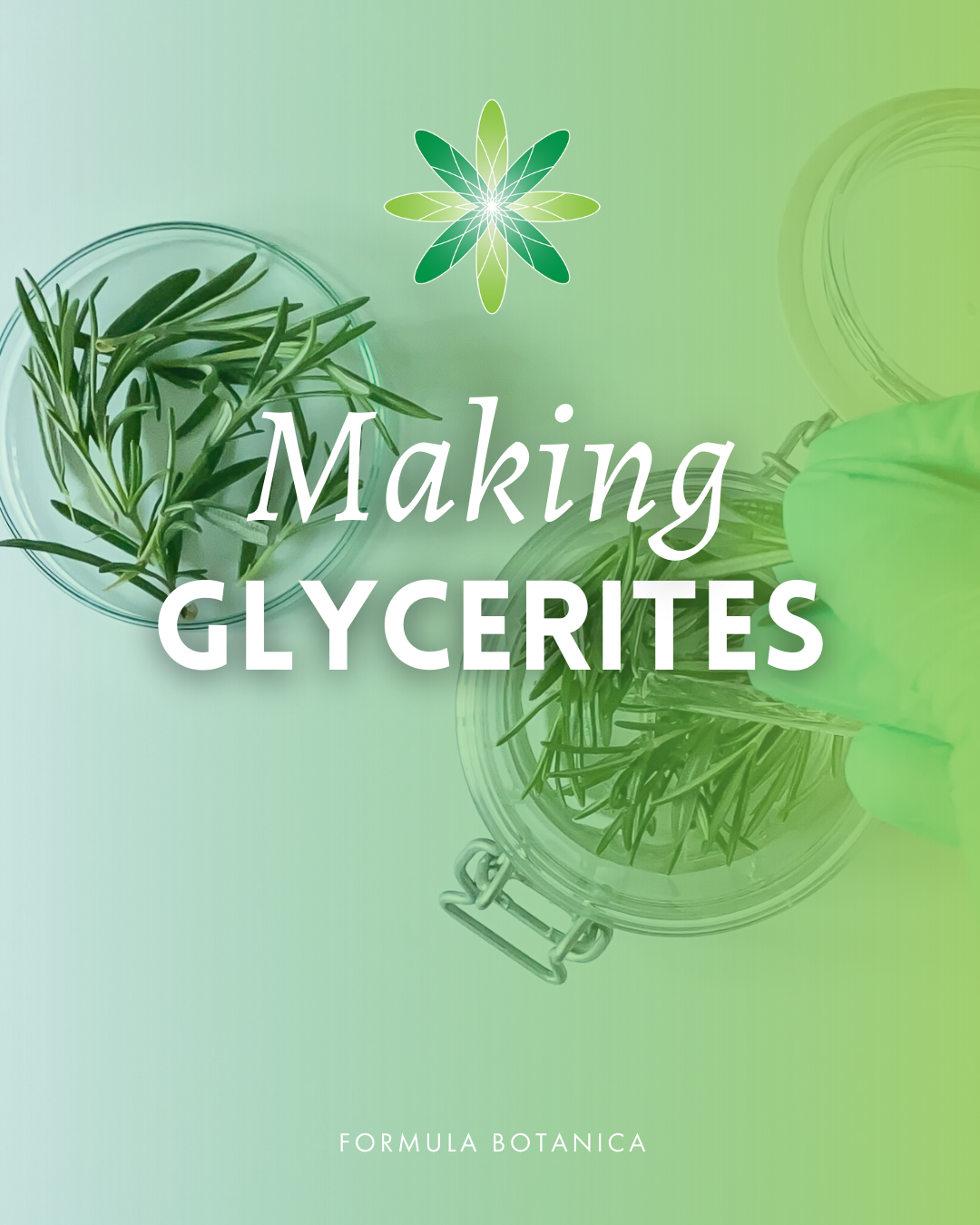
You could also create your own alcohol-free botanical extracts using glycerine by infusing dried or fresh herbs, flowers, fruits, roots, or leaves in glycerine, and then using them on their own or adding them to your DIY skincare or haircare products.
These are called glycerites, and capture the colour, scent, and beneficial compounds of your chosen plant, while also delivering glycerine’s hydrating, humectant properties.
You can learn everything about making and using glycerites in this helpful guide below:
The formulator’s ultimate guide to glycerites (What they are & how to use them)
Is glycerine the next big skincare ingredient of 2026?
 To recap, glycerine is incredibly versatile and so much more than just a functional ingredient. There’s a reason why it’s so widely used in the beauty industry, and why it’s making a big wave right now as a hero ingredient in cosmetic products.
In short, it’s finally getting the recognition it deserves.
So, is glycerine the next big ingredient of 2026? Very possibly. But at Formula Botanica, we see it as more than just a trend. We see glycerine as a timeless staple – an ingredient formulators will continue to rely on, again and again.
If you’re feeling inspired to try it for yourself, check out some of our older blog posts, as we have plenty of free glycerine-based formulations for you to try and get you started making your own skincare at home!
Glycerine is just one example of what happens when you really understand your ingredients — not just what they do, but why they work, and what the cosmetics industry isn’t telling you about them.
That’s exactly what we teach in our free training. Join us and discover what else you’ve been missing!
FAQ
- What is glycerine?
Glycerine is a clear, odourless, slightly syrupy liquid ingredient that has been used in cosmetics and food for decades. It’s a humectant, which is an ingredient type that attracts and locks in water in the skin, helping to keep it hydrated.
- What is glycerine used for in skincare?
Glycerine is most often used as a humectant in cosmetics and also to disperse powders, gums, and actives in cosmetic products. It’s used in all kinds of water-based products, from toners, serums, moisturisers, creams, shampoos, conditioners, and masks.
It can also be used on its own to make glycerites, which are glycerine-based botanical extracts, which make great additions to your homemade skincare and haircare products.
- What kind of glycerine should I use?
You can use any cosmetic-grade glycerine, which usually comes in strengths of 99% or 85%. It’s most often vegetable-derived, making it suitable for vegan products, but double-check with your supplier to be sure.
- How much glycerine should I use in formulations?
Because glycerine can feel sticky, we recommend using between 2-5% for leave-on products. You can use higher amounts in rinse-off products if needed, for example, in cleansers, scrubs, or oleogels.
Experiment with different ratios to see what you like, and the overall effect and skin feel.
- What are glycerites?
Glycerites are alcohol-free botanical extracts made by infusing dried or fresh herbs, flowers, fruits, roots, or leaves into glycerine.
You can use them on their own or add them to your formulations. What’s so great about them is that they infuse the beneficial properties, scent and colour of plants.
- How can you make glycerites?
To make glycerites, cover the plant material with glycerine, leave to infuse for 1-2 weeks, strain, and store in a cool, dark place. You can find a complete guide on how to make glycerites here.
- Where can I learn to make my own skincare?
Check out our free training to learn how to create high-performance skincare from scratch using ingredients like glycerine!
FREE TRAINING
Learn how to become an
Organic Skincare Formulator
FREE TRAINING
How to become an
Organic Skincare Entrepreneur
FREE TRAINING
How to become an
Organic Skincare Entrepreneur

Ariane is Formula Botanica’s Content Creator and an active member of the student community. She has worked as a professional journalist, blogger, copywriter and editor before joining Formula Botanica full-time in 2024.